
文/HuSir
阅读预备:什么是API?
API,全称为应用程序编程接口(Application Programming Interface),是一组预定义的规则和协议,允许不同的软件应用程序相互通信和交互。API就像是数字世界中的万能翻译官,让不同的软件系统能够无缝对话和协作。把AI程序的API想象成一个“智能服务的电话亭”,这样就好懂多了。你不需要知道电话亭里面复杂的线路是怎么工作的,你只需要:拿起听筒(发起请求)、按几个键(输入你的问题或数据)、电话那头就会传来回答(返回结果)。这个“电话亭”就是API。它把AI背后所有复杂的代码、算法、数据训练都封装起来了,只给你露出一个简单的“拨号盘”。
最近一两年,阴霾国短视频平台上出现了越来越多关于 AI 的内容。有人教大家写 Prompt,有人分享各种 Skill,有人介绍 Claude、ChatGPT、Gemini 等最新功能,也有人讲述如何利用 AI 提高工作效率、制作视频、开发程序,甚至如何借助 AI 创业赚钱。这些分享中有不少经验确实值得学习,我自己也从中受益不少。但看得越多,我心里却越来越产生一个疑问:为什么几乎没有人讨论,为什么我们只能这样使用 AI?
在这些教程里,经常会出现这样的画面:前面还在介绍国外最新的 AI 模型,到了真正开始操作时,却突然变成了“这里我们接入国内某个平台的 API”“这里使用国内镜像服务”“这里换成某某中转接口”。整个过程行云流水,仿佛事情本来就是这样。没有人解释为什么不能直接使用官方提供的原生 API,也很少有人讨论,为什么一个正在迅速发展的技术,会出现这样的使用方式。大家讨论的,几乎都是如何绕过去、如何替代、如何提高效率、如何继续赚钱。
我并不是说国产 AI 不好。事实上,DeepSeek、通义千问、智谱 AI 等国产模型近几年发展很快,在许多应用场景中已经表现得非常优秀,我自己也经常使用它们。真正让我思考的,并不是国产模型与国外模型之间的比较,而是另外一个问题:为什么大家都知道原因,却很少有人讨论原因本身?
后来,我想到一个比喻。
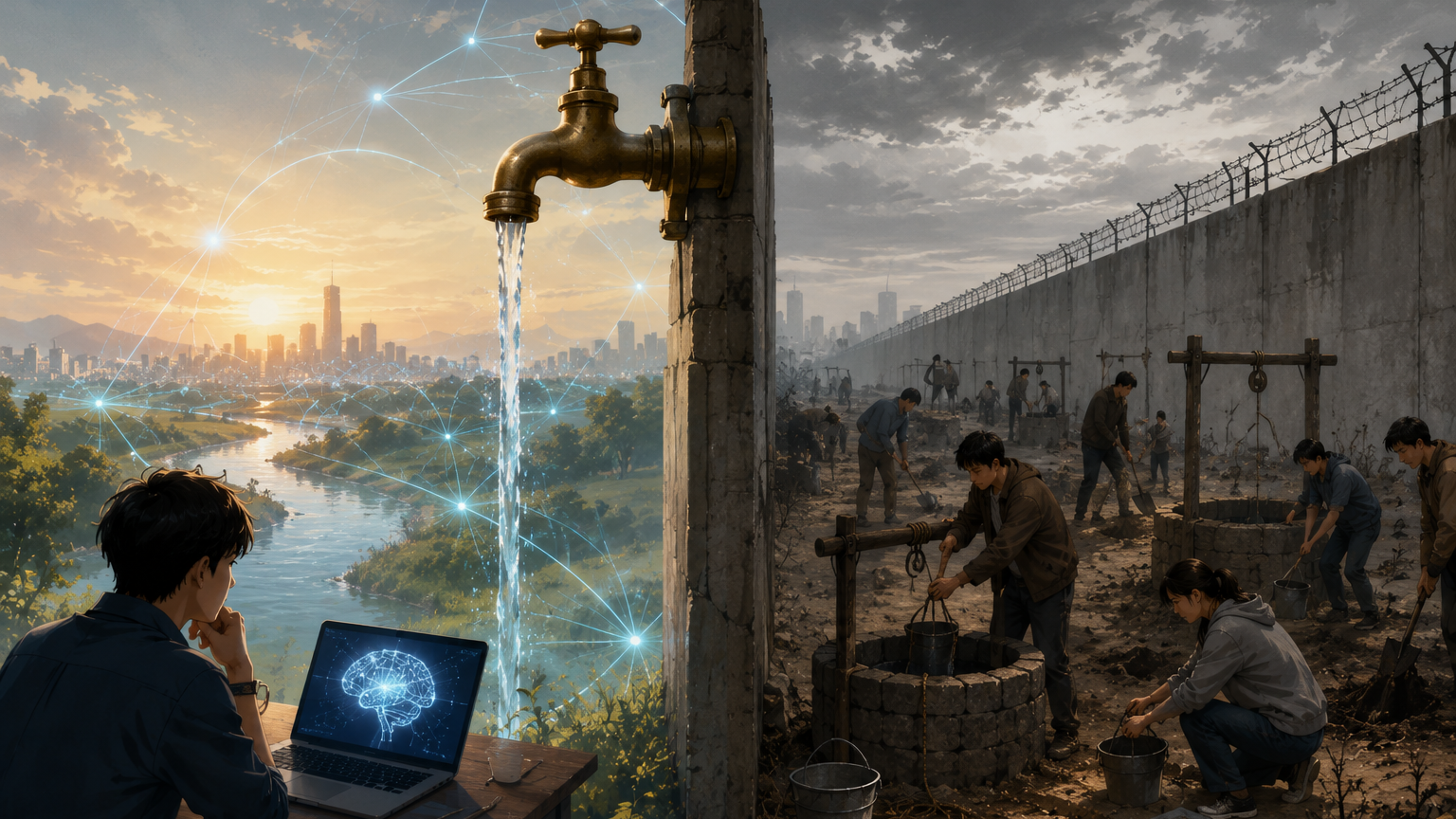
假设有一座城市,原本家家户户都有自来水。后来,不知道从什么时候开始,水龙头渐渐没有了水。可没有人去质疑水龙头的故障是个别“管理者”的决策使然,却有人率先开始在院子里打井。有人研究怎样打井最快,有人分享怎样挖得更深,有人总结如何提高出水率,还有人成了教别人打井的专家。关于打井的经验越来越丰富,关于水龙头为什么没有水,却越来越少有人提起。
再后来,新一代人长大了。他们从小看到的,就是家家户户都在打井,于是自然认为,生活本来就应该这样。甚至有人开始怀疑,过去真的有过打开水龙头就有水的时代吗?而管理者站在高处,看见大家都在认真打井,没有多少人再去讨论水龙头,也就会觉得:看来,水龙头确实不需要修了,让这些人继续打井吧。
我觉得,今天 AI 的很多讨论,多少有一点这样的影子。人们越来越擅长分享如何适应现实,却越来越少讨论现实为什么会变成这样。于是,真正的问题慢慢消失了,留下来的只有各种“解决方案”。
其实,适应环境并没有错。面对现实,每个人都需要工作,都需要生活,也都需要寻找解决办法。如果官方 API 用不了,那就寻找其他接口;如果某个平台无法使用,那就寻找替代方案。这是一种现实中的生存智慧,也是普通人的无奈选择。
但是,一个社会如果越来越只鼓励“如何适应”,却越来越少鼓励“为什么会这样”,那么反馈机制就会逐渐失灵。管理者能够听到的,只剩下大家分享打井的经验,却再也听不到“水龙头没有水”的声音。时间久了,人们甚至会忘记,原来提出问题,也是推动社会进步的一部分。
技术的发展,本来应该不断降低人与知识之间的门槛。AI 的出现,让越来越多不会编程的人开始开发软件,不会设计的人开始制作图片,不会写代码的人开始实现自己的创意。这原本是一件令人兴奋的事情。然而,当大量精力不得不花在寻找替代接口、研究各种中转平台、适应不同限制的时候,我们其实已经把一部分本应用于创造的时间,消耗在了适应环境上。
更值得思考的是,人们渐渐开始把这种适应,当成了一种理所当然。今天,人们分享的是 AI 的替代接口;昨天,人们分享的是各种网络工具;明天,也许还会有新的技术需要新的替代方案。每一次,我们都迅速学会了适应,却越来越少停下来问一句:为什么会这样?
我并不是反对分享 AI 技巧。恰恰相反,我认为那些认真研究技术、帮助别人提高效率的人,值得尊敬。只是,我希望在这些分享之外,还能保留另一种声音。一种提醒大家:水龙头原本应该有水。
一个社会当然需要会打井的人,但也需要愿意提醒大家,水龙头本来不应该一直是干的。因为沉默不会修好水龙头,它只会让越来越多的人相信,没有水,本来就是生活的常态。而当所有人都不再讨论问题本身的时候,问题往往就真的不会再得到解决。
对于个人来说,学会适应现实是一种能力;对于一个社会来说,保留提出问题、表达意见 and 反馈现实的能力,同样是一种不可缺少的文明。我们当然可以继续学习如何使用 AI,如何提高效率,如何创造价值。但我更希望,在讨论这些技巧的时候,我们不要忘记偶尔抬起头,看一眼那个已经很久没有出水的水龙头。
最后,补充一句话。也许有人(或者很多人)会说,现在的AI模型已经很好了啊,还需要那些原生AI和API干嘛?那我只能说,你可能从未见过“水龙头”,只会喝井里的水,更不用说“纯金水龙头”了。
We Talk About AI, But We Don’t Talk About Why We Can Only Use It This Way
By HuSir
A quick primer: What is an API?
API stands for Application Programming Interface. It’s a set of predefined rules and protocols that let different software programs talk to each other. Think of an AI model’s API as a “smart service phone booth.” You don’t need to understand the complicated wiring inside the booth. You just: pick up the receiver (send a request), press a few buttons (type in your question or data), and the voice on the other end gives you an answer (returns the result). That’s the API. It hides all the complex code, algorithms, and training data behind a simple “dial pad” that anyone can use.
—
Over the past year or two, AI content has been popping up everywhere on short-video platforms in the Haze Country. People teach you how to write prompts. They share various “skills.” They introduce the latest features of Claude, ChatGPT, Gemini. They talk about using AI to be more productive, to make videos, to write code, even to start a business. Some of this advice is genuinely useful — I’ve learned from it myself. But the more I watched, the more a question started gnawing at me: **Why does almost nobody talk about** ***why*** **we can only use AI this way?**
There’s a pattern in these tutorials. The first half of the video will be all about the latest foreign AI model — how impressive it is, what it can do. Then, when it’s time to actually use it, the screen cuts to: “Here we’ll connect through a domestic platform’s API,” “Let’s use a domestic mirror service,” “Switch to this relay interface here.” It’s presented as if this is just the natural order of things. Nobody explains why you can’t just use the official, native API directly. Nobody discusses why a technology that’s spreading so fast globally requires this extra layer of gymnastics. What they *do* talk about is how to work around it, how to find substitutes, how to be more efficient, how to keep making money.
Let me be clear: I’m not dismissing Chinese AI. DeepSeek, Tongyi Qianwen, Zhipu AI, and other domestic models have come a long way in recent years. They perform well in many scenarios. I use them myself. The thing that bothers me isn’t about comparing which model is “better.” It’s something else: **why does everyone know the reason, yet almost nobody talks about it?**
I eventually found a metaphor that captures it.
Imagine a city where every house used to have running water from a tap. Then, at some point, the taps went dry. Nobody questioned whether the dry taps were the result of some authority’s decision. Instead, someone was the first to start digging a well in their yard. Someone else figured out the fastest way to dig. Someone else shared tips on how to dig deeper. Someone else compiled a guide on maximizing water output. A few became well-digging experts. The body of knowledge around well-digging grew richer and richer. The question of why the taps ran dry in the first place — fewer and fewer people brought that up.
Eventually, a new generation grew up. All they’d ever seen was every family digging their own well. So they assumed: this is just how life works. Some even started to wonder: *was there really ever a time when water came out of a tap?* And the authorities, looking down from above, saw everyone diligently digging wells, with hardly anyone talking about the taps anymore. And they thought: well, I guess the taps don’t need fixing after all. Let them keep digging.
I feel like a lot of today’s AI discourse has a bit of this shadow. People are getting better and better at sharing how to adapt to reality, and worse and worse at discussing why reality became this way. So the real questions gradually disappear, leaving behind only the “solutions.”
Now, adapting is not wrong. Facing reality, everyone needs to work, needs to live, needs to find a way forward. If the official API doesn’t work, find another interface. If a platform is inaccessible, find an alternative. This is survival wisdom. It’s what ordinary people do when they have no better choice.
But a society that increasingly rewards only “how to adapt” while discouraging “why is it this way” — that society’s feedback mechanism breaks down. What the authorities hear is nothing but well-digging tips. They stop hearing the sound of dry taps. Over time, people even forget that raising questions was once part of how progress happened.
Technology, at its best, should keep lowering the barriers between people and knowledge. AI now lets people who can’t code build software. People who can’t design make images. People who can’t write code turn their ideas into reality. That’s genuinely exciting. Yet when so much energy has to go into finding alternative interfaces, studying relay platforms, and adapting to various restrictions, we’re spending part of our creative energy just on coping with the environment.
What’s more striking is that people are beginning to treat this coping as normal. Today, they share alternative APIs for AI. Yesterday, they shared workarounds for internet tools. Tomorrow, there will be some new technology needing its own set of substitutes. Every time, we get good at adapting — fast. And every time, fewer of us pause to ask: **why is it like this?**
I’m not against sharing AI tips. On the contrary, I respect the people who seriously study the technology and help others work more effectively. I just hope that alongside all this sharing, there’s room for another kind of voice. One that reminds people: the tap was supposed to have water.
A society needs people who know how to dig wells. But it also needs people willing to point out that the taps were never meant to stay dry. Because silence won’t fix the taps. It will only convince more people that the absence of water is the natural state of things. And when nobody talks about the problem anymore, the problem very likely stops getting solved.
For an individual, learning to adapt is a survival skill. For a society, retaining the ability to raise questions, express dissent, and push back against reality — that is an equally indispensable form of civilization. We can keep learning how to use AI, how to be more efficient, how to create value. I just hope that in the middle of all this technique and productivity, we remember, once in a while, to lift our heads and look at that tap that hasn’t run water for a very long time.
Some people — maybe a lot of people — might say: the current AI models are already good enough. Why do we need those original native APIs anyway? To that, I can only say: you’ve probably never seen a tap. You only know how to drink well water. You don’t even know what a solid gold faucet looks like.
发表回复