
文/HuSir
今天,我按照每年两遍读经计划,读完了旧约最后一卷书——《玛拉基书》。
每次读到这里,我都会有一种很深的感受:《玛拉基书》虽然篇幅不长,却几乎概括了整部旧约的信息。回顾《摩西五经》、历史书以及大小先知书,我们会发现,神不断借着先知呼唤以色列人回转。当他们远离神时,神借着管教、甚至借着外邦民族的手施行审判;当他们愿意遵行神的话时,神又不断施恩、赐福、保护他们。
因此,《玛拉基书》作为旧约最后一卷书,更像是神对整部旧约的一次总结,也是对所有读完整本旧约之人的最后一次提醒。
整本旧约,究竟在讲什么?以前,我总觉得是在讲律法、献祭、审判、悔改和恩典。今天,当我再次读到最后一句经文时,我忽然发现,也许整部旧约一直在讲述同一件事情——关系。
“他必使父亲的心转向儿女,儿女的心转向父亲,免得我来咒诅遍地。” (玛拉基书 4:6)
这节经文,许多人首先想到的是家庭关系。当然,这是经文最直接的含义。可是,如果把它放回整部旧约来看,它所表达的远远不只是家庭伦理,而是神整个救赎计划的缩影。
整本《圣经》,其实就是一部关系恢复的历史。《创世记》开始的时候,人犯罪以后,首先破坏的不是人与人的关系,而是人与神的关系。亚当和夏娃躲避神。人与神之间出现了隔阂。紧接着,人与人的关系也开始破裂。亚当推卸责任。该隐杀害亚伯。家庭开始出现裂痕。社会开始败坏。国家彼此争战。直到后来以色列民族一次又一次偏离神,一次又一次经历神的管教。
回头再看整部旧约,你会发现,无论是摩西五经、历史书,还是大小先知书,看似内容丰富,实际上都围绕着同一个主题。人与神的关系出了问题。于是,人与人的关系出了问题。家庭关系出了问题。民族关系出了问题。社会关系出了问题。而神所做的一切工作,也都围绕着同一件事情。恢复关系。
因此,《玛拉基书》最后没有继续讨论祭物,没有继续讨论圣殿,也没有继续讨论战争和律法。神把整部旧约最后的话语,放在了一个家庭里面。“父亲的心转向儿女,儿女的心转向父亲。”
我越来越觉得,这不是偶然。因为神知道,一个家庭若不能彼此相爱,一个社会也不可能真正彼此相爱。人与神若不能和好,人与人终究也无法真正和好。
更让我深思的是,这节经文并没有说:“儿女转向父亲。”也没有说:“父亲转向儿女。”而是双方都要彼此转向。这正像神在《玛拉基书》中所说:“你们要转向我,我就转向你们。”
神恢复关系,从来不是要求某一方单方面改变,而是呼召彼此回转。
今天,我越来越觉得,一个人的生命,其实始终活在三种关系之中。第一,是人与神的关系。第二,是家庭成员彼此之间的关系。第三,是人与社会之间的关系。这三种关系,并不是彼此独立,而是层层相连。
人与神的关系,是生命的根。家庭成员之间的关系,是生命的树干。人与社会之间的关系,则像树木伸展出去的枝叶。根若健康,树干便有生命。树干健康,枝叶自然茂盛。如果人与神的关系出了问题,那么家庭迟早会受到影响,人与社会之间的关系也终将受到影响。
因此,在我看来,撒但最大的工作,并不仅仅是诱惑人做某一件坏事。它更深的工作,是不断借着人的骄傲、自私、恐惧、焦虑、苦毒和不信,破坏人与神之间的关系。当人与神渐渐疏远时,人便开始依靠自己。依靠自己的聪明。依靠自己的能力。依靠自己的利益。于是,人与人的关系也慢慢开始破裂。家庭失去温暖。人与人失去信任。社会失去彼此相爱的能力。
罪,并不仅仅表现为某一种行为。罪最终结出的果子,是关系的破裂。而神所做的工作,却始终与这一切相反。祂不断呼召人回转。恢复人与神之间的关系。再借着人与神关系的恢复,修复家庭,修复人与人的关系,使恩典不断流向这个世界。
因此,我越来越觉得,《玛拉基书》最后留下的重点,并不是“咒诅”。因为神从来不是急于降下咒诅。祂真正留下的,是“回转”的邀请。只要人愿意转向神,人与神的关系便开始恢复;人与神恢复了,家庭便开始恢复;家庭恢复了,人与社会之间的关系也会渐渐恢复。神的恩典,也就在这样的关系恢复中不断流淌。
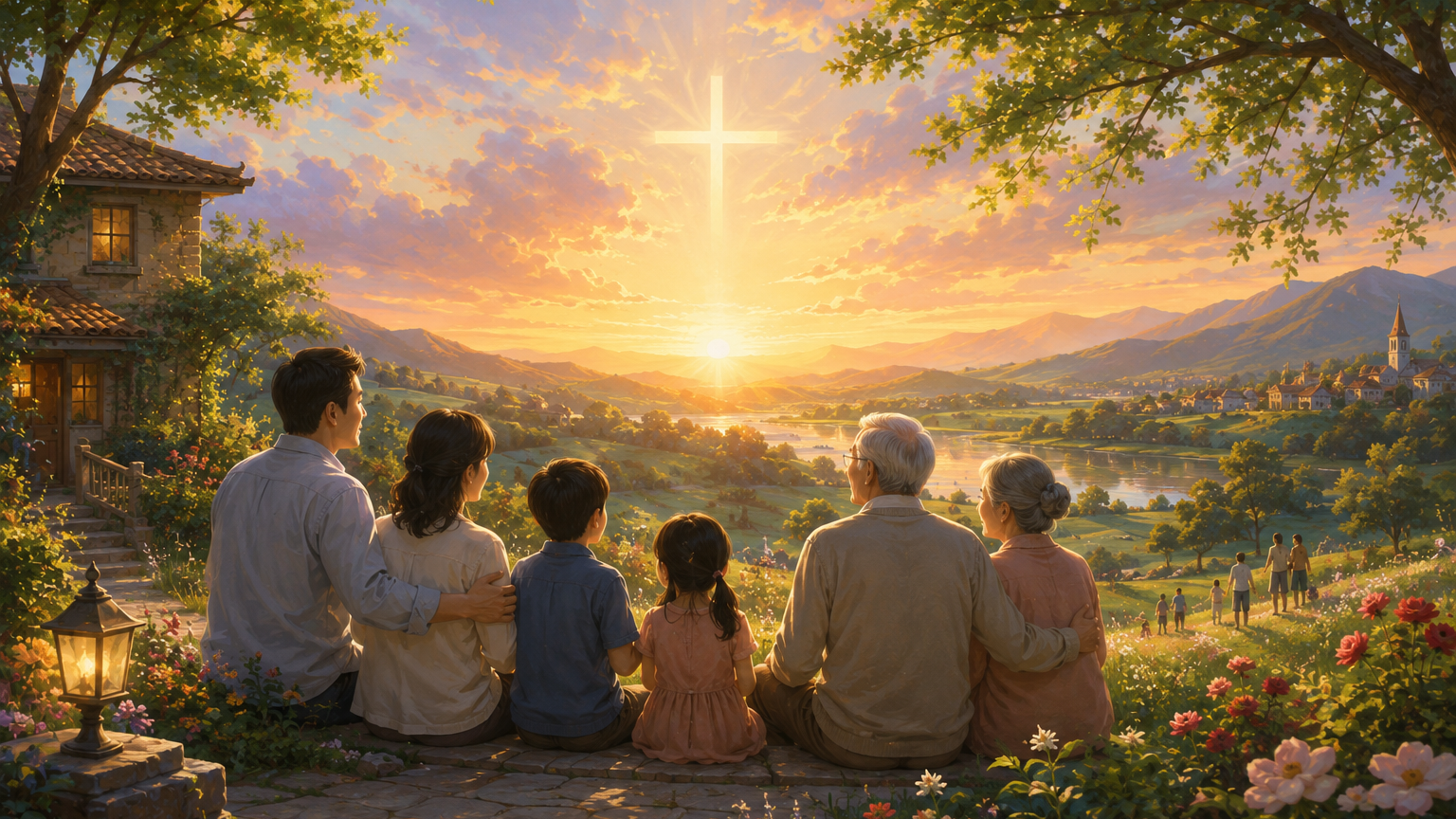
所以,《玛拉基书》作为旧约最后一卷书,最后留给我们的,不是一句令人惧怕的话,而是一幅充满盼望的图画。父亲的心重新转向儿女。儿女的心重新转向父亲。人与神重新同行。人与人重新相爱。
这,不仅是一个家庭的恢复,更是整部旧约一直等待实现的应许。
当我一年又一年读完整本旧约,我越来越相信,神真正关心的,从来不是人完成了多少宗教仪式,也不是人拥有多少宗教知识。祂真正关心的,是人与神、人与家庭、人与社会之间的关系是否不断恢复。因为当人与神同行的时候,家庭便有了爱的根基;家庭成为爱的见证,社会也才有真正更新的可能。
或许,这就是整部旧约,留给每一位读完整本《圣经》之人的最后一课。
The Old Testament Leaves Us Not with a Curse, but with the Restoration of Relationships
By HuSir
Today, following my plan of reading through the Bible twice each year, I finished the final book of the Old Testament—Malachi.
Every time I reach this point, I am struck by the same profound realization: although Malachi is a short book, it almost encapsulates the entire message of the Old Testament. Looking back at the Pentateuch, the Historical Books, and the Major and Minor Prophets, we see God continually calling the people of Israel to return to Him through His prophets. When they turned away from Him, He disciplined them—even using foreign nations as instruments of judgment. But whenever they obeyed His word, He continually poured out His grace, blessing, and protection.
Therefore, as the final book of the Old Testament, Malachi serves not only as God’s summary of the Old Testament, but also as His final reminder to everyone who has read it.
What, then, is the Old Testament really about? For many years I thought it was about the Law, sacrifices, judgment, repentance, and grace. Yet as I read its final verse once again, I suddenly realized that perhaps the entire Old Testament has been telling one story all along—the story of relationships.
“He will turn the hearts of the fathers to their children, and the hearts of the children to their fathers, or else I will come and strike the land with a curse.” (Malachi 4:6)
Many people naturally understand this verse as referring to family relationships. And that is certainly its most direct meaning. Yet when viewed in the context of the entire Old Testament, it represents far more than family ethics. It is a portrait of God’s entire work of redemption.
The whole Bible is, in fact, a history of restored relationships. In Genesis, after humanity sinned, the first relationship that was broken was not the relationship between people, but the relationship between humanity and God. Adam and Eve hid from God. Fellowship with Him was broken. Immediately afterward, human relationships also began to collapse. Adam shifted the blame. Cain murdered Abel. Families were fractured. Society became corrupt. Nations fought against one another. Throughout Israel’s history, the same pattern continued as the people repeatedly turned away from God and repeatedly experienced His discipline.
Looking back across the entire Old Testament, one discovers that although the Pentateuch, the Historical Books, and the Prophets contain a great variety of events, they all revolve around the same central theme. Humanity’s relationship with God was broken. Consequently, relationships between people were broken. Families were broken. Nations were broken. Society itself was broken. Everything God did throughout the Old Testament was aimed at one purpose: restoring relationships.
That is why Malachi does not conclude with further discussions about sacrifices, the temple, wars, or the Law. Instead, God’s final words in the Old Testament are spoken within the context of a family:
“He will turn the hearts of the fathers to their children, and the hearts of the children to their fathers.”
The more I reflect on this, the more convinced I become that this is no coincidence. God knows that if love cannot be restored within a family, genuine love can never flourish throughout society. If people are not reconciled to God, they can never truly be reconciled to one another.
What strikes me even more is that the verse does not simply say, “Children will turn to their fathers,” nor does it merely say, “Fathers will turn to their children.” Instead, both are called to turn toward one another. This echoes God’s own invitation earlier in Malachi:
“Return to Me, and I will return to you.”
God’s work of restoration has never been about requiring only one side to change. He calls both sides to return.
Today, I have come to believe that every human life exists within three fundamental relationships. First, our relationship with God. Second, our relationships within the family. Third, our relationships with society. These three are not isolated from one another; they are deeply connected.
Our relationship with God is the root of life. Family relationships are the trunk. Our relationships with society are the branches and leaves. If the root is healthy, the trunk will have life. If the trunk is healthy, the branches and leaves will flourish. But when our relationship with God is damaged, family relationships will inevitably suffer, and eventually our relationships with society will also be affected.
Therefore, I have come to believe that Satan’s greatest work is not merely tempting people to commit individual sins. His deeper work is to use pride, selfishness, fear, anxiety, bitterness, and unbelief to destroy humanity’s relationship with God. As people gradually drift away from God, they begin relying on themselves—their own wisdom, their own abilities, and their own interests. Consequently, relationships between people also begin to fall apart. Families lose their warmth. Trust disappears. Society loses its capacity to love.
Sin is not merely expressed through individual actions. Its ultimate fruit is broken relationships. God’s work, however, always moves in the opposite direction. He continually calls people to return to Him, restoring their relationship with Him. Then, through that restored relationship, He restores families and heals relationships between people, allowing His grace to flow continually into the world.
For this reason, I increasingly believe that the final emphasis of Malachi is not the curse. God has never been eager to bring judgment. What He leaves us with is an invitation to return. When people turn back to God, their relationship with Him begins to be restored. As that relationship is restored, families begin to heal. As families are healed, society itself can gradually be renewed. In this way, God’s grace flows through restored relationships.
Thus, the final book of the Old Testament leaves us not with a terrifying warning, but with a beautiful picture filled with hope. Fathers’ hearts turn toward their children. Children’s hearts turn toward their fathers. Humanity walks with God once again. People learn to love one another again.
This is not merely the restoration of a family. It is the fulfillment of the promise toward which the entire Old Testament has been pointing.
As I complete the Old Testament year after year, I become increasingly convinced that God’s deepest concern has never been how many religious rituals we perform, nor how much religious knowledge we possess. What He truly desires is the continual restoration of our relationships—with Him, with our families, and with society. For when people walk with God, families gain the foundation of love; and when families become witnesses of that love, society itself can truly begin to be renewed.
Perhaps this is the final lesson the Old Testament leaves for everyone who finishes reading the Scriptures.
发表回复