文 / HuSir

35年前的1991年前后,像我(或前后几年的同龄人)这样从大学走出来的人,正站在一个充满希望、却也充满不确定性的十字路口。当时不敢想自己何时退休,只想大干一番事业,可如今眨眼间到了回忆的一刻。
那是改革开放的早期阶段。80年代思想启蒙的余波尚在,而政治环境也在悄然收紧。
在物质层面,我们骑着自行车上下班,家里装电话仍是一种奢侈,全国人均GDP只有约319美元;而在思想层面,校园里仍有人私下讨论“民主”“改革”“普世价值”,那种带着理想主义的期待,在空气中若隐若现。
今天,35年过去,我们这一代人(大致1965–1975年出生)大多已步入中老年,处在退休前后的年龄节点。我们亲身经历了这个国家从贫困走向富足的巨大跃迁,也逐渐感受到另一种变化——一种不那么容易被量化的变化。
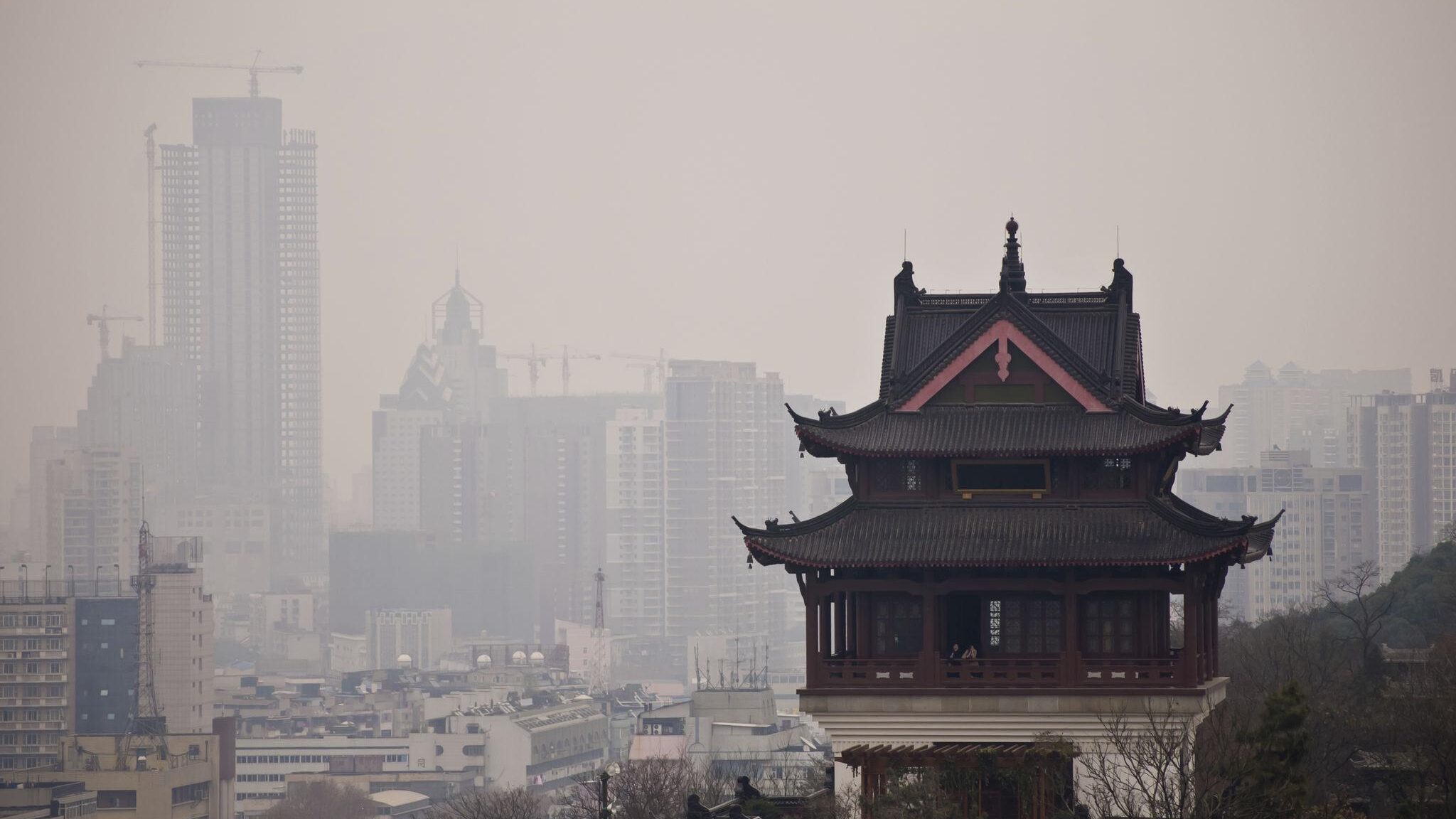
如果用一个更具象征意味的称呼来说,这片土地在很多时候更像一个“阴霾国”:物质方面在不断丰富,思想却在某些角落变得更加克制与收敛。难道单纯是年龄增加的原因吗?
于是,一个问题开始浮现:这35年,我们究竟是在进步,还是在以另一种方式发生转向?
答案或许并不在非黑即白之间,而更像是一种分层的现实:一方面,是物质环境的显著提升;另一方面,是思想空间在某些维度上的收缩与重塑。
物质环境的跃升:从温饱到小康的现实跨越
先看那些可以被测量、也更容易达成共识的部分,这种变化几乎是无可争议的。
1990年前后,中国仍是一个典型的低收入国家,城市化率约26%,平均预期寿命约68岁。普通大学毕业生多被分配到国企或机关单位,月收入仅几十元,住房依赖单位,出行以公交或自行车为主,信息来源主要是报纸和有限的电视节目。
35年之后,这些指标已经发生了极大的变化。
人均GDP从1990年的约319美元提升至2024年的约13,303美元,名义增长超过40倍。城市化率已接近67%,高速铁路总里程达到全球最大规模,互联网用户超过11亿,信息获取方式发生了根本性转变。
在健康层面,平均预期寿命由约68岁提高至接近78岁。医疗条件、生活质量与消费能力均有显著改善。
对我们这一代人来说,这种变化是切身的。许多人从“铁饭碗”时代走来,经历过体制内与市场化的交替,也见证了从物资匮乏到消费丰富的全过程。住房、汽车、子女教育乃至全球流动,都成为现实选项。
如果仅从这些维度来看,这无疑是一段显著的进步历程。
思想环境的变化:从松动到收敛的长期过程
然而,如果从思想空间与表达环境的角度来看,这35年的变化则显得更加复杂。
如果以言论自由、多元讨论、个体表达空间等为参照,可以观察到一种逐渐收紧的趋势。
1990年前后,尽管政治环境已有收缩,但80年代的思想余温仍在。知识分子之间仍可进行一定程度的讨论,城市青年对外部世界保持好奇,甚至带有某种理想化的期待。
而在今天,这种空间变得更加谨慎、边界更加清晰。
互联网从早期的信息窗口,逐渐演变为一种被规范与塑造的表达环境。实名制、内容管理与平台机制,使得表达行为本身也变得更加自我约束。
这种变化,并不总是以明确限制的形式出现,更多时候,是一种逐渐内化的边界意识。久而久之,人们开始习惯于在表达之前进行自我筛选,在讨论过程中主动回避敏感议题。这并不意味着思考的消失,而更像是一种表达方式的转移:公共讨论减少,私人空间承载更多思考。
与此同时,价值观结构也在发生变化。相较于过去对“自由”“权利”的关注,新的叙事更强调秩序、稳定与集体认同。
在这一过程中,我们这一代人与下一代之间,也逐渐形成了一种差异:前者更多保留对思想开放的记忆,后者则在既有环境中形成更为稳定的认知框架。
进步还是转向:一代人的双重经验
如果将这35年的变化放在一起观察,可以看到一种并行的现实。
在物质层面,这是一次罕见的跃升。伴随加入WTO所带来的整体繁荣,人们从温饱到小康,从自行车到高铁,从信息匮乏到高度连接,这一切都构成了实实在在的进步。
而在思想层面,则更像是一种结构性的调整。从相对松动的讨论氛围,到更加有序与边界清晰的表达环境,这种变化未必可以简单归类为“进步”或“退步”,但其方向是可以被感知的。
对我们这一代人来说,这种体验是叠加的。我们既见证了物质世界的迅速扩展,也经历了思想空间的逐步收敛。我们曾经对未来有过某种理想化的期待,也逐渐学会在现实框架中重新理解“可能性”的边界。
而我们的子女一代,成长于一个物质更为充裕、但表达方式更加稳定的环境之中,他们对世界的理解,或许已经与我们不再完全相同。
结语:关于“进步”的另一种理解
回到最初的问题:地处阴霾国的人群及其环境,究竟是进步了,还是退化了?
答案或许并不在单一维度之中。如果以物质指标衡量,这是一次显著的进步;如果从思想空间的变化来看,则更像是一种方向性的转变。这并非简单的否定或怀旧,而更像是一种对现实的记录。
对我们这一代人而言,35年的变化不仅体现在生活方式上,也体现在内心对世界的理解方式之中,这段时间囊括了这一代人几乎所有的发展、变化,以及在这个社会的磨砺和见证。物质的丰富,并不必然带来思想的扩展;而思想的边界,也未必永远固定。
也许真正值得思考的,并不是“过去更好还是现在更好”,而是:在已经获得的这些进步之上,我们是否仍然保有继续思考与表达的空间与能力。
也许未来的某一天,我们会用另一种方式,重新理解“进步”本身的含义。
如今,已经到了需要算账的时候了。
35 Years After Graduation: Have People and Their Environment Progressed or Regressed?
By HuSir
Thirty-five years ago, around 1991, people like me (or those who graduated a few years before or after) were stepping out of university and standing at a crossroads filled with hope yet also uncertainty. At that time, we dared not think about when we would retire; we only wanted to work hard and achieve great things. Now, in the blink of an eye, the moment for reflection has arrived.
It was the early stage of reform and opening-up. The afterglow of the intellectual enlightenment of the 1980s still lingered, while the political environment was quietly tightening.
On the material level, we rode bicycles to and from work, having a telephone at home was still a luxury, and the national per capita GDP was only about 319 US dollars. On the intellectual level, in the campus, there were still people privately discussing “democracy,” “reform,” and “universal values.” That kind of idealistic expectation hovered faintly in the air.
Today, 35 years later, our generation (roughly born between 1965 and 1975) has mostly entered middle age or even the pre-retirement or retirement stage. We have personally witnessed this country’s tremendous leap from poverty to prosperity, and we have gradually sensed another kind of change — a change that is not so easily quantified.
If we use a more symbolic term, this land often feels more like a “hazy country”: materially it continues to grow richer, yet in certain corners, thought has become more restrained and subdued. Is this simply due to aging?
Thus, a question begins to emerge: Over these 35 years, have we progressed, or have we turned in another direction?
The answer may not lie in black-and-white terms, but rather in a layered reality: on one hand, there has been a significant improvement in the material environment; on the other hand, there has been a contraction and reshaping of intellectual space in certain dimensions.
The Leap in the Material Environment: A Real Transition from Subsistence to Moderate Prosperity
First, let us look at the parts that can be measured and are more likely to reach consensus. This change is almost indisputable.
Around 1990, China was still a typical low-income country, with an urbanization rate of about 26% and an average life expectancy of about 68 years. Ordinary university graduates were mostly assigned to state-owned enterprises or government agencies, earning only a few dozen yuan per month. Housing depended on the work unit, travel relied mainly on buses or bicycles, and information came primarily from newspapers and limited television programs.
Thirty-five years later, these indicators have undergone tremendous change.
Per capita GDP rose from about 319 US dollars in 1990 to approximately 13,303 US dollars in 2024, a nominal increase of more than 40 times. The urbanization rate has approached 67%, the total length of high-speed railways has reached the world’s largest scale, and there are now over 1.1 billion internet users — a fundamental transformation in the way information is accessed.
In terms of health, average life expectancy has increased from about 68 years to nearly 78 years. Medical conditions, quality of life, and consumption capacity have all improved significantly.
For our generation, this change is deeply personal. Many of us came from the era of the “iron rice bowl,” experienced the transition between the planned system and marketization, and witnessed the entire process from material scarcity to consumer abundance. Housing, cars, children’s education, and even global mobility have all become realistic options.
If judged solely from these dimensions, this has undoubtedly been a period of remarkable progress.
Changes in the Intellectual Environment: A Long Process from Loosening to Contraction
However, when viewed from the perspective of intellectual space and the environment for expression, the changes over these 35 years appear more complex.
If we take freedom of speech, pluralistic discussion, and space for individual expression as reference points, we can observe a gradually tightening trend.
Around 1990, although the political environment had already begun to contract, the intellectual warmth of the 1980s still remained. There was still a certain degree of discussion among intellectuals, and urban youth maintained curiosity about the outside world, even harboring a somewhat idealized expectation.
Today, this space has become more cautious, with clearer boundaries.
The internet, which began as a window of information, has gradually evolved into an environment for expression that is regulated and shaped. The real-name system, content management, and platform mechanisms have made the act of expression itself more self-restrained.
This change does not always appear in the form of explicit restrictions. More often, it is a gradually internalized sense of boundaries. Over time, people have become accustomed to self-screening before expressing themselves and proactively avoiding sensitive topics during discussions. This does not mean the disappearance of thinking, but rather a shift in the mode of expression: public discussion has decreased, and more thinking is carried in private spaces.
At the same time, the structure of values has also changed. Compared with the past focus on “freedom” and “rights,” the new narrative places greater emphasis on order, stability, and collective identity.
In this process, a difference has gradually formed between our generation and the next: the former retains more memories of intellectual openness, while the latter has formed a more stable cognitive framework within the existing environment.
Progress or Turn: A Generation’s Dual Experience
When we observe the changes of these 35 years together, we can see a parallel reality.
On the material level, this has been a rare leap. Accompanied by the overall prosperity brought by joining the WTO, people have moved from having enough food and clothing to moderate prosperity, from bicycles to high-speed trains, from information scarcity to high connectivity. All of this constitutes real and tangible progress.
On the intellectual level, however, it feels more like a structural adjustment. From a relatively loose atmosphere of discussion to a more orderly and clearly bounded environment for expression, this change cannot simply be classified as “progress” or “regression,” but its direction can be clearly perceived.
For our generation, this experience is superimposed. We have witnessed both the rapid expansion of the material world and the gradual contraction of intellectual space. We once held certain idealized expectations for the future, and we have gradually learned to re-understand the boundaries of “possibility” within the realistic framework.
Our children’s generation, growing up in an environment with greater material abundance but a more stable mode of expression, may already have a different understanding of the world from ours.
Conclusion: Another Understanding of “Progress”
Returning to the original question: Has people and their environment in this “hazy country” progressed or regressed?
The answer may not lie in a single dimension. If measured by material indicators, this has been a significant progress; if viewed from the changes in intellectual space, it resembles a directional shift. This is not a simple negation or nostalgia, but rather a record of reality.
For our generation, the changes over 35 years are reflected not only in lifestyle but also in the way we inwardly understand the world. This period encompasses almost all the development, changes, trials, and witnessing of this generation in society. Material abundance does not necessarily bring about an expansion of thought; nor are the boundaries of thought forever fixed.
Perhaps what is truly worth pondering is not whether the past was better or the present is better, but whether, on top of the progress we have already achieved, we still retain the space and ability to continue thinking and expressing ourselves.
Perhaps one day in the future, we will understand the meaning of “progress” itself in another way.
Now, the time has come to settle the accounts.