文 / HuSir
吴敬琏曾指出:“阴霾国的中产阶级还很幼稚,对自己根本利益在哪里不清楚。以为我只要有一个房子,开豪华车,老婆孩子怎么怎么样,就行了。实际上,如果社会不完善的话,个人前途是没有保证的。”
这句话之所以尖锐,在于它击中了一个常被忽视的现实:个人的安全感,从来不是孤立存在的,而是深深嵌在社会制度之中。在一个规则不稳定的环境里,再多的财富,也可能只是暂时的占有;再体面的生活,也未必经得起一次制度性的波动。
一、中产阶级:不是“有钱的人”,而是“依赖规则的人”
在日常语境中,中产阶级常被理解为一个收入区间:有房、有车、有稳定工作,生活体面。但如果只停留在这个层面,就无法理解吴敬琏所说的“幼稚”。
中产阶级真正的意义,不在于他们“拥有多少”,而在于他们在社会中的位置。他们不是最富有的群体,无法脱离制度风险;也不是最底层的群体,已经积累了一定资源。他们恰恰是最依赖规则稳定性的一群人。
因此,中产的核心特征可以归结为三点:有资产,但需要制度保护;有认知,能够理解规则的重要性;有焦虑,最害怕不确定性。
问题正在这里产生——当一个群体最依赖规则,却没有真正意识到规则的重要性时,就会把安全感错误地寄托在“可见之物”上:房子、车子、消费、表面的体面。于是,安全感被“物化”,而不是“制度化”。
二、所谓“根本利益”,本质是人生的可预期性
很多人以为,中产阶级的根本利益是财富增长。实际上,更深一层看,他们真正需要的,是一种更基础的东西:人生的可预期性。
也就是说——今天的努力,明天仍然有效;已经拥有的,不会被轻易剥夺;孩子的未来,不取决于关系和偶然;个人命运,不会因为不可预测的力量突然中断。
换句话说,中产并不是单纯追求“更多”,而是希望“已有的一切可以持续存在”。因此,那些看似抽象的制度要素——产权保护、法治、公平竞争、公民权利——其实都指向同一个核心:让人敢于做长期规划,而不是被迫活在短期博弈之中。
一旦这一点缺失,人们就会本能地转向另一种选择:不是建设未来,而是尽快兑现当下。
三、一个“完善的社会”,普通人能直接感受到什么?
“完善的社会”并不只是制度文本上的完善,它首先是一种可以被普通人直接感受到的状态。大致可以归结为三种直观体验:不害怕未来;不需要讨好权力;不依赖运气生活。
对于普通人而言,这意味着:一次意外不会彻底摧毁人生;孩子仍然拥有向上的可能;矛盾可以通过规则解决,而不是靠忍耐或冲突。
对于中产阶级而言,这意味着:不需要把所有希望押在房产或单一资产上;不需要因为政策不确定性而焦虑;可以放心做十年、二十年的规划。
可以说:一个社会是否成熟,不在于富人有多富,而在于普通人是否敢规划十年后的生活。
四、不完善的社会,会系统性地“塑造人”
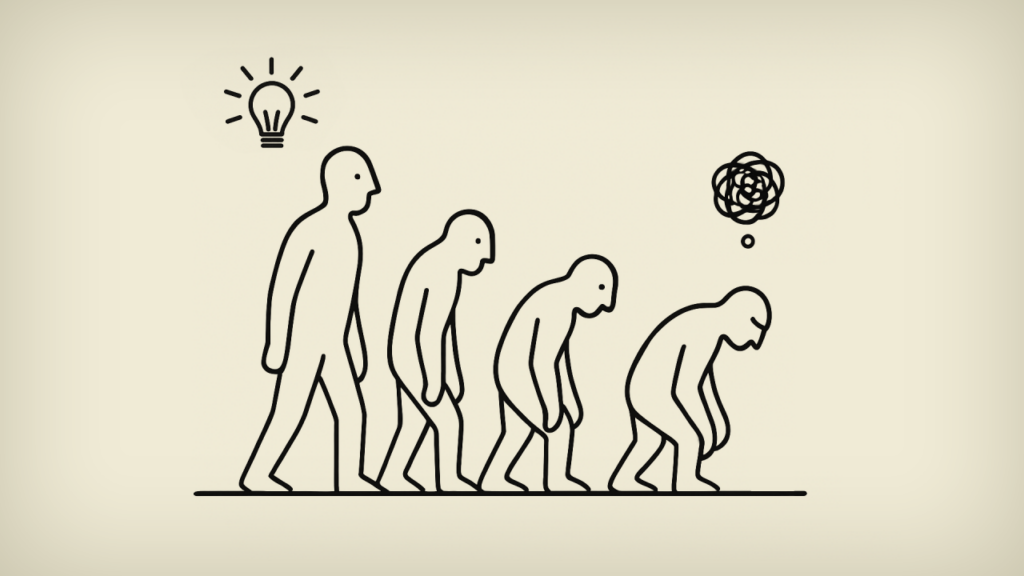
不完善的社会,并不会简单地让人“变坏”。它更深刻的作用在于:通过激励机制,慢慢塑造人的行为方式。它不需要人堕落,只需要让一种选择看起来更“理性”。
换句话说:它让短视,成为最理性的选择。
首先,它会制造“安全幻觉”。人们拼命积累可见资产,把房子、消费当作护城河,却忽略制度风险。一旦环境变化,焦虑迅速蔓延,进而转向犬儒或自保。
其次,它会奖励机会主义。当规则成本高、灰色路径回报高时,人们自然学会“绕开规则”,而不是依赖规则。久而久之,“守规则的人”反而被视为不够聪明。
再次,它会导致社会原子化。人们不再信任公共系统,不再参与公共事务,只把精力收缩到家庭与小圈子之中。社会信任被不断侵蚀。
最后,它会扭曲成功的定义。成功不再是长期价值与创造,而变成短期占有与生存能力。教育工具化,努力碎片化,人生被压缩在“当下可兑现”的范围内。
这些人,并非“道德败坏”。他们只是做出了在那个环境中看起来最理性的选择。但当这种选择成为普遍现象时,环境本身就会进一步恶化,形成循环。
五、从“适应者”到“建设者”:中产的关键转变
在这样的环境中,中产阶级往往会走向两种路径:一种是继续适应,在不确定中寻找生存空间;另一种,是开始意识到:问题不在于“我拥有多少”,而在于“我所处的规则是否可靠”。
这正是转变的起点。
历史经验表明,那些相对稳定、可持续发展的社会,并不是因为资源更丰富,而是因为逐步形成了一套被广泛接受的价值基础:自由、法治、权利、责任与参与。
这些原则,使个人不再只是自保者,而成为规则的共建者。
但这些价值并非凭空产生。正如 Max Weber 所分析的,它们背后有着更深的文化与信仰根基。
六、从制度到人心:一条更深的路径
如果说制度决定外在秩序,那么信念决定内在方向。
对我个人而言,这些价值之所以成立,并不只是因为它们“有效”,而是因为它们指向一种更深的根基——
人并不是终极标准,权力也不是。人之上,应当有更高的真理作为约束与指引。
基督信仰所强调的悔改、责任、人与人之间的平等,以及对真理的敬畏,使人不再只是为了自保而活,而愿意为更长远的秩序承担代价。
这也是为什么,真正的改变往往不是从制度开始,而是从人心开始。
当一个人开始承认自身的有限,愿意悔改,愿意按照更高的标准约束自己,他的行为方式就已经发生改变——不再只是计算得失,而是开始考虑正直、责任与长远。
这种转变,或许不会立刻改变环境,但会改变人与环境的关系。
结语
不完善的社会,往往培养出最理性、却也最短视的人。他们精于适应,却难以建设。
而一个更成熟的社会,需要的不是更多精明的个体,而是愿意承担、愿意守规则、也愿意为规则付出代价的人。
这种人,不只是制度的产物,更是内心选择的结果。
或许,对每一个人来说,真正的起点,并不在远方,而在当下——在一次诚实的反思,一次真实的悔改,一次不再随波逐流的选择之中。
当越来越多的人,从“如何保护自己”,转向“如何活得真实”,所谓的前途,才不再只是运气,而开始有了方向。
An Imperfect Society Cultivates the Most Rational Yet Most Shortsighted People
By HuSir
Wu Jinglian once pointed out: “The middle class in this foggy land is still very naive and unclear about where its fundamental interests lie. They think that as long as they have a house, drive a luxury car, and take care of their wife and children, everything will be fine. In reality, if society is imperfect, there is no guarantee for an individual’s future.”
This statement is sharp because it hits a reality that is often overlooked: personal security is never isolated; it is deeply embedded in the social system. In an environment where rules are unstable, even vast wealth may be only temporary possession; even the most respectable life may not withstand a single systemic fluctuation.
One: The Middle Class — Not “Rich People,” but “People Who Depend on Rules”
In everyday language, the middle class is often understood as an income bracket: owning a house, a car, a stable job, and living a decent life. But if we stop at this level, we cannot understand what Wu Jinglian means by “naive.”
The true significance of the middle class does not lie in how much they “possess,” but in their position in society. They are not the wealthiest group and cannot escape institutional risks; nor are they the bottom group, as they have already accumulated certain resources. They are precisely the group that most depends on the stability of rules.
Therefore, the core characteristics of the middle class can be summarized in three points: they have assets that need institutional protection; they have the cognition to understand the importance of rules; and they have anxiety, fearing uncertainty the most.
The problem arises right here — when a group depends most on rules but fails to truly recognize their importance, it mistakenly places its sense of security on “visible things”: houses, cars, consumption, and superficial respectability. Thus, security is “materialized” rather than “institutionalized.”
Two: So-Called “Fundamental Interests” Are Essentially the Predictability of Life
Many people think that the fundamental interest of the middle class is wealth growth. In fact, at a deeper level, what they truly need is something more basic: the predictability of life.
That is to say — today’s efforts will still be valid tomorrow; what has been gained will not be easily taken away; a child’s future will not depend on connections and chance; and personal destiny will not be suddenly interrupted by unpredictable forces.
In other words, the middle class is not simply pursuing “more,” but hoping that “everything they already have can continue to exist.” Therefore, those seemingly abstract institutional elements — property rights protection, rule of law, fair competition, and civil rights — all point to the same core: enabling people to dare to make long-term plans rather than being forced to live in short-term games.
Once this is missing, people instinctively turn to another choice: not building the future, but cashing in on the present as quickly as possible.
Three: What Can Ordinary People Directly Feel in a “Perfect Society”?
A “perfect society” is not merely perfection on paper in institutional texts; it is first and foremost a state that ordinary people can directly experience. It can roughly be summarized into three intuitive feelings: not fearing the future; not needing to please those in power; and not depending on luck to live.
For ordinary people, this means: a single accident will not completely destroy one’s life; children will still have the possibility of upward mobility; and conflicts can be resolved through rules rather than through endurance or confrontation.
For the middle class, this means: there is no need to pin all hopes on real estate or a single asset; there is no need to feel anxious due to policy uncertainty; and one can confidently make plans for ten or twenty years.
It can be said: whether a society is mature does not depend on how rich the rich are, but on whether ordinary people dare to plan their lives ten years from now.
Four: An Imperfect Society Systematically “Shapes” People
An imperfect society does not simply make people “bad.” Its deeper effect lies in slowly shaping people’s behavior through incentive mechanisms. It does not require people to degenerate; it only needs to make one choice appear more “rational.”
In other words: it makes shortsightedness the most rational choice.
First, it creates a “security illusion.” People desperately accumulate visible assets, treating houses and consumption as moats, while ignoring institutional risks. Once the environment changes, anxiety spreads rapidly, leading to cynicism or self-preservation.
Second, it rewards opportunism. When the cost of following rules is high and the returns from gray paths are high, people naturally learn to “bypass the rules” rather than rely on them. Over time, “those who follow the rules” are seen as not smart enough.
Third, it leads to social atomization. People no longer trust public systems, no longer participate in public affairs, and only shrink their energy to family and small circles. Social trust is constantly eroded.
Finally, it distorts the definition of success. Success is no longer long-term value and creation, but short-term possession and survival ability. Education becomes instrumentalized, efforts become fragmented, and life is compressed into the range of “what can be cashed in right now.”
These people are not “morally corrupt.” They have simply made the choice that seems most rational in that environment. But when this choice becomes widespread, the environment itself will further deteriorate, forming a vicious cycle.
Five: From “Adapters” to “Builders”: The Key Transformation of the Middle Class
In such an environment, the middle class often heads toward two paths: one is to continue adapting and seeking survival space amid uncertainty; the other is to begin realizing that the problem is not “how much I own,” but “whether the rules I live under are reliable.”
This is precisely the starting point of transformation.
Historical experience shows that those relatively stable and sustainable societies did not arise because resources were richer, but because they gradually formed a widely accepted set of value foundations: freedom, rule of law, rights, responsibility, and participation.
These principles transform individuals from mere self-protectors into co-builders of rules.
However, these values do not emerge out of thin air. As Max Weber analyzed, they have deeper cultural and faith roots behind them.
Six: From Institutions to the Human Heart: A Deeper Path
If institutions determine external order, then beliefs determine internal direction.
For me personally, these values hold not only because they are “effective,” but because they point to a deeper foundation —
Human beings are not the ultimate standard, nor is power. Above humanity, there should be a higher truth as constraint and guidance.
The Christian faith emphasizes repentance, responsibility, equality among people, and reverence for truth, enabling people to no longer live merely for self-protection but to be willing to pay the price for a longer-term order.
This is also why real change often does not begin with institutions, but with the human heart.
When a person begins to acknowledge his own limitations, is willing to repent, and is willing to discipline himself according to higher standards, his behavior has already changed — no longer merely calculating gains and losses, but beginning to consider integrity, responsibility, and the long term.
This kind of transformation may not immediately change the environment, but it will change the relationship between the individual and the environment.
Conclusion
An imperfect society often cultivates the most rational yet most shortsighted people. They are adept at adapting but find it difficult to build.
A more mature society does not need more shrewd individuals, but people who are willing to take responsibility, willing to follow rules, and also willing to pay the price for those rules.
Such people are not merely products of the system, but results of inner choices.
Perhaps, for every person, the true starting point is not in the distance, but in the present — in one honest reflection, one genuine repentance, and one choice to stop going with the flow.
When more and more people shift from “how to protect myself” to “how to live authentically,” what we call the future will no longer be mere luck, but will begin to have direction.