文 / HuSir
我们并非家族废墟上的修补匠,而是被迁入光明国度的自由人。父母的过错是他们生命中的荒漠,而我们可以选择不在那片荒漠里挖掘井水,而是去往神所应许的青草地。
父母长辈的“罪”在这一代人身上的体现,是许多人生命中难以回避的隐痛。童年时,我们常常因为父母或长辈的认知局限、时代压力、情感缺失,甚至无意的忽略与伤害,而留下深刻的创伤。这些创伤可能表现为被强迫走父母指定的道路、情感需求被忽视、体罚或冷暴力、甚至更严重的永久性伤害。长大后,这些经历往往演变为行为模式的深层影响:抑郁、焦虑、暴力倾向、过度沉默怕事、自我价值感低下、难以建立健康亲密关系……仿佛父母的“罪”像一道影子,笼罩着我们的一生,让人感觉无力挣脱。
这种现象在不同信仰中,有着截然不同的解释框架。先来看佛教的三世业力观。在佛教因果论中,业力是个人过去、现在行为的总和,会跨越三世(前世、今生、来世)产生果报。父母的恶业可能通过“共业”或“同业相引”的方式,影响子女的出生环境、遭遇或性格倾向。子女今生的苦难,有时被视为前世业力的延续,或父母业力的牵连,需要通过自身的行善、持戒、修行来“还债”或化解。同时,父母的业也会提醒我们:自己必须严守戒律,避免再给下一代种下恶因。
有些人在这样的理解框架中,容易产生一种感受:仿佛人生是一场漫长的偿还,苦难似乎带着某种难以改变的必然性。这样的观念一方面能解释某些家族模式的重复,也带来一种自律与责任感;但另一方面,也可能让人陷入沉重与无力之中,仿佛这一生都在为过去承担无法完全厘清的债。
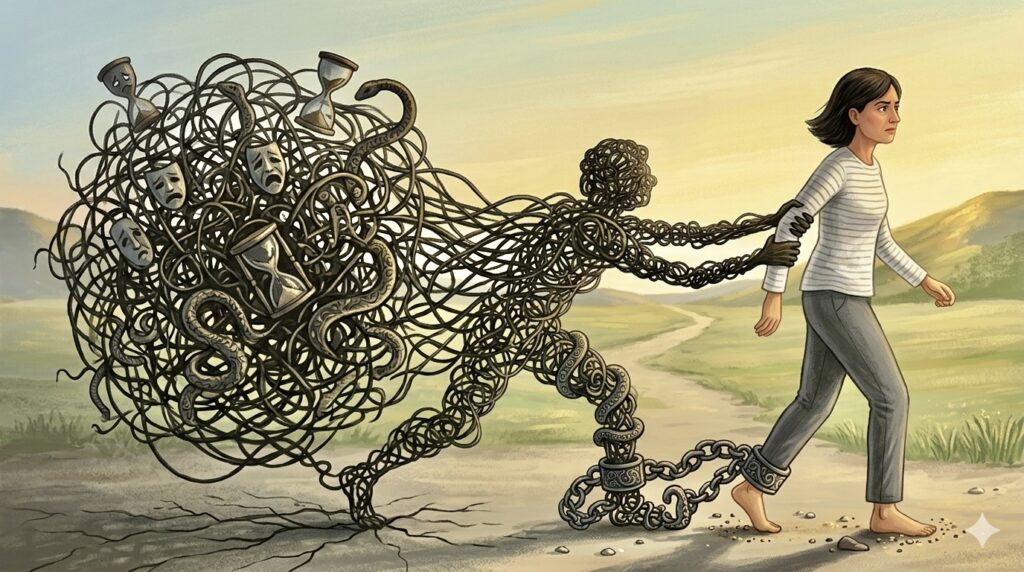
相比之下,基督教圣经对“罪的责任”有清晰而释放的宣告。旧约中虽有“恨我的,我必追讨他的罪,自父及子,直到三四代”(出埃及记20:5b)的经文,但这主要是针对持续悖逆上帝的群体性罪行,强调其后果可能在家族中延续,而非上帝直接把父亲的罪责转移给无辜的儿子。关键在于“恨我”——若后代继续效法同样的悖逆,才会承受类似后果;若他们转向神,就能脱离这种循环。
更直接的宣告在以西结书18章:“惟有犯罪的,他必死亡。儿子必不担当父亲的罪孽,父亲也不担当儿子的罪孽。义人的善果必归自己,恶人的恶报也必归自己。”(以西结书18:20)这节经文清楚地指出,每个人都要为自己的行为负责。上帝拒绝让人把困境完全归咎于祖先,而是呼召个人转向公义。
耶稣基督的救赎,更是彻底打破了这种“代际捆绑”。十字架上,祂“为我们的过犯受害,为我们的罪孽压伤。因祂受的刑罚,我们得平安;因祂受的鞭伤,我们得医治。”(以赛亚书53:5)我们不再是父母罪的延续,而是“在基督里新造的人,旧事已过,都变成新的了”(哥林多后书5:17)。
但这并不意味着过去的影响不存在,而是意味着——它不再拥有最终的定义权。我们仍然可以承认伤害的真实,却不必继续活在它的掌控之中。每个人最终向神交账的,是“自己的事”(罗马书14:12)。父母的罪,由他们在神面前承担(或在恩典中得赦免);我们不必背负他们的账单去“弥补”。
回到现实生活,这种信仰对比带来截然不同的出路。佛教的业力观提醒我们注意行为的长期影响,鼓励自律与慈悲,但也可能加重“此生为前人承担”的心理重量。基督教则带来一种更深层的自由:我们承认童年伤害的真实性,不否认痛苦,却不必活在永久的控诉或自怜之中。
基督里的自由,不是让我们否认伤害,而是让我们不再被伤害定义。
饶恕是关键——不是假装伤害不存在,也不是继续维持有害关系,而是把伤痛交给神,让祂医治(诗篇147:3 “祂医好伤心的人,裹好他们的伤处”)。饶恕父母,不等于他们无罪,而是释放我们自己,不让苦毒生根(希伯来书12:15)。
在基督里,代际创伤可以被转化为成长的材料。那些曾让我们自卑、愤怒、沉默的模式,不再是定罪我们的咒诅,而是圣灵可以更新的地方。我们可以操练新的回应:从怕事走向建立界限,从暴力倾向走向温柔坚定,从抑郁走向在基督里的盼望。
最终,我们不需要用一生的善行去“还父母的债”,而是按神的带领,对今天的选择负责——用健康的爱去对待自己的孩子,从而真正打破恶性循环。
亲爱的读者,如果你正活在这样的阴影中,请记住:你的生命不被父母的过去定义,乃被神的恩典重塑。把伤痛带到十字架前,求圣灵医治与更新。
你可以开始这样祷告:“主啊,我把童年的伤害交给祢,求祢医治我里面的伤口,帮助我饶恕,也赐我力量活出新生命。”
神是慈爱的父,祂乐意裹好我们的伤处,带领我们走向自由与盼望。
We Are Not Repairers of Our Parents’ Sins
—The Freedom and Healing of Being Transferred into the Kingdom of Light
By HuSir
We are not repairers of a family’s ruins, but people who have been transferred into the Kingdom of Light. Our parents’ failures belong to the deserts of their own lives; we do not have to dig wells in that desert, but may choose to walk toward the green pastures God has promised.
The manifestation of parents’ and elders’ “sins” in this generation is a hidden pain that many cannot avoid. In childhood, because of parents’ or elders’ limitations in understanding, pressures of their time, emotional absence, or even unintentional neglect and harm, deep wounds are often left behind. These wounds may take the form of being forced onto a path chosen by parents, emotional needs being ignored, corporal punishment or cold violence, or even more severe and lasting damage. As we grow up, these experiences often develop into deep behavioral patterns: depression, anxiety, tendencies toward violence, excessive silence and fear, low self-worth, and difficulty forming healthy intimate relationships. It is as if the “sins” of parents cast a shadow over one’s life, making it feel impossible to escape.
Such phenomena are explained very differently across belief systems. Let us first consider the Buddhist concept of karma across three lifetimes. In Buddhist causality, karma is the sum of a person’s past and present actions, producing consequences across past, present, and future lives. The negative karma of parents may influence their children’s environment, experiences, or personality through “shared karma” or karmic affinity. The suffering of a child in this life is sometimes understood as the continuation of past karma or the result of parental karma, requiring the individual to perform good deeds, observe discipline, and cultivate themselves to repay or resolve this debt. At the same time, the parents’ karma serves as a warning: one must carefully avoid creating further negative causes for the next generation.
Within such a framework, some people may develop a certain feeling: as if life were a long process of repayment, and suffering carried a kind of inevitability that is difficult to change. While this perspective can explain recurring family patterns and encourage discipline and responsibility, it can also lead to a heavy sense of burden and helplessness, as though one’s life is spent repaying debts that can never be fully understood.
By contrast, the Bible presents a clear and liberating declaration regarding responsibility for sin. In the Old Testament, although it is written, “visiting the iniquity of the fathers upon the children to the third and fourth generations of those who hate Me” (Exodus 20:5, NKJV), this refers primarily to persistent, collective rebellion against God, where the consequences of sin may continue within a family line—not that God directly transfers the guilt of the father onto an innocent child. The key phrase is “those who hate Me.” If later generations continue in the same rebellion, they bear similar consequences; but if they turn to God, they can break free from this cycle.
An even clearer declaration appears in Ezekiel 18:
“The soul who sins shall die. The son shall not bear the guilt of the father, nor the father bear the guilt of the son. The righteousness of the righteous shall be upon himself, and the wickedness of the wicked shall be upon himself.” (Ezekiel 18:20, NKJV)
This passage clearly affirms that each person is responsible for their own actions. God refuses to let people attribute their entire condition to their ancestors, but instead calls each individual to turn toward righteousness.
The redemption of Jesus Christ completely breaks this form of generational bondage. On the cross, “He was wounded for our transgressions, He was bruised for our iniquities; The chastisement for our peace was upon Him, And by His stripes we are healed.” (Isaiah 53:5, NKJV) We are no longer a continuation of our parents’ sins, but “a new creation in Christ; old things have passed away; behold, all things have become new.” (2 Corinthians 5:17, NKJV)
Yet this does not mean that past influences disappear. Rather, it means they no longer hold the final authority to define us. We can acknowledge the reality of our wounds without remaining under their control. Each person will give account to God for “himself” (Romans 14:12, NKJV). The sins of our parents are borne by them before God (or forgiven in His grace); we are not required to carry their debts or repair their failures.
Returning to real life, this difference in belief leads to entirely different paths forward. The Buddhist view of karma highlights the long-term consequences of actions and encourages discipline and compassion, but it can also increase the psychological weight of “repaying for the past.” Christianity, on the other hand, offers a deeper freedom: we do not deny the reality of childhood wounds, but neither are we condemned to live under accusation or self-pity.
Freedom in Christ does not mean denying the wound, but no longer being defined by it.
Forgiveness is central—not pretending the harm did not exist, nor maintaining harmful relationships, but entrusting the pain to God and allowing Him to heal it. “He heals the brokenhearted And binds up their wounds.” (Psalm 147:3, NKJV) Forgiving our parents does not mean they were without fault; it means releasing ourselves, so that bitterness does not take root (Hebrews 12:15, NKJV).
In Christ, generational wounds can be transformed into material for growth. The patterns that once led to inferiority, anger, or silence are no longer curses that condemn us, but areas where the Holy Spirit can bring renewal. We can begin to practice new responses: from fearfulness to healthy boundaries, from violent tendencies to gentle firmness, from depression to hope in Christ.
Ultimately, we do not need to spend our lives “repaying” our parents’ debts through good works. Instead, we are called to respond faithfully to what God places before us today—to love our children in a healthy way, and in doing so, truly break the cycle.
Dear reader, if you are living under such shadows, remember this: your life is not defined by your parents’ past, but reshaped by God’s grace. Bring your wounds before the cross, and ask the Holy Spirit for healing and renewal.
You may begin to pray: “Lord, I bring my childhood wounds to You. Please heal what is broken within me. Help me to forgive, and give me the strength to live a new life.”
God is a loving Father. He delights in binding up our wounds and leading us into freedom and hope.