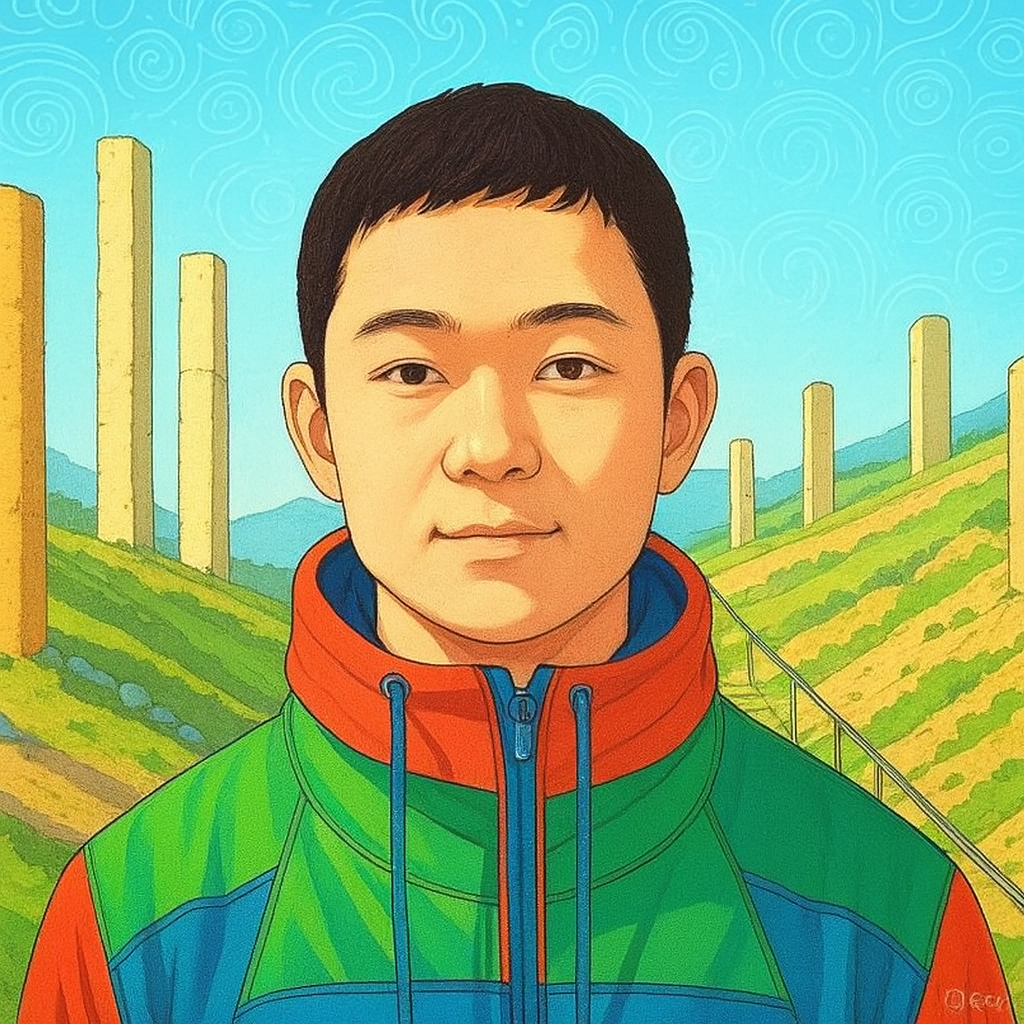

“不要试图去改变一个成年人,除非你有能力彻底打破他坚不可摧的原生家庭雕琢、漫长的学校教育刻画,周围排山倒海的群体影响力。面对成年人,你唯有取舍,无力改变。”
这是我在朋友圈里看到的一段话,先前也在其他地方见过类似的表达。的确,这句话道出了成年人那种感觉:既想在这个‘毛毛糙糙’的社会里寻找和自己情投意合的合作伙伴或朋友,但却像两个刺猬一样不敢轻易打开自己拥抱对方。我们受到的教育、和谐环境的要求与现实社会几乎是截然不同的两种境界,每个人对临到自己的人和事,在作出决定面对时都要提前想好收拾残局的权衡。尤其是在最近半个多世纪文明的土地上,更要小心翼翼,自己一旦没有了某些生存技巧,很容易成为‘社交’的牺牲品。每个成年人因着与众不同的复杂经历,也逐渐生出了一副与众不同的面孔和与之匹配的心理防护模式。所以孙教授这段话所说的‘改变’一个成年人,很多情况下是指那种一厢情愿的瞎忙活,能做对‘取’或‘舍’这道选择题就已是明智之举,至少可以避开80%以上的麻烦。我今天要谈的是在这样的情况下如何调整自己。
下面简要描述一下成年人所处的‘社会’对我们的要求和影响,再看看基督徒这个群体该有什么样的心态去面对,仅仅是随笔,供参考。
一、先说一下这个‘社会’对我们的要求和影响
我们常常把上述情况的成因归咎于社会,却忘记了其实我们每个个体都是社会的一部分。社会的各种要求,包括工作模式、消遣方式、以及如何与他人交往实际上是我们每个个体制定的规范,应用于每个原生家庭、各类学校、各种盈利团体等等。人们想要真正理解并实践自由交流和快乐的生活,关键不在于外部是否调和,而在于我们如何内在地认识和改变自己。通过深入观察自我,识别隐藏在日常选择和行为背后的自我,我们可以开始理解如何在不依赖外部结构的情况下,为自己和社会创造真正的变革。这需要我们超越表面的教育和社会化过程,这包括原生家庭根深蒂固的家族理念、后天那些与现实相悖的教育方式,甚至包括工作中来自于大环境的约束,问题在于:谁愿意为此改变?
话说回来,之所以说需要我们‘超越’这些我们称之为大环境的社会,原因很简单,因为千千万万个‘你’、千千万万个‘我’和千千万万个‘他’组成了这个社会,是千千万万个‘你、我、他’ 通过我们的野心、贪婪、嫉妒、暴力、腐败、恐惧等等创造了这个社会,因此所谓的‘超越’实际上是在说需要每个人去超越自己。受多年‘大一统’思想熏陶的人们,通过各种文化学说、宗教派别、科学手段、甚至政治手段试图达成的目标均会碰到一个坎儿,像弹簧一样的坎儿,那就是人的欲望。当一个人形成了一种他人无法撼动的行为模式时,并不是他看不懂、听不懂外来的声音,他不愿意因此改变是怕破坏了自己既得的欲望成果。所以当我们谈到社会对我们的影响时,不如说是千千万万个‘他人’不希望你撼动的欲望成果对你造成的影响。当你想改变社会、甚至改变其他人时,实际上是在改变他人赖以生存的欲望成果和因此形成的思维模式。明白了这一点,我们在作‘取’或‘舍’的选择时就有了方向和方法,甚至得出这个结论:我这么做不是多余吗?
二、基督门徒应有的态度
在满足或调整一个人的欲望方面,学术、法律、科学、政治、宗教等等都有相应的方法和策略,在此不再展开叙述。社会生活的高度概括称作哲学,哲学的最高纬度是宗教,宗教是人们信仰的具象化。
从基督门徒的视角看,社会的要求往往与物质世界的环境和个人利益紧密相关,如工作、消费和社交活动等。然而,这些要求可能与圣经教导的生活方式有所冲突。基督门徒被呼召追求更高的价值,如爱、服务和谦卑,这需要超越自我中心的行为和思考。真正的自由来自于与跟随上帝的关系中,依靠祂的恩典来实现个人乃至社会的改变。因此,基督门徒的挑战在于如何在属灵追求和世俗生活之间找到平衡,活出基督的样式,将神的爱带入我们所在的社会。
    基督门徒是一群蒙福的人组成的,但在这个物质世界中不可避免的与之融入并被感染和影响,甚至因某些羁绊慢慢将自己的信仰抛开。因为他们看到‘有其他信仰’的人在某些时间段反而过的比自己更‘惬意’,相信这种现象带来的困惑不在少数,可弟兄姐妹们想过没有,无论是谁、无论是物质世界里什么样的东西都是上帝所造的,人在地上的时间所做、所行都在祂的掌握之中,主的门徒不必‘嫉妒’,也不必处心积虑地考虑如何去做‘取’或‘舍’的选择题,无论遇到什么难题、疾病、患难......,始终按主的带领去做就行,“我一生一世必有恩惠慈爱随着我,我且要住在耶和华的殿中,直到永远。”(诗篇 23:6 和合本)
    对文章开头那段话提到的人,门徒尽可以为他们祷告,每个人的欲望成果也只有主可以掌控。“因为你的财宝在哪里,你的心也在那里。””(马太福音 6:21 和合本)你碰到的任何一个饱经沧桑的成年人,总有一天会意识到他所拥有的一切并不会随着人的心意给他们带来永恒的关怀,没有基督福音赐予的安宁,自己永远都会轮转于世俗的欲望之中。
    弟兄姐妹们,主耶稣来到这个世界上,祂的大能和救赎不是为了让我们冷漠的去做‘取’或‘舍’的选择题,祂希望我们认识祂、依靠祂,把心思意念放在祂所求所想的目标上,求祂带领我们行出爱心的传递,并影响更多的人愿意为此改变,愿意为基督而改变。
    请我们一起为此祷告。
(如有建议敬请留言讨论,邮箱:[email protected])
Who Should Change?
“Do not try to change an adult unless you have the ability to completely shatter the imprints of an unyielding original family, the lengthy molding of school education, and the overwhelming influence of surrounding social groups. When dealing with adults, you can only choose whether to act or not—you have no power to change them.”
I recently noticed these words shared in my social circle. I had seen similar expressions elsewhere before. Indeed, this statement encapsulates a familiar feeling among adults: the desire to find like-minded partners or friends in this “rough and tumble” society, yet being so guarded and cautious—like two hedgehogs unwilling to open up to each other for fear of being hurt. The expectations instilled by our education and the demands of a harmonious environment stand in stark contrast to the reality of modern society. Every adult, when facing people and situations, must weigh the potential consequences beforehand. Especially in the past half-century of civilization, one must tread very carefully; without certain survival skills, it is all too easy to become a casualty of “social interaction.” Due to our unique and often complex life experiences, each adult gradually develops a distinct persona along with corresponding psychological defense mechanisms. Thus, when Professor Sun speaks of “changing” an adult, in many cases he is referring to a one-sided and futile effort. Being able to correctly decide what to “keep or let go” is already wise—it can at least avoid over 80% of trouble. Today, I want to discuss how to adjust ourselves in such circumstances.
I. The Demands and Influences of Society
We often blame society for these conditions, forgetting that every one of us is an integral part of society. The various requirements of society—including work modes, forms of entertainment, and ways of interacting with others—are actually standards set by individuals and then applied to every family, school, profit-driven organization, etc. For people to truly understand and practice free communication and a joyful life, the key lies not in whether external circumstances are in harmony but in how we internally understand and change ourselves. By deeply observing our own nature and identifying the hidden self behind our daily choices and actions, we can begin to understand how to create genuine change for ourselves and society without relying solely on external structures. This requires that we go beyond the superficial education and socialization processes—including the deep-rooted family ideologies, the education methods that conflict with real-life, and even the constraints imposed by the broader environment. The real question is: Who is willing to change for this?
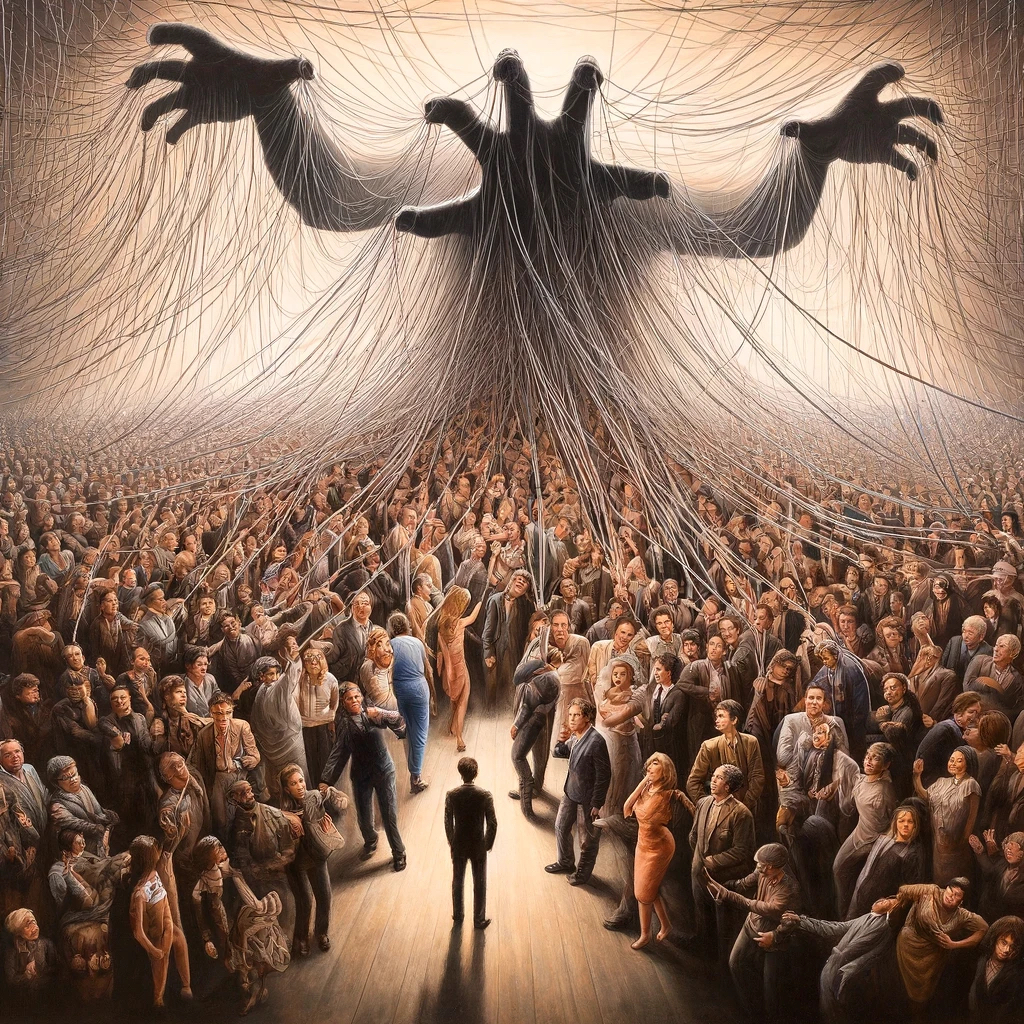
That being said, the reason we say that we need to “transcend” what we call the larger societal environment is simple: this society is made up of countless “yous,” “mes,” and “theirs.” It is these countless individuals—with their ambitions, greed, jealousy, violence, corruption, and fear—that have created our society. Therefore, “transcending” actually means that each person must transcend themselves. Those who have been steeped in a long tradition of a unified way of thinking, attempting to achieve goals through various cultural doctrines, religious sects, scientific methods, or even political strategies, inevitably encounter an obstacle—a spring-like barrier—which is human desire. When a person develops a behavioral pattern that others cannot shake, it is not because he is incapable of understanding or hearing external voices; rather, he is unwilling to change because he fears destroying the fruits of his established desires. Thus, when we speak of society’s influence on us, it is better understood as the influence of countless others who do not want you to disrupt the fruits of their desires. When you attempt to change society, or even change another person, you are, in effect, trying to alter the desire outcomes and the resultant mindset that others depend on for their survival. Once you understand this, you can determine both a direction and a method when making choices about what to “keep” or “let go.” You might even conclude: “Isn’t it unnecessary for me to do this?”
Image Interpretation: The accompanying image depicts the complex interplay between personal desires and societal influences. Every individual’s aspirations are entangled within a vast network that represents social norms and expectations, manipulated by the invisible forces of culture, education, and politics symbolized by a looming shadow over them. It illustrates the struggle of an individual trying to find personal freedom within the restrictions imposed by society—a struggle that shows that changing oneself, and by extension the environment, is both arduous and necessary.
II. The Attitude That Disciples Should Have
In addressing or adjusting a person’s desires, fields like academia, law, science, politics, and religion offer their own methods and strategies, but I will not elaborate on those here. The broadest summary of social life is called philosophy, and the highest dimension of philosophy is religion—religion being the embodiment of people’s faith.
From the perspective of a Christian disciple, societal demands are often closely tied to the material world and individual interests—such as work, consumption, and social activities. However, these demands might conflict with the lifestyle taught by the Bible. Christian disciples are called to pursue higher values such as love, service, and humility, which require us to go beyond self-centered behavior and thinking. True freedom comes from our relationship with God; it is through relying on His grace that we can bring about transformation on both a personal and societal level. Thus, the challenge for Christian disciples is to find balance between spiritual pursuits and worldly life—to live in a way that mirrors Christ, bringing God’s love into the society in which we live.
Disciples of Christ are a blessed people, yet in this material world they inevitably become integrated with and influenced by it. Sometimes, due to various entanglements, they gradually abandon their faith. Many become confused when they see that people of “other beliefs” sometimes appear to live more comfortably than they do. But, dear brothers and sisters, have you ever considered that regardless of who you are or what material things exist in this world, all are created by God? Everything we do during our time on earth is under His control. As disciples of the Lord, we do not need to be jealous, nor must we labor over how to choose between what to “keep” or “let go.” No matter what difficulties, diseases, or adversities we face, we should always follow the Lord’s lead:
“Surely goodness and mercy shall follow me All the days of my life; And I will dwell in the house of the Lord Forever.” (Psalms 23:6 NKJV)
For those mentioned in the opening words of this article, disciples may certainly pray for them, for only the Lord has control over each individual’s desired outcomes.
“For where your treasure is, there your heart will be also.” —Matthew 6:21 NKJV
Any hardened adult you meet will eventually realize that what they possess will not provide eternal care according to human will. Without the peace provided by the gospel of Christ, one will forever be caught in a cycle of worldly desires.
Brothers and sisters, when our Lord Jesus came into this world, His power and redemption were not meant for us to coldly wrestle with choices of what to “keep” or “let go.” He desires that we know Him, rely on Him, and set our hearts and minds on the goals He calls for. We should ask Him to lead us in living out love and to influence more people to be willing to change for the sake of Christ.
Let us pray together for this.
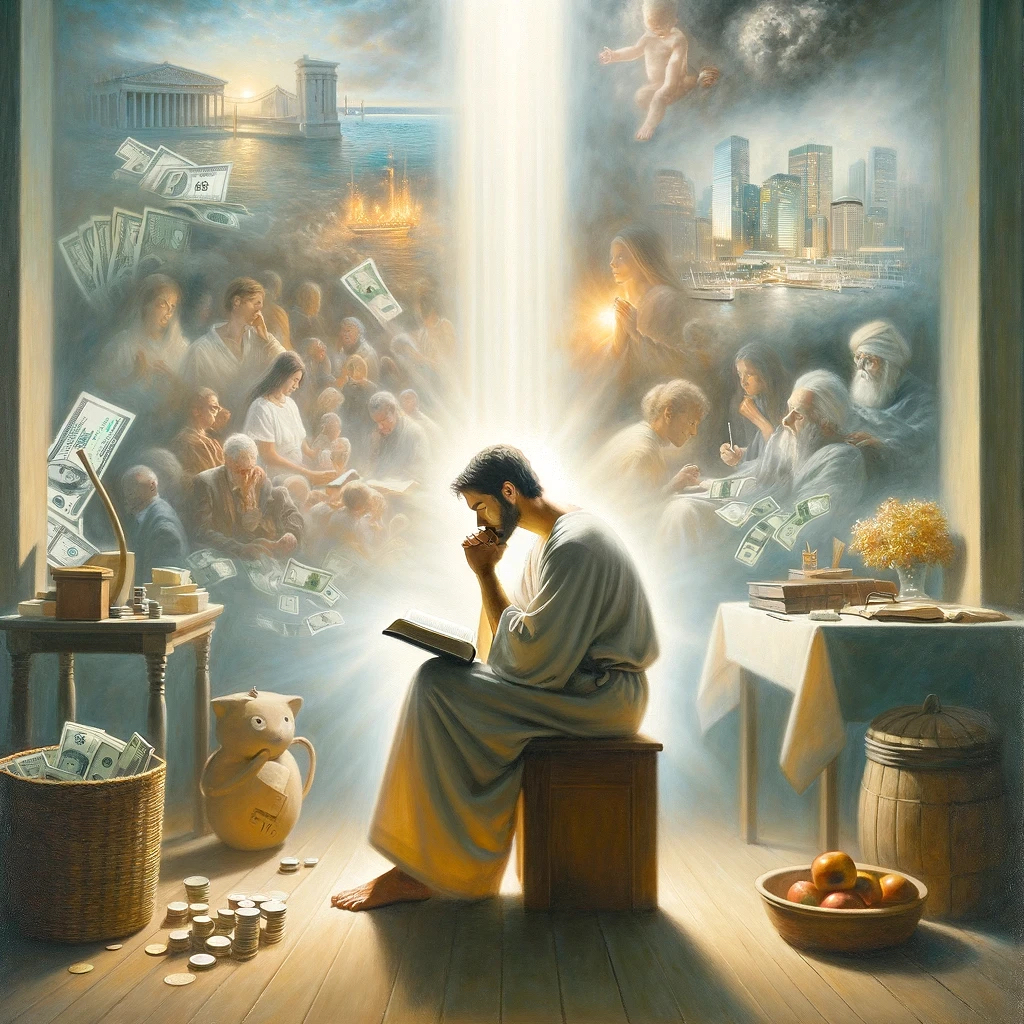
Image Interpretation: The painting depicts a Christian disciple deep in contemplation and prayer, surrounded by symbols of worldly desires and material wealth. The disciple sits in a quiet, simple setting holding a Bible, while blurred images of money, luxury items, and a bustling urban life represent the distractions of the material world. A beam of light shines upon the disciple, symbolizing God’s guidance and the spiritual path amidst worldly temptations.