文/HuSir
这两天,我的思想经历了一次很特别的转向。它不是突然发生的,也不是因为某一个观点被推翻,而是在一连串思考、讨论、写作和停顿之中,慢慢显露出来的。回头看,我才发现,这两天表面上是在谈信仰、谈《圣经》、谈社会、谈小说题材,实际上却是在重新整理我这些年写作的方向,也是在重新思想:一个经历过阴霾的人,究竟应该怎样继续书写神的恩典。
最开始的时候,我谈的是“有神”与“无神”的争论。这个问题似乎永远不会停止。说没有神的人常常会问:“神在哪里?你给我看看。”他们强调人的五官可以感知的世界,强调看得见、摸得着、可以测量、可以验证。而基督徒所谈论的神,却不是一个能够被放到显微镜下观察的物体,也不是一个可以被五官限定的存在。于是,双方看似在谈同一个问题,实际上往往并没有站在同一个起点上。
我越来越觉得,人真正应该做的,不是停留在“有神”还是“无神”的争论中,而是在有限的人生里寻找那位至高者。人的五官是有限的,人的理性也是有限的。一个人若不先承认自己的有限,便很难真正谦卑下来;而不谦卑下来,就很难认识神。认识神,不是为了赢得一场辩论,而是为了在祂面前重新认识自己,认识生命,认识罪,也认识恩典。
由此,我又谈到了谦卑。网上常常流传一些看似成熟的话,比如:“见过太多观点相悖,慢慢学会不争不辩。不是妥协,是明白每个人都困在自己的认知里,沉默,是成年人最好的体面。”这样的话乍一看很有道理,因为经历多了的人,确实会明白许多争论毫无意义。可是我也越来越觉得,如果一个人以“每个人都困在自己的认知里”为理由,从此停止思考、停止追问、停止寻求真理,那就不是谦卑,而是另一种认知上的封闭。
真正的谦卑,不是停止思考,而是承认自己还没有完全明白。真正的谦卑,不是把自己困在原来的认知里,而是在神面前不断被更新。人可以不为争胜而争辩,却不能停止对真理的追求;可以在无谓的纷争中保持沉默,却不能在神的呼召面前保持沉默。因为神赐给人的,不只是思考的能力,更是不断认识真理、修正自己、活出真理的生命。若因害怕争论而停止寻求,反而辜负了神所赐的恩典。
接着,我按照每年两遍读经的计划,读完了旧约最后一卷书——《玛拉基书》。读到最后一句:“他必使父亲的心转向儿女,儿女的心转向父亲,免得我来咒诅遍地。”我心里忽然有一种很深的感受。《玛拉基书》虽然短,却仿佛把整部旧约的信息浓缩在一起。回顾《摩西五经》、历史书、大小先知书,神不断呼唤以色列人回转;当他们远离神时,神管教他们,甚至借外邦民族的手惩戒他们;当他们愿意遵行神的话时,神又施恩、赐福、保护他们。
以前我总觉得,整部旧约主要是在讲律法、献祭、审判、悔改和恩典。可是这一次读到《玛拉基书》的结尾,我忽然发现,也许整部旧约一直在讲另一件更根本的事情——关系的恢复。人犯罪以后,首先破坏的是人与神的关系。亚当和夏娃躲避神,人与神之间出现隔阂;紧接着,人与人的关系也破裂,亚当推卸责任,该隐杀害亚伯,家庭开始出现裂痕,社会开始败坏,民族彼此争战。整部旧约看似充满律法、战争、献祭和审判,背后其实都是一个问题:人与神的关系出了问题,于是人与人、人与家庭、人与社会的关系都出了问题。
因此,《玛拉基书》最后没有继续谈祭物,没有继续谈圣殿,也没有继续谈战争和律法,而是把最后的话语放在一个家庭里面:“父亲的心转向儿女,儿女的心转向父亲。”这不是偶然。因为神知道,一个家庭若不能彼此相爱,一个社会也不可能真正彼此相爱;人与神若不能和好,人与人终究也无法真正和好。更让我深思的是,经文并不是只说儿女转向父亲,也不是只说父亲转向儿女,而是双方都要彼此转向。这正像神在《玛拉基书》中所说:“你们要转向我,我就转向你们。”神恢复关系,从来不是要求某一方单方面改变,而是呼召人彼此回转,也呼召人重新转向祂。
这使我更加清楚地看到,一个人的生命始终活在三种关系之中:人与神的关系,家庭成员彼此之间的关系,人与社会之间的关系。这三种关系不是孤立的,而是层层相连。人与神的关系,是生命的根;家庭关系,是生命的树干;人与社会的关系,是伸展出去的枝叶。根若健康,树干便有生命;树干健康,枝叶自然茂盛。如果人与神的关系出了问题,家庭迟早会受到影响,人与社会之间的关系也终将受到影响。
我也因此更深地理解了罪的果子。罪不仅仅是某一种行为,不仅仅是做错一件事,罪最终结出的果子,是关系的破裂。撒但更深的工作,也不仅仅是诱惑人犯某一个具体的错,而是借着人的骄傲、自私、恐惧、焦虑、苦毒和不信,破坏人与神之间的关系。当人与神渐渐疏远时,人便开始依靠自己的聪明、自己的能力、自己的利益,于是人与人的关系也开始破裂,家庭失去温暖,人与人失去信任,社会失去彼此相爱的能力。而神所做的工作,始终与这一切相反。祂呼召人回转,恢复人与神之间的关系,再借着人与神关系的恢复,修复家庭,修复人与人之间的关系,使恩典不断流向这个世界。
这几篇文章写下来,我本来已经感到很满足。可是随后,我又想到另一个题材:一个幽冥世界里,七十多年来无数非正常死亡的人在阎罗殿前打官司,要求返还寿命,要求投胎到别的地方,不愿再回到阴霾国。这个设定一开始很有吸引力。冥界可以有阎王、判官、鬼差、寿命返还诉讼、孟婆汤、投胎申请、幽冥旅馆、冥界律师、数据核查小组,甚至形成一个完整的冥界社会。它可以写成荒诞现实主义小说,也可以写成《阴霾国幽冥见闻录》这样的系列专栏。
可是越往下想,我越感到沉重。这个题材很大,很复杂,也很有文学潜力,但它需要构建一个完整的世界。它要写这些年来自阴霾国的冤屈、死亡、记忆、正义、诉讼、历史,也要写人心的愤怒和不甘。如果写得好,当然会有力量;但我也渐渐意识到,它仍然把我的笔带向阴霾,带向审判,带向无法平息的历史怨恨。虽然这不是没有意义,可是我心里忽然有一种提醒:神的恩典那么多,为什么我还要继续把主要精力放在幽冥和控诉之中?这难道不是神正在做的工吗?
就是在这个时候,我说出了一句话:“神的恩典那么多,我想换一个题材和角度,既可以广为流传,也可以宣扬主名。”这句话说出来以后,我自己心里也安静了许多。因为我意识到,这不是简单放弃一个小说题材,而是我的写作方向正在发生变化。过去,我常常记录阴霾,记录制度、人性、沉默、恐惧、权力、规则和苦难。这些当然都是真实的,而且我并不后悔写过它们。可是现在,我越来越觉得,仅仅记录阴霾是不够的。一个基督徒若只记录黑暗,而不记录神如何在黑暗中工作,那他的见证便是不完整的。
这几年,我经历了太多事情。家人相继重病,最后离世;自己经历心梗、高血压和身体的软弱;女儿远在海外,多年不能相见;工作几十年后慢慢退居二线;身边许多关系、环境和制度都在变化;高压的环境愈演愈烈。这些当然都是阴霾。可是如果只写这些,我的人生就会显得只有苦难、只有失去、只有现实的沉重。事实上,并不是这样。因为在这一切之中,神从来没有离开我。家人患病时,神没有离开;家人离世后,神没有离开;我身体软弱时,神没有离开;女儿远在他乡时,神没有离开;工作结束后,神也没有离开。
回头看,我这几年还能读经、祷告、写作、整理书稿、建立网站、出版十四本书,甚至借着AI这样的工具不断思考、整理、表达,这本身就是恩典的莅临。若没有神的保守,我可能早已被忧愁、焦虑、孤独、愤怒和失望压垮。可是神一步一步带领我,让我在阴霾中仍然能够写下文字,让我在失去中仍然能够看见恩典,让我在现实的沉重里仍然不失去对祂的信靠。
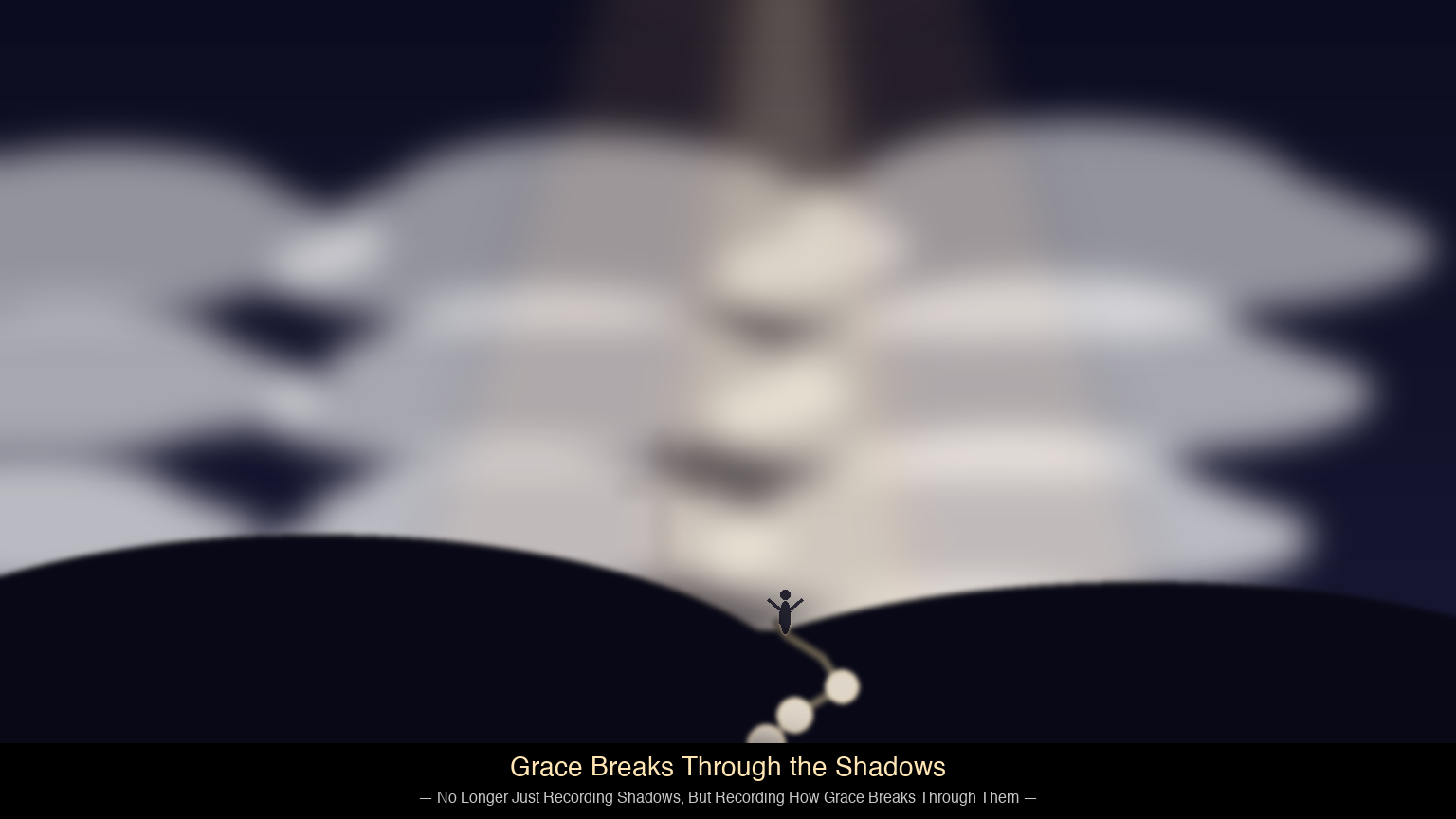
所以,我越来越觉得,我的笔以后不应该只是记录阴霾,更应该记录恩典如何穿过阴霾。阴霾是真实的,苦难是真实的,疾病是真实的,死亡是真实的,制度和人性的败坏也是真实的。但神的恩典同样真实,而且比阴霾更深、更久、更有力量。阴霾属于一个时代,恩典却贯穿人的一生;阴霾可能遮住天空,恩典却总能找到穿透阴霾的道路。
这并不意味着我以后不再观察现实,也不再写社会问题。真实本来就是信仰的一部分。基督信仰从来没有要求人闭上眼睛,只看见光明而不承认黑暗。《圣经》从来没有回避黑暗:有埃及的奴役,有旷野四十年,有巴比伦被掳,也有十字架上的苦难。可是《圣经》真正要写的,从来不是黑暗本身,而是神怎样在黑暗中工作。十字架不是终点,复活才是终点;被掳不是终点,归回才是终点;咒诅不是终点,关系的恢复才是神一直呼唤人的方向。
这也提醒我,写作不应该只是指出世界出了什么问题,更应该见证神如何在人出问题的世界里施行恩典。过去,我写阴霾国,写人性,写制度,写权力,写沉默,写责任,这些都仍然有价值。但如果这些文字最终不能把人带向盼望,不能让人看见神,不能让人意识到悔改、真实、信仰和自由,那么它们就容易停留在控诉之中。而控诉虽然必要,却不能成为生命的终点。
一个基督徒写作者,最深的责任不是制造愤怒,而是见证恩典;不是让人停留在阴霾里,而是让人看见穿过阴霾的光。真实的见证并不是粉饰苦难,而是在苦难中看见神的手;不是否认世界的破碎,而是在破碎中见证关系如何被神恢复;不是回避死亡,而是在死亡面前仍然相信生命的主权属于神。
也许,这就是我这两天思想经历的真正意义。我从“有神与无神”的争论,走到“谦卑不是停止思考”;从《玛拉基书》的最后一句,走到“旧约最后留下的不是咒诅,而是关系的恢复”;又从幽冥题材的沉重构思,走到“神的恩典那么多,我为什么不更多记录恩典?”表面上,这些题目互不相同;实际上,它们都在把我带向同一个方向:不要停留在阴霾之中,而要看见神如何穿过阴霾。
我想,这或许也是我未来写作应当更加明确的方向。不再只是记录阴霾,而是记录恩典如何穿过阴霾。不再只是写这个世界如何破碎,而是写神如何在破碎中修复关系。不再只是写人如何被恐惧、骄傲、自私和焦虑辖制,而是写人在神的带领下如何悔改、更新、恢复和重新得力。
如果有一天,我的女儿和后代读到这些文字,我希望他们看到的,不只是一个父亲曾经怎样观察时代,也不只是一个人曾经怎样经历失去和痛苦。我更希望他们看到,一个普通的基督徒,在人生后半程怎样一点一点明白:阴霾虽然真实,却不是故事的结局;神的恩典也真实,而且总是在最不容易看见的地方,悄悄穿过阴霾,照进人的生命。
我不会停止观察这个世界,因为真实本来就是信仰的一部分;但我也不愿再让阴霾成为文章的主角。真正值得不断书写的,是神如何一次又一次带领一个普通人走过人生的阴霾。因为终有一天,人们会忘记许多制造阴霾的人,也会忘记许多曾经压在人心上的黑暗年代;但神的恩典,却会一直留在人的记忆里,成为照亮后来者的光。
也许,这就是这两天神借着思考、读经和写作给我的提醒:我可以继续记录时代,但更要记录神的作为;我可以继续面对阴霾,但更要见证恩典的光。因为真正能够传下去的,不是阴霾本身,而是恩典如何穿过阴霾。
No Longer Just Recording the Shadows — But Recording How Grace Breaks Through Them
By HuSir
These past two days, my thinking has undergone something of a quiet shift. It didn’t happen all at once, nor was it the result of any single argument being overturned. It emerged slowly — through a chain of conversations, reflections, writing, and pauses. Looking back, I realize that what appeared on the surface to be discussions about faith, Scripture, society, and fiction was really something deeper: a reexamination of the direction my writing has taken over the years, and a fresh reckoning with what it means for someone who has walked through shadows to continue bearing witness to God’s grace.
It began with the old debate between belief and unbelief — a debate that never seems to end. Those who say there is no God often ask: “Where is He? Show me.” They appeal to what the five senses can perceive — the visible, the tangible, the measurable, the verifiable. But the God Christians speak of is not an object to be placed under a microscope, nor a being whose existence can be bounded by sensory perception. So the two sides appear to be discussing the same question, when in fact they are not even standing on the same ground.
I have come to feel, more and more, that what a person truly ought to do is not to remain stuck in the argument about whether God exists, but to seek the Most High within the brevity of their own life. Our senses are limited. Our reason is limited. A person who does not first acknowledge their own limitations will find it very difficult to become genuinely humble — and without genuine humility, it is very difficult to know God. Knowing God is not about winning a debate. It is about coming to know yourself, your life, your sin, and grace — in His presence.
From there, I turned to the question of humility. There is a kind of aphorism that circulates widely online: “I’ve seen too many opposing viewpoints, and slowly I’ve learned not to argue. It’s not compromise — it’s understanding that everyone is trapped inside their own cognition. Silence is the best grace an adult can offer.” On the surface, this sounds wise. Anyone who has lived long enough understands that many arguments are pointless. But I find myself increasingly troubled by it. If a person uses “everyone is trapped in their own cognition” as an excuse to stop thinking, stop questioning, stop seeking truth — that is not humility. It is another form of cognitive closure.
True humility is not the cessation of thought. It is the admission that you have not yet fully understood. True humility does not confine you to your original understanding; it allows you to be continually renewed before God. A person may refrain from arguing for the sake of winning, but they must not stop pursuing truth. They may remain silent in pointless disputes, but they must not remain silent before God’s calling. For God has given us not only the ability to think, but also the capacity to keep knowing truth, to keep correcting ourselves, and to live out that truth. To stop seeking simply out of a fear of argument is to squander the very grace God has given.
Then, following my practice of reading through the Bible twice each year, I finished the last book of the Old Testament — Malachi. I came to its final verse: “And he will turn the hearts of the fathers to the children, and the hearts of the children to their fathers, lest I come and strike the earth with a curse.” A deep feeling settled over me. Malachi is short, yet it seems to distill the entire message of the Old Testament into a single frame. Looking back over the Torah, the historical books, and the writings of the prophets, I see a pattern: God continually called Israel to return. When they strayed, He disciplined them — even using foreign nations to bring judgment. When they obeyed, He poured out grace, blessing, and protection.
I used to think the Old Testament was primarily about law, sacrifice, judgment, repentance, and grace. But reading Malachi’s closing words this time, I saw something else — something more fundamental. Perhaps the Old Testament has been about one thing all along: the restoration of relationship.
After the Fall, the first thing shattered was humanity’s relationship with God. Adam and Eve hid from Him. A rift opened between heaven and earth. Then, almost immediately, human relationships broke apart: Adam blamed Eve, Cain killed Abel. Families fractured. Society decayed. Nations warred against each other. The Old Testament may seem filled with laws, battles, sacrifices, and judgments — but underneath all of it is a single wound: humanity’s relationship with God had gone wrong, and so every other relationship — between people, within families, across societies — went wrong too.
That is why Malachi does not end with more talk about sacrifices, the temple, war, or the law. It ends with a family: “The hearts of the fathers to the children, and the hearts of the children to their fathers.” That is no accident. God knows that if a family cannot love one another, no society ever will. If people cannot be reconciled to God, they will never truly be reconciled to each other. And what struck me even more is that the verse does not say only that children must turn to fathers, nor only that fathers must turn to children. It says both must turn to each other. It echoes what God says earlier in Malachi: “Return to Me, and I will return to you,” says the LORD of hosts. God’s work of restoring relationship never demands unilateral change. It calls for mutual turning — toward each other, and toward Him.
This brought into sharper focus something I had been sensing for a while: every human life exists within three interwoven relationships — our relationship with God, our relationships within our families, and our relationships with the wider society. These are not separate; they are deeply connected. Our relationship with God is the root. Family relationships are the trunk. Society is the branches that extend outward. If the root is healthy, the trunk lives. If the trunk is healthy, the branches flourish. If our relationship with God is broken, the family will feel it, and in time, society will feel it too.
I came to understand the fruit of sin more deeply as well. Sin is not merely a behavior — not simply doing something wrong. The ultimate fruit of sin is the breaking of relationship. And Satan’s deeper work is not merely to tempt a person into a particular mistake, but — through pride, selfishness, fear, anxiety, bitterness, and unbelief — to slowly pry apart a person’s relationship with God. As that distance grows, people begin to rely on their own intelligence, their own strength, their own interests. And so human relationships begin to break down. Families lose their warmth. Trust between people erodes. Society loses its capacity for genuine love. And God’s work has always run in the opposite direction. He calls us to turn back. He restores our relationship with Himself, and then — through that restoration — He heals families and reconciles people to one another, so that grace may flow continually into this world.
After writing all of this, I felt a deep sense of satisfaction. But then another idea came to me — a piece of fiction. An underworld where, for more than seventy years, countless people who died unnatural deaths stand before the court of King Yama, demanding their lost years back, demanding to be reborn anywhere else, refusing to return to the Land of Shadows. The premise was compelling. The underworld could have its kings and judges and demon escorts, its lawsuits for life restitution, its Bowl of Forgetfulness, its reincarnation applications, its ghostly hostels, its underworld lawyers, its data verification committees — an entire society built in the shadows. It could become a work of absurdist realism, or a serial column: Tales from the Underworld of the Shadowlands.
But the more I thought about it, the heavier I felt. The subject is vast, complex, rich with literary potential. But it would require building an entire world. It would demand writing about grievances, death, memory, justice, litigation, and history — and also about human rage and refusal to let go. Done well, it would have power. But I gradually realized: it would still be leading my pen toward darkness. Toward judgment. Toward a history of grievances that cannot be settled.
It was at that moment that I said something aloud: “God’s grace is so abundant. I want to choose a different subject, a different angle — one that can reach many people and also proclaim His name.” The moment I said it, something settled in my heart. Because I recognized that this was not simply about abandoning a novel idea. It was about a change in the direction of my writing.
In the past, I have often written about shadows. About systems. About human nature. About silence. About fear. About power. About rules. About suffering. All of this is real, and I do not regret a word of it. But now I feel, more and more, that writing only about shadows is not enough. A Christian who records only the darkness, without recording how God works within it, bears an incomplete testimony.
These past few years, I have been through so much. Family members fell gravely ill, one after another, and then they were gone. I suffered a heart attack. High blood pressure. Physical weakness. My daughter has been far away, overseas, for years — we have not been able to see each other. After decades of work, I have gradually stepped back. So many relationships, environments, and systems have shifted around me. The pressure has only intensified.
All of this is shadow. But if I wrote only about these things, my life would appear to be nothing but loss, suffering, and the weight of circumstance. And that would not be true. Because through all of it, God has never left me. When my family was ill, God was there. When they passed away, God was there. When my body grew weak, God was there. When my daughter was far away, God was there. When my work came to an end, God was there.
Looking back, the very fact that I have been able, through these years, to read Scripture, to pray, to write, to compile manuscripts, to publish fourteen books, to build a website, and to keep thinking, organizing, and expressing — even with tools like AI — this itself is the arrival of grace. Without God’s sustaining hand, I would long ago have been crushed by sorrow, anxiety, loneliness, anger, and despair. But step by step, God has led me. He has let me go on writing, even in the shadows. He has let me see grace, even in loss. He has kept my trust in Him alive, even under the weight of reality.
So I feel more and more that my pen should no longer be given primarily to recording shadows. It should record how grace breaks through them.
The shadows are real. Suffering is real. Disease is real. Death is real. The corruption of systems and human nature is real. But God’s grace is equally real — and it runs deeper, lasts longer, and carries more power than any shadow. Shadows belong to an age. Grace runs through an entire life. Shadows may momentarily cover the sky, but grace always finds a way through.
This does not mean I will stop observing reality, or stop writing about social questions. Truthfulness is part of faith. The Christian faith has never asked anyone to close their eyes and see only light while denying the dark. Scripture never avoids darkness: there is slavery in Egypt, forty years in the wilderness, exile in Babylon, and the suffering of the cross. But what Scripture truly writes about is never the darkness itself. It writes about how God works within it. The cross is not the end. The resurrection is the end. Exile is not the end. Return is the end. The curse is not the end. The restoration of relationship — that is the thing God has been calling us toward all along.
This also reminds me that writing should not merely point out what is wrong with the world. It should bear witness to how God extends grace in a world where people have gone wrong. In the past, I wrote about the Land of Shadows, about human nature, about systems, about power, about silence, about responsibility. All of that still has value. But if these words ultimately do not lead readers toward hope, if they do not help people see God, if they do not awaken in them a recognition of repentance, truth, faith, and freedom — then they risk remaining trapped in accusation. And accusation, though sometimes necessary, cannot be the final destination of a life.
A Christian writer’s deepest calling is not to manufacture outrage. It is to bear witness to grace. Not to leave people stranded in the shadows, but to help them see the light that breaks through. True testimony does not whitewash suffering. It sees God’s hand within it. It does not deny the brokenness of the world. It witnesses, within that brokenness, how God restores relationship. It does not avoid death. It affirms, in the face of death, that the sovereignty of life belongs to God.
Perhaps this is what these past two days have truly meant. I moved from the debate between belief and unbelief, to the recognition that humility is not the end of thinking. I moved from the final verse of Malachi, to the realization that the Old Testament does not end with a curse — it ends with the restoration of relationship. I moved from the weight of an underworld novel, to the quiet conviction that God’s grace is so abundant — why not write more about it?
On the surface, these were separate subjects. But underneath, they were all pulling me in the same direction: do not stay in the shadows. See how God breaks through them.
I think this is the direction my writing should take from now on. No longer just recording the shadows — but recording how grace breaks through them. No longer writing only about how the world is broken — but writing about how God repairs relationships within that brokenness. No longer writing only about how people are bound by fear, pride, selfishness, and anxiety — but writing about how, under God’s leading, they repent, are renewed, restored, and strengthened.
If someday my daughter and my descendants read these words, I hope they will see more than a father who once observed his times. More than a man who once experienced loss and pain. I hope they will see an ordinary Christian who, in the latter half of his life, came to understand, little by little: the shadows are real, but they are not the end of the story. God’s grace is also real — and it always finds a way, in the places we least expect, to break quietly through the shadows and shine into a human life.
I will not stop observing this world — because truthfulness is part of faith. But I no longer want the shadows to be the main subject of what I write. What is truly worth writing about, again and again, is how God leads an ordinary person, time after time, through the shadows of life. Because one day, people will forget many of those who created the shadows. They will forget many of the dark ages that once pressed down on the human heart. But God’s grace will remain in human memory — a light for those who come after.
Perhaps this is what God has been showing me, these past two days, through thinking and Scripture and writing: I can go on recording the times. But I must record God’s work even more. I can go on facing the shadows. But I must bear witness, even more, to the light of grace. Because what will truly be passed down is not the shadow itself. It is how grace broke through.
发表回复