文 / HuSir
在生命最幽暗的谷底,我们往往会被迫去思考一个终极命题:如果肉体的倒计时无法停下,那我们这一生到底留下了什么?尤其是面对亲人的时候。
记得我在近四年前,与一位身患绝症的至亲有过一次长谈。她一生虔诚,即便在病痛折磨、体力每况愈下的时刻,她对关心、探望她的姊妹,依然在传递耶稣的恩典;交通过程中的谈话,依然是在关心他人的灵魂,鼓励身边的人信靠主,去胜过面前的试炼。
那次通话中,我一边听着她讲述治疗的过程,一边也能清楚地感受到她身体的虚弱。作为至亲,我当然惧怕失去她;但我也同样担心,她会因为对“寿命”的不确定,而在内心产生隐约的恐惧。正是在这样一种复杂的情绪中,我没有直接去安慰她,而是选择用一种更委婉的方式,对她说出了我当时的一个体会——关于“生命的两重寿命”。
我对她说,一个人的寿命,其实可以从两个层面去理解:一是肉体的寿命,二是灵魂的寿命。她听完之后,是理解的,也表示认可。那一刻,我们并没有更多的解释,却在彼此之间,获得了一种安静而真实的力量。
经过这么长时间才重新想起这段对话,并不是遗忘,而是一种自然的沉淀。我渐渐意识到,这段话不仅是当时给她的安慰,也许同样可以成为对更多人的一种提醒。
第一重寿命:随遇而安的肉体
我们每个人都拥有一段生物意义上的寿命。是的,我说的是每个人,包括我,也包括看到此文的弟兄姐妹。它受限于基因、环境、疾病,或许也与人自身的生活方式与选择有关。在这一重生命中,人常常不自觉地与时间对抗,希望延长、控制、甚至扭转既定的轨迹。
但当人真正走到生命的边缘时,才会慢慢明白,肉体的寿命,并不完全掌握在我们手中。
因此,“随遇而安”,并不是一种消极的放弃,而是一种与生命规律的和解。承认肉身的有限,接纳它的衰老与凋零,是让人从紧绷与恐惧中慢慢松开的过程。
随遇而安,是给疲惫的肉体一份温柔的允许,让它在有限的岁月中,不再背负过重的焦虑,而是带着一种更平和的心,走完应走的路。
第二重寿命:光芒万丈的灵魂
然而,人之所以为人,并不只在于肉体的存在。我们还有另一重更深的生命——灵魂的寿命。
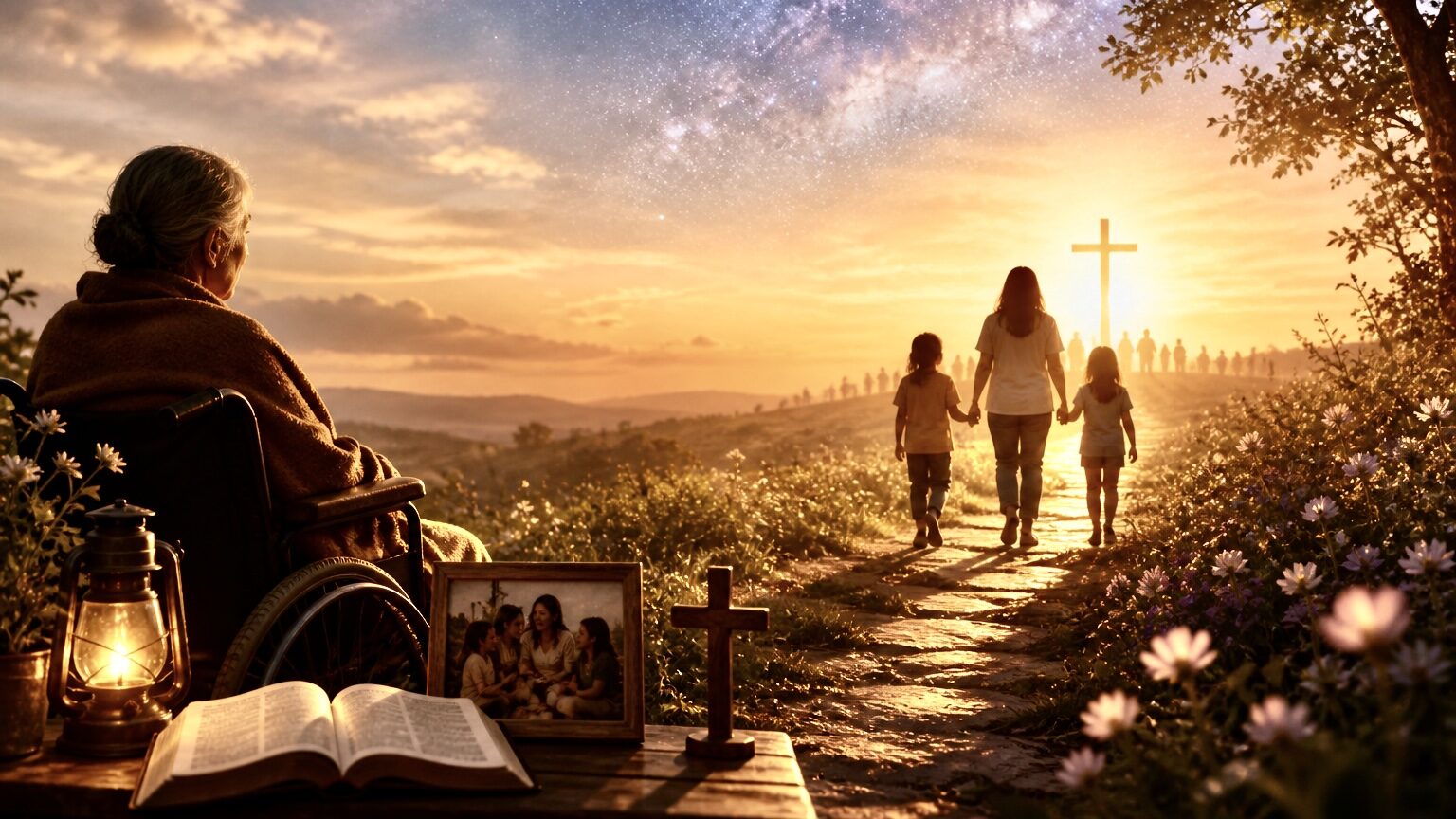
有些人虽然肉体寿命并不长,但他们的一生却在不断追求信仰的升华,在为他人播种希望。正如我的这位至亲,她的一生就像一棵果实累累的树:她不仅自己热心学习圣经、践行爱心,也不断带领他人认识基督,教人学会爱与交托,将自己的生命真实地分享给那些内心干渴的人。
不仅如此,她还热心参与国内外的宣教事工,将信仰带到更需要的地方。即便在身体日渐衰弱的日子里,她仍然没有停止关心他人、鼓励他人。
这种生命,是“灿烂”的。
这种灿烂,不在于她活了多少年,而在于她的生命曾真实地影响了多少人。那些因她而获得平安的人,那些因她而重新思考信仰的人,都是她灵魂寿命的一部分延续。
真正的圆满:在告别中看见永恒
当一个人的灵魂已经“果实累累”时,肉体的离去,就不再只是一个终点,而更像是一种完成。
对于离开的人来说,身体的衰败不再那么令人恐惧,因为她知道,自己已经在这个世界留下了不只是痕迹,而是一种真实的生命影响。
对于留下的人来说,分离的痛苦依然存在,但这种痛苦,不再只是失去,而也包含着一种继承——我们会在她留下的生命中,继续获得力量。
于是,告别不再只是断裂,而成为一种延续。
结语
生命的长度,或许由天定;但生命的厚度与亮度,却与人的灵魂有关。
如果你正处在身体的软弱之中,或正在面对与亲人的告别,请试着换一个角度去看待“寿命”这件事。
当爱仍在传递,当信仰仍在发光,当一个人的生命仍在影响他人时,这样的生命,并不会因为肉体的结束而消失。
肉体可以随遇而安,
灵魂却可以持续发光。
而这,或许才是生命真正的意义。
The Two Lifespans of Life: Seeing the Brilliance of the Soul as the Body Fades
By HuSir
At the darkest valley of life, we are often forced to confront an ultimate question: if the countdown of the physical body cannot be stopped, then what, in the end, does our life leave behind? Especially when facing our loved ones.
About four years ago, I had a long conversation with a close relative who was suffering from a terminal illness. She had lived a devout life. Even as she endured pain and her physical strength steadily declined, she continued to share the grace of Jesus with the sisters who cared for and visited her. In her conversations, she was still concerned about the souls of others, encouraging those around her to trust in the Lord and overcome the trials before them.
During that phone call, as I listened to her talk about her treatment, I could clearly sense her physical weakness. As someone close to her, I naturally feared losing her. But at the same time, I was also concerned that she might carry an unspoken fear about her own “lifespan.” In such a mixture of emotions, I did not comfort her directly. Instead, I chose a more indirect way to share with her a reflection I had at that moment—about what I call “the two lifespans of life.”
I told her that a person’s lifespan can actually be understood on two levels: the lifespan of the body and the lifespan of the soul. After hearing this, she understood and agreed. In that moment, we did not elaborate further, yet we both gained a quiet and genuine sense of strength.
The reason I recall this conversation only after such a long time is not because I had forgotten it, but because it had been quietly settling within me. Gradually, I realized that these words were not only meant to comfort her at that time, but might also serve as a reminder for many others.
The First Lifespan: The Body, at Peace with What Comes
Each of us possesses a biological lifespan. Yes, I mean everyone—including myself, and including every brother and sister reading this. It is shaped by genetics, environment, disease, and perhaps also by one’s own lifestyle and choices. Within this dimension of life, people often unconsciously struggle against time, hoping to extend, control, or even reverse its course.
But when a person truly approaches the edge of life, they begin to understand that the lifespan of the body is not entirely within our control.
Therefore, “accepting what comes” is not a passive resignation, but a reconciliation with the nature of life itself. To acknowledge the limits of the body, to accept its aging and decline, is to gradually loosen the tension and fear within us.
To accept what comes is to grant the weary body a gentle permission—to no longer carry excessive anxiety, but to move through its limited years with a more peaceful heart.
The Second Lifespan: The Radiance of the Soul
Yet what makes us human is not merely the existence of the body. We possess another, deeper life—the lifespan of the soul.
Some people may not live long physically, yet their lives are devoted to the pursuit of faith and the sowing of hope in others. Just like my relative, her life was like a tree full of fruit: she not only studied the Scriptures diligently and practiced love, but also led others to know Christ, teaching them to love and to entrust their lives to Him, sharing her own life openly with those who were spiritually thirsty.
Moreover, she was actively involved in both domestic and overseas missionary work, bringing faith to places where it was most needed. Even as her body grew weaker, she never stopped caring for and encouraging others.
Such a life is “brilliant.”
This brilliance does not lie in how many years she lived, but in how many lives she truly touched. Every person who found peace through her, every person who rediscovered faith because of her, becomes a continuation of the lifespan of her soul.
True Fulfillment: Seeing Eternity in Farewell
When a person’s soul has already borne abundant fruit, the departure of the body is no longer merely an ending, but more like a completion.
For the one who leaves, the decline of the body is no longer something to fear, because she knows that she has left behind not just traces, but a real and lasting impact.
For those who remain, the pain of separation still exists. But that pain is no longer only about loss—it also carries a sense of inheritance. We continue to receive strength from the life she has left behind.
Thus, farewell is no longer simply a rupture, but becomes a continuation.
Conclusion
The length of life may be determined by heaven, but the depth and brightness of life are determined by the soul.
If you are experiencing physical weakness, or facing the farewell of a loved one, try to look at “lifespan” from a different perspective.
As long as love continues to be passed on, as long as faith continues to shine, as long as a person’s life continues to influence others, such a life does not truly end with the body.
The body can accept what comes,
but the soul can continue to shine.
And perhaps this is the true meaning of life.