
(转发文章)
马太福音 5:1-12 是耶稣登山宝训的开篇,在中文和合本中被译为“八福”(实际上是九句祝福宣告)。许多汉语基督徒读这段经文时,常因翻译的语义差异而产生误解。例如,“虚心的人有福了”里的“虚心”,在现代汉语里常被理解为“谦虚谨慎、客客气气”,这与希腊原文的深刻含义相去甚远。原文是希腊文(Koine Greek,新约通用希腊语),耶稣时代的地中海地区常用语。为了帮助大家更准确地明白主耶稣的原意,本文将逐一列出每句福分的希腊原文关键词(附英文音译和对应英文圣经常用译法),并结合古典希腊语、七十士译本(旧约希腊文译本)及新约上下文,重新解释其真实含义。
希腊文中,每句开头都是 Μακάριοι(makarioi,英文:blessed / happy in a divine sense),意思不是“运气好”或“世俗幸运”,而是神亲自宣告的、源于天国、超越环境的内在喜乐与蒙福状态——一种清澈、平静、被神充满的福分,仿佛神说:“你已经蒙福了!”这福分不是靠行为赚取,而是靠圣灵在基督里活出来的生命品格。下面我们逐一来看。
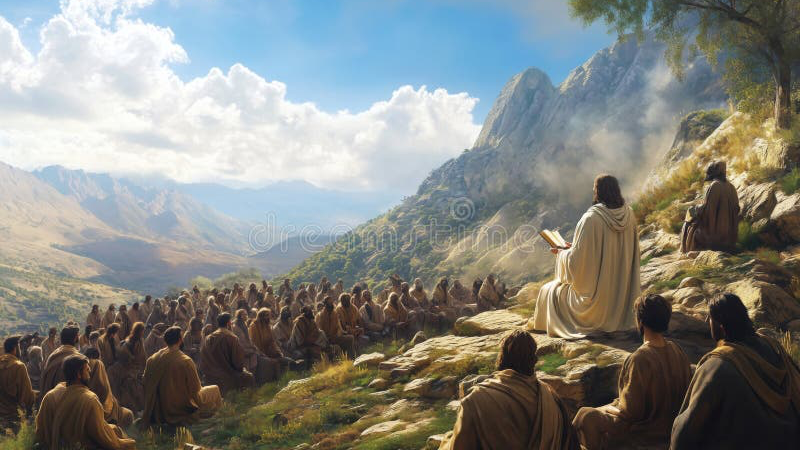
1. “虚心的人有福了,因为天国是他们的。”(太 5:3)
希腊原文:Μακάριοι οἱ πτωχοὶ τῷ πνεύματι(ptōchoi tō pneumati,英文:the poor in spirit)。
关键词 πτωχοὶ(ptōchoi,英文:poor / beggarly)本义是“极度贫穷的乞丐、彻底破产、一无所有、必须跪地求乞的人”。古典希腊语中,它描述一个人完全失去依靠、蜷缩在尘土中等待施舍的状态——不是“谦虚谨慎”,而是灵里彻底破产、承认自己在神面前一无所有。
真实含义:有福的不是“懂礼貌的谦和人”,而是那些深刻认识到“靠自己灵里赤贫、无法自救”的人。他们不再自以为灵里富足(参启 3:17),而是像乞丐一样完全仰望神的怜悯。这样的人,天国现在(希腊文现在式 ἐστιν)就已是他们的产业。今天许多基督徒常说“我还不够虚心”,其实正是这种“灵里贫乏”的起点——这是进入天国的第一把钥匙。
2. “哀恸的人有福了,因为他们必得安慰。”(太 5:4)
希腊原文:Μακάριοι οἱ πενθοῦντες(penthountes,英文:those who mourn)。
关键词 πενθοῦντες(penthountes,英文:mourning / grieving)是现在分词,指持续、深切哀悼,古典用法常指为死亡、罪恶或与神隔绝而发出的悲恸哭泣(七十士译本中以色列常为罪哀恸)。
安慰一词 παρακληθήσονται(paraklēthēsontai,英文:they will be comforted)是将来被动式,意思是“将被神亲自呼召到身边得安慰”(圣灵正是“保惠师”Paraclete)。
真实含义:有福的不是“情绪低落的人”,而是为自己的罪、为世界的败坏、为教会的不忠而持续哀恸的人。神应许他们必得神亲自的安慰。在今日纷乱的世界,这不是软弱,而是通往神安慰的门。
3. “温柔的人有福了,因为他们必承受地土。”(太 5:5)
希腊原文:Μακάριοι οἱ πραεῖς(praeis,英文:the meek / the gentle)。
关键词 πραεῖς(praeis,英文:meek / gentle)古典希腊语中专指一匹强壮战马被完全驯服——力量强大,却被主人掌控得温顺有力,不是软弱无力。圣经中对应旧约“谦卑人”(ānāw),如摩西(民 12:3)。
真实含义:这正是许多人误解的第一福时想到的那种“自身拥有强大力量,却克制主观意愿、甘心顺服主人旨意而表现出的克制与礼貌”——但它对应的是“温柔”(meek),而非“虚心”。有福的不是“老好人”或“好欺负的人”,而是内心刚强却不靠自己争竞、完全依靠神的人。他们“必承受地土”(κληρονομήσουσιν τὴν γῆν,英文:inherit the earth),得着神永远的应许产业。今天我们祷告求“温柔”,其实就是在求这种“驯服的刚强”。
4. “饥渴慕义的人有福了,因为他们必得饱足。”(太 5:6)
希腊原文:Μακάριοι οἱ πεινῶντες καὶ διψῶντες τὴν δικαιοσύνην(peinōntes kai dipsōntes tēn dikaiosynēn,英文:those who hunger and thirst for righteousness)。
关键词 πεινῶντες καὶ διψῶντες(peinōntes kai dipsōntes,英文:hungering and thirsting)是现在分词,形容像快饿死、渴死的人般极度强烈的渴望;δικαιοσύνην(dikaiosynēn,英文:righteousness)指神的完全公义、合乎神标准的生命状态。
饱足 χορτασθήσονται(chortasthēsontai,英文:they will be filled)指“被喂饱到完全满足”,如牲畜吃饱草料。
真实含义:不是“有点想做好人”,而是对神的公义有生死攸关般渴望的人。神必亲自充满他们。今天“义”被稀释的时代,这福分呼召我们把渴慕神的公义当成生命必需品。
5. “怜恤人的人有福了,因为他们必蒙怜恤。”(太 5:7)
希腊原文:Μακάριοι οἱ ἐλεήμονες(eleēmones,英文:the merciful)。
关键词 ἐλεήμονες(eleēmones,英文:merciful)源自 ἔλεος(eleos,英文:mercy),指主动、具体的怜恤行动,不只是同情心。
真实含义:不是“心软好人”,而是主动向罪人、弱者施怜恤的人。神应许“他们必蒙怜恤”——这是神圣的相互回应。今天教会中,怜恤不是可选美德,而是天国子民的标记。
6. “清心的人有福了,因为他们必得见神。”(太 5:8)
希腊原文:Μακάριοι οἱ καθαροὶ τῇ καρδίᾳ(katharoi tē kardia,英文:the pure in heart)。
关键词 καθαροὶ(katharoi,英文:pure / clean)指“纯净、无掺杂”(如 catharsis“净化”),καρδίᾳ(kardia,英文:heart)是内心最深处、意志核心。
真实含义:不是“思想单纯”,而是内心专一、没有被世界或私欲玷污的人。他们“必得见神”(ὄψονται τὸν θεόν,英文:they will see God)——今生灵里亲近、将来荣耀中面对面。今天媒体纷扰的时代,这福分是“单单寻求神”的呼召。
7. “使人和睦的人有福了,因为他们必称为神的儿子。”(太 5:9)
希腊原文:Μακάριοι οἱ εἰρηνοποιοί(eirēnopoioi,英文:the peacemakers)。
关键词 εἰρηνοποιοί(eirēnopoioi,英文:peacemakers)是罕见复合词(eirēnē“平安”+ poieō“制造”),指主动制造和平、促成和解的人,像神一样化解冲突。
真实含义:不是“老好人不惹事”,而是积极在家庭、教会、社会中带来和解的人。他们“必称为神的儿子”——彰显父的性情。今天分裂时代,这福分是基督徒的使命标记。
8. “为义受逼迫的人有福了,因为天国是他们的。”(太 5:10)
希腊原文:Μακάριοι οἱ δεδιωγμένοι ἕνεκεν δικαιοσύνης(dediōgmenoi heneken dikaiosynēs,英文:those who are persecuted for righteousness’ sake)。
关键词 δεδιωγμένοι(dediōgmenoi,英文:persecuted)是完成分词,本义“已被追赶、猎捕如猎物”。
真实含义:不是“自找苦吃”,而是因坚守神的公义(而非个人私利)遭受逼迫的人。天国现在已是他们的(与第一福呼应)。受逼迫不是失败,而是天国公民的印记。
9. “人若因我辱骂你们,逼迫你们,捏造各样坏话毁谤你们,你们就有福了……”(太 5:11-12)
希腊原文延续 Μακάριοι 结构,加上 ἕνεκεν ἐμοῦ(heneken emou,英文:for my sake / because of me)。
真实含义:这是第八福的高潮。有福的不是泛泛“受苦者”,而是因基督的名被辱骂、毁谤时,仍欢喜快乐(χαίρετε καὶ ἀγαλλιᾶσθε,英文:rejoice and be glad)的人。因为他们在天上的赏赐极大,与历代先知同列。今天面对文化压力,这福分教导我们以基督为中心看待受苦——不是受害者心态,而是得胜的喜乐。
总结:八福的整体图画与今日呼召
这九句福在希腊原文中形成严谨的对称结构(前四与后四呼应,头尾都说“天国是他们的”),描绘的不是世俗成功者的画像,而是天国子民的真实品格:灵里贫乏(poor in spirit)、哀恸罪恶(mourning)、力量受控的温柔(meek)、渴慕公义(hungering for righteousness)、怜恤他人(merciful)、内心纯净(pure in heart)、主动造和平(peacemakers)、为基督受苦仍喜乐(persecuted for my sake)。
在世界眼中,他们看似“失败者”;在神眼中,他们却是“何等有福”——因为神国已属于他们,神亲自安慰、满足、看见、称他们为儿子,并赐天上大赏赐。
亲爱的汉语基督徒弟兄姊妹,这些福分不是要努力做到的品行清单,而是靠圣灵在基督里自然活出的生命状态。它彻底颠覆了中文文化中“成功=有福”“温柔=软弱”“虚心=客套谦虚”的误解,反而呼召我们:承认灵里贫乏、甘心力量受控、渴慕神的公义……最终,这一切都指向耶稣自己——祂是完全活出八福的那一位(太 11:29)。
愿我们今日在祂里面,也得着这真实的、永恒的福分。阿们!
附:以下是《马太福音》第5章3-12节“八福”的希腊文原文(不含中文,看一下原文词语的排列)
Μακάριοι οἱ πτωχοὶ τῷ πνεύματι, ὅτι αὐτῶν ἐστιν ἡ βασιλεία τῶν οὐρανῶν.
μακάριοι οἱ πενθοῦντες, ὅτι αὐτοὶ παρακληθήσονται.
μακάριοι οἱ πραεῖς, ὅτι αὐτοὶ κληρονομήσουσιν τὴν γῆν.
μακάριοι οἱ πεινῶντες καὶ διψῶντες τὴν δικαιοσύνην, ὅτι αὐτοὶ χορτασθήσονται.
μακάριοι οἱ ἐλεήμονες, ὅτι αὐτοὶ ἐλεηθήσονται.
μακάριοι οἱ καθαροὶ τῇ καρδίᾳ, ὅτι αὐτοὶ τὸν Θεὸν ὄψονται.
μακάριοι οἱ εἰρηνοποιοί, ὅτι αὐτοὶ υἱοὶ Θεοῦ κληθήσονται.
μακάριοι οἱ δεδιωγμένοι ἕνεκεν δικαιοσύνης, ὅτι αὐτῶν ἐστιν ἡ βασιλεία τῶν οὐρανῶν.
Rediscovering the “Eight Beatitudes” of the Sermon on the Mount: Their True Meaning from the Original Greek
(Shareable Article)
Matthew 5:1-12 marks the beginning of Jesus’ Sermon on the Mount. In the Chinese Union Version, it is commonly called the “Eight Beatitudes” (though there are actually nine pronouncements of blessing). Many Chinese-speaking Christians misunderstand parts of this passage due to differences in translation and modern word usage. For example, the phrase “虚心的人有福了” (“Blessed are the poor in spirit”) is often understood in contemporary Chinese as “humble and courteous people,” which is quite far from the profound meaning in the original Greek. The original text is in Koine Greek—the common language of the Mediterranean world in Jesus’ time. To help readers grasp the Lord’s original intent more accurately, this article lists the key Greek words for each Beatitude (with English transliteration and the common English rendering), drawing on classical Greek, the Septuagint (the Greek translation of the Old Testament), and New Testament context.
In the Greek text, every Beatitude begins with Μακάριοι (makarioi, English: “blessed” or “happy in a divine sense”). This does not mean “lucky” or “fortunate in worldly terms,” but rather a deep, inner joy and blessed state declared by God Himself—a clear, calm, God-filled happiness that transcends circumstances. It is as if God is saying, “You are already blessed!” This blessing is not earned by human effort but is the natural character produced by the Holy Spirit in Christ. Let us examine each one.
1. “Blessed are the poor in spirit, for theirs is the kingdom of heaven.” (Matthew 5:3 NKJV)
Greek: Μακάριοι οἱ πτωχοὶ τῷ πνεύματι (ptōchoi tō pneumati, English: the poor in spirit).
Key word: πτωχοὶ (ptōchoi, English: poor / beggarly) literally means “extremely poor beggars, completely bankrupt, having nothing, forced to kneel and beg.” In classical Greek, it describes someone who has lost all support and crouches in the dust waiting for handouts. It is not “modest and courteous,” but spiritually bankrupt—fully acknowledging one’s utter poverty before God.
True meaning: The blessed are not “polite and humble people,” but those who deeply realize they are spiritually destitute and cannot save themselves. They no longer consider themselves spiritually rich (cf. Revelation 3:17) but, like beggars, completely depend on God’s mercy. For them, the kingdom of heaven is theirs right now (Greek present tense ἐστιν). Many Christians today say, “I am not poor in spirit enough,” yet this very awareness is the starting point—the first key to entering the kingdom of heaven.
2. “Blessed are those who mourn, for they shall be comforted.” (Matthew 5:4 NKJV)
Greek: Μακάριοι οἱ πενθοῦντες (penthountes, English: those who mourn).
Key word: πενθοῦντες (penthountes, English: mourning / grieving) is a present participle indicating continual, deep mourning. In classical usage, it often refers to lamenting over death, sin, or separation from God (the Septuagint frequently uses it when Israel mourned over sin).
The word for “comforted,” παρακληθήσονται (paraklēthēsontai, English: they will be comforted), is future passive, meaning “they will be called to God’s side and comforted” (the Holy Spirit is precisely the “Paraclete” or Comforter).
True meaning: The blessed are not “emotionally downcast people,” but those who continually mourn over their own sin, the corruption of the world, and the unfaithfulness of the church. God promises they will receive God’s personal comfort. In today’s chaotic world, this is not weakness but the doorway to divine consolation.
3. “Blessed are the meek, for they shall inherit the earth.” (Matthew 5:5 NKJV)
Greek: Μακάριοι οἱ πραεῖς (praeis, English: the meek / the gentle).
Key word: πραεῖς (praeis, English: meek / gentle) in classical Greek specifically refers to a powerful warhorse that has been fully tamed—strong yet under complete control by its master, gentle yet still full of power. It is not weakness. In Scripture, it corresponds to the Old Testament “humble” (ānāw), as with Moses (Numbers 12:3).
True meaning: This is exactly the quality many people mistakenly associate with the first Beatitude: possessing great inner strength yet restraining one’s own will, gently submitting to the Master’s will in a controlled and courteous manner. However, it belongs to “meek” (meek), not “poor in spirit.” The blessed are not “nice guys” or “pushovers,” but those whose hearts are strong yet do not strive in their own strength—they fully rely on God. They “shall inherit the earth” (κληρονομήσουσιν τὴν γῆν, English: inherit the earth), receiving God’s eternal promised inheritance. When we pray for “meekness” today, we are actually asking for this “tamed strength.”
4. “Blessed are those who hunger and thirst for righteousness, for they shall be filled.” (Matthew 5:6 NKJV)
Greek: Μακάριοι οἱ πεινῶντες καὶ διψῶντες τὴν δικαιοσύνην (peinōntes kai dipsōntes tēn dikaiosynēn, English: those who hunger and thirst for righteousness).
Key words: πεινῶντες καὶ διψῶντες (peinōntes kai dipsōntes, English: hungering and thirsting) are present participles describing an extreme, life-or-death craving, like someone about to starve or die of thirst. δικαιοσύνην (dikaiosynēn, English: righteousness) refers to God’s perfect righteousness and a life fully aligned with God’s standard.
“Filled” — χορτασθήσονται (chortasthēsontai, English: they will be filled) means “to be fed until completely satisfied,” like livestock filled with fodder.
True meaning: It is not “somewhat wanting to be good,” but having a desperate, survival-level hunger and thirst for God’s righteousness. God Himself will fill them completely. In an age when “righteousness” is diluted, this Beatitude calls us to treat hunger for God’s righteousness as an essential of life.
5. “Blessed are the merciful, for they shall obtain mercy.” (Matthew 5:7 NKJV)
Greek: Μακάριοι οἱ ἐλεήμονες (eleēmones, English: the merciful).
Key word: ἐλεήμονες (eleēmones, English: merciful) comes from ἔλεος (eleos, English: mercy) and refers to active, concrete acts of mercy, not just sympathy.
True meaning: The blessed are not “soft-hearted nice people,” but those who actively show mercy to sinners and the weak. God promises, “they shall obtain mercy”—a divine, reciprocal response. In the church today, mercy is not an optional virtue but a mark of kingdom citizens.
6. “Blessed are the pure in heart, for they shall see God.” (Matthew 5:8 NKJV)
Greek: Μακάριοι οἱ καθαροὶ τῇ καρδίᾳ (katharoi tē kardia, English: the pure in heart).
Key words: καθαροὶ (katharoi, English: pure / clean) means “pure, unmixed” (as in catharsis—“purification”). καρδίᾳ (kardia, English: heart) refers to the deepest core of one’s inner being and will.
True meaning: It is not “simple-mindedness,” but singleness of heart, untainted by the world or selfish desires. They “shall see God” (ὄψονται τὸν θεόν, English: they will see God)—intimate fellowship now and face-to-face in glory later. In today’s distracting media age, this Beatitude is a call to seek God alone.
7. “Blessed are the peacemakers, for they shall be called sons of God.” (Matthew 5:9 NKJV)
Greek: Μακάριοι οἱ εἰρηνοποιοί (eirēnopoioi, English: the peacemakers).
Key word: εἰρηνοποιοί (eirēnopoioi, English: peacemakers) is a rare compound word (eirēnē “peace” + poieō “to make”) meaning those who actively create peace and bring reconciliation, acting like God in resolving conflict.
True meaning: The blessed are not “people who avoid trouble,” but those who proactively make peace in families, churches, and society. They “shall be called sons of God”—displaying the Father’s character. In today’s divided world, this is a mark of the Christian mission.
8. “Blessed are those who are persecuted for righteousness’ sake, for theirs is the kingdom of heaven.” (Matthew 5:10 NKJV)
Greek: Μακάριοι οἱ δεδιωγμένοι ἕνεκεν δικαιοσύνης (dediōgmenoi heneken dikaiosynēs, English: those who are persecuted for righteousness’ sake).
Key word: δεδιωγμένοι (dediōgmenoi, English: persecuted) is a perfect participle literally meaning “having been hunted and chased like prey.”
True meaning: The blessed are not “those who invite trouble,” but those who suffer persecution precisely because they uphold God’s righteousness (not personal gain). The kingdom of heaven is theirs now (echoing the first Beatitude). Persecution is not defeat but the seal of kingdom citizenship.
9. “Blessed are you when they revile and persecute you, and say all kinds of evil against you falsely for My sake. Rejoice and be exceedingly glad, for great is your reward in heaven…” (Matthew 5:11-12 NKJV)
Greek continues the Μακάριοι structure, adding ἕνεκεν ἐμοῦ (heneken emou, English: for my sake / because of me).
True meaning: This is the climax of the eighth Beatitude. The blessed are not general “sufferers,” but those who, when reviled and slandered because of Christ’s name, still “rejoice and be exceedingly glad” (χαίρετε καὶ ἀγαλλιᾶσθε, English: rejoice and be glad). Their reward in heaven is great, placing them in the company of the prophets of old. In today’s cultural pressures, this Beatitude teaches us to view suffering with Christ at the center—not with a victim mentality, but with victorious joy.
Summary: The Overall Picture of the Beatitudes and Today’s Calling
These nine blessings form a carefully balanced structure in the original Greek (the first four and latter four correspond, with “theirs is the kingdom of heaven” framing the whole). They do not portray worldly successful people but the true character of kingdom citizens: poor in spirit, mourning over sin, meek (strength under control), hungering for righteousness, merciful, pure in heart, peacemakers, and rejoicing even when persecuted for Christ’s sake.
In the eyes of the world, they may look like “losers.” In God’s eyes, they are profoundly blessed—because the kingdom already belongs to them, God personally comforts and fills them, they see Him, are called His sons, and receive great heavenly reward.
Dear Chinese-speaking brothers and sisters in Christ, these Beatitudes are not a checklist of behaviors to strive for, but the natural life character produced by the Holy Spirit living in Christ. They completely overturn common Chinese cultural misunderstandings such as “success equals blessing,” “meekness equals weakness,” or “poor in spirit equals polite humility.” Instead, they call us to: acknowledge our spiritual poverty, willingly place our strength under God’s control, and hunger for His righteousness… Ultimately, all of this points to Jesus Himself—He is the One who perfectly lived out every Beatitude (Matthew 11:29).
May we, today, also receive this true and eternal blessing in Him. Amen!