
文/HuSir
在前两篇中,我们谈到了语言回归和食物回归。这些都是生活中最基本、最日常的层面。当我们把目光转向健康时,同样会发现:表面的进步之下,有些最根本的需求仍然没有得到充分保障。
我们不追求什么宏大的医疗体系叙事,只希望每一个人——无论贫富、无论身处何地——在生病时都能有平等的机会得到治疗,不要因为药费不足而在医院里失去生命。这应该是一个正常法治社会里公民最朴素、也最基本的期待和权利。
这些年,国家通过药品集采和医保谈判,大幅降低了许多常用药的价格,这确实减轻了不少家庭的负担。但在慢性病和慢特病的实际治疗中,很多患者却感受到另一种现实。
集采政策旨在让更多人用得起药,但在执行过程中,部分进口原研药逐渐被替换为国产替代药。一些患者和医生反映,部分国产替代药与原进口药相比,在疗效稳定性或个体适应性上存在明显差异。患者为了达到理想的治疗效果,有时不得不自费购买医保目录外的进口药,这又增加了额外的经济负担。
我自己就是一个普通的例子。我有高血压,心脏支架手术后,需要每天同时服用四种药控制血压。医院在此次医改后逐步将原来的进口药全部替换为国产药,其中倍他洛克的国产替代版本对我几乎没有明显效果。血压控制不理想,只能再想其他办法,到药店自费购药。这不是个案,很多慢性病患者都有类似经历:药价降了,但治疗效果打了折扣,为了把病管好,只能额外自费。
对于癌症、罕见病或其他需要长期治疗的慢特病患者,情况往往更艰难。一些救命的创新药或特效药,即使经过谈判降价,仍有较高自费部分;部分患者因为负担不起,只能选择效果较差的替代方案,或者干脆放弃规范治疗。医院有时受成本控制影响,诊疗决策也难免受到掣肘。最终,普通家庭面对重病时,最怕的还是“一病返贫”,甚至因为药费问题而延误最佳治疗时机。
这些痛点,本质上不是医疗技术不够先进,而是底层逻辑出现了偏差:医疗不应以利益或单纯成本控制为首要驱动,而应以患者实际疗效和生命尊严为中心。物质层面的医保覆盖率提升了,但“病有所医”的真实感受,却在很多普通人那里打了折扣。我们以为医疗已经很方便了,却在平等就医机会和不因药费殒命这个最基本的需求上,仍与那些医疗保障更注重个体差异和疗效连续性的地方存在着巨大差距。
为什么这些问题难以彻底解决?
根本原因仍然与资本逐利和制度设计有关。在集采等政策推动下,药价大幅下降,但部分替代药的疗效一致性评估和个体差异考虑还不够细致深入。同时,医院运行中的成本压力,也让“以患者为中心”的原则有时面临现实挑战。患者端的反馈渠道,以及相关社会组织从患者实际体验出发提出约束和改进意见的作用,也还不够有力。
我们并非否定医保和集采带来的积极一面。真正的健康回归,需要回归到以患者为中心:让每一种药的选择都优先考虑实际疗效,而非单纯价格;让慢特病患者在医保框架内有更多稳定、有效的选择;让医院的诊疗不再过多受成本考核左右;让患者有更透明的知情权和合理的自费缓冲机制。
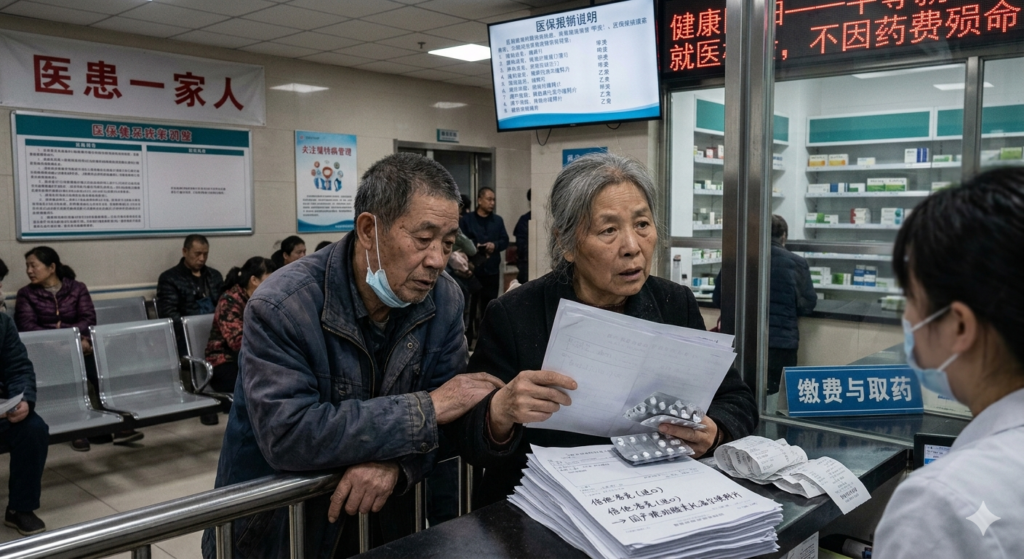
另外,医护人员面对患者的态度也是一个值得关注的问题。绝大多数医护人员为了避免日后出问题时被追究“不按流程治疗”的责任,连一些可以给患者提供的便利方法也不予提供。因为怕担责任,所有的治疗严格按照医院规章制度执行,几乎没有通融的余地(当然,除非关系熟络)。面对患者的治疗和护理,往往是冷冰冰的面孔和标准流程。今天许多知名医院的前身是上世纪初的教会医院,那种“爱人如己”的医护精神如今在这些医院里已难以寻觅。医院宣传的“医患一家人”与实际的医患关系形成了强烈的对比。
语言回归在这里同样关键。只有我们敢于在日常中说真话——和医生诚实沟通用药感受、在家庭中讨论真实负担、理性表达对疗效差异的担忧——问题才有可能被看见并逐步改进。不只是患者一方,医护人员及其管理人员是否也该反思这些问题,回归到真实的人性,回归到医院建立的初衷呢?
普通人改变不了整个医疗体系,但我们可以从自己和小范围开始:
- 看病时,医生和患者之间可以坦诚讨论用药后的真实感受,共同面对问题;
- 在力所能及范围内,保留一些自费购买有效药物的选项,同时支持更注重疗效一致性的政策改进;
- 在家庭和朋友圈,实事求是地分享慢性病管理的经历,让更多人知道真实情况,而不是只说“医保挺好的”;
- 医疗系统更需要反思和回归建立医院的初衷,而不是沿着资本的指引经营——要知道,医护人员自身也是这个需要回归社会的一分子。
当越来越多的人把真实体验说出来,信号就会慢慢传递上去,推动医疗向“人人有机会平等就医、不因药费失去生命”的方向靠近。
这只是回归系列的第三篇。后续我们还会继续讨论其他基本层面的回归。
心中有数,理性前行。
(案例来源于公开报道及个人真实经历,仅供参考。文章旨在客观分析与个人反思。)
相关阅读:
回归系列之一:从语言开始——说真话,才能真正反思(EN ver. inside)
回归系列之二:食物回归——吃得放心,不昧良心(EN ver. inside)
回归系列之四:权利的回归——让真话有空间,让情感被看见(EN ver. inside)
Return Series No. 3: Health Regression — Equal Opportunity for Medical Care, Without Losing Life Due to Inability to Afford Medicine
By HuSir
In the first two articles, we discussed language regression and food regression. These are the most basic and everyday aspects of life. When we turn our attention to health, we similarly discover that beneath the surface of progress, some of the most fundamental needs have not yet been fully guaranteed.
We are not pursuing any grand narrative about the medical system. We simply hope that every person — regardless of wealth or location — can have an equal opportunity to receive treatment when ill, and will not lose their life in the hospital due to inability to afford medicine. This should be the most simple and basic expectation and right of citizens in a normal society under the rule of law.
In recent years, the state has significantly reduced the prices of many commonly used medicines through volume-based procurement and medical insurance negotiations. This has indeed eased the burden on many families. However, in the actual treatment of chronic and special chronic diseases, many patients experience a different reality.
The volume-based procurement policy aims to make medicine affordable for more people. Yet during implementation, some imported original drugs have gradually been replaced by domestic alternatives. Some patients and doctors report that certain domestic substitute drugs show noticeable differences compared to the original imported drugs in terms of efficacy stability or individual adaptability. In order to achieve the desired therapeutic effect, patients sometimes have to pay out-of-pocket for imported drugs not covered by medical insurance, which adds an extra economic burden.
I am an ordinary example myself. I have hypertension and, after undergoing cardiac stent surgery, need to take four kinds of medicine every day to control my blood pressure. Following the recent medical reform, the hospital gradually replaced all the original imported drugs with domestic ones. Among them, the domestic version of Betaloc has almost no obvious effect on me. My blood pressure control is unsatisfactory, so I have no choice but to find other solutions and purchase medicine out-of-pocket at the pharmacy. This is not an isolated case; many patients with chronic diseases have similar experiences: drug prices have decreased, but the treatment effect has been discounted. In order to manage the illness properly, they have to pay extra out-of-pocket.
For patients with cancer, rare diseases, or other chronic conditions requiring long-term treatment, the situation is often even more difficult. Some life-saving innovative or specialty drugs, even after price negotiations, still require a relatively high out-of-pocket portion. Some patients, unable to afford the cost, can only choose less effective alternatives or even give up standardized treatment altogether. Hospitals, sometimes constrained by cost controls, inevitably face limitations in clinical decision-making. Ultimately, when ordinary families face serious illness, what they fear most is “falling back into poverty due to one illness,” or even missing the best treatment window because of drug costs.
These pain points are essentially not due to insufficiently advanced medical technology, but because the underlying logic has deviated. Medical care should not be primarily driven by profit or pure cost control, but should center on patients’ actual therapeutic outcomes and the dignity of life. While the material-level medical insurance coverage rate has increased, the real feeling of “medical care for all who are ill” has fallen short for many ordinary people. We think medical care has become very convenient, yet in the most basic needs of equal opportunity for medical treatment and not losing life due to inability to afford medicine, we still have a huge gap compared with places where medical security pays more attention to individual differences and continuity of efficacy.
Why are these problems so difficult to solve completely?
The fundamental reasons are still related to capital’s profit-seeking nature and institutional design. Under policies such as volume-based procurement, drug prices have dropped sharply, but the consistency evaluation of efficacy for some substitute drugs and consideration of individual differences are still not detailed and thorough enough. At the same time, cost pressures in hospital operations sometimes make the principle of “patient-centered care” face practical challenges. Feedback channels from the consumer side (patient side), as well as the role of relevant social organizations in putting forward constraints and improvement suggestions based on patients’ actual experiences, are also not strong enough.
We do not deny the positive aspects brought by medical insurance and volume-based procurement. True health regression requires returning to a patient-centered approach: letting the choice of every medicine prioritize actual efficacy rather than pure price; giving patients with chronic and special diseases more stable and effective options within the medical insurance framework; ensuring hospital diagnosis and treatment are no longer overly constrained by cost assessments; and giving patients greater transparency in their right to know and reasonable out-of-pocket buffering mechanisms.
Another issue worth attention is the attitude of medical staff toward patients. The vast majority of medical staff, in order to avoid being held accountable later for “not following procedures,” refrain from providing even some convenient methods that could be offered to patients. Because they fear trouble and responsibility, all treatments are strictly executed according to hospital rules and regulations, with almost no room for flexibility (unless, of course, one has a close relationship with the medical staff). The treatment and care patients receive are almost always accompanied by cold faces and standard procedures. It is worth noting that many of today’s well-known hospitals in China evolved from church hospitals established in the early 20th century. The medical spirit of “loving others as oneself” that once existed in those church hospitals has now largely disappeared from these institutions. The hospital’s promotional posters proclaiming “doctors and patients are one family” form a stark contrast with the actual doctor-patient relationship.
Language regression is equally crucial here. Only when we dare to speak the truth in daily life — honestly communicating medication experiences with doctors, discussing real burdens within the family, and rationally expressing concerns about differences in efficacy — can problems be seen and gradually improved. It is not only patients who should do this; medical staff and administrators should also reflect on these issues and return to genuine humanity and the original purpose for which the hospitals were founded.
Ordinary people cannot change the entire medical system, but we can start from ourselves and small circles:
- When seeing a doctor, both doctor and patient can discuss the real effects of medication openly and face the problems together;
- Within our means, retain the option to purchase effective medicines out-of-pocket, while supporting policy improvements that place greater emphasis on efficacy consistency;
- In the family and among friends, share chronic disease management experiences honestly, so more people know the real situation, rather than only saying “medical insurance is quite good”;
- The medical system needs to reflect more deeply and return to the original purpose of establishing hospitals, rather than operating under the guidance of capital — after all, medical staff themselves are also part of the society that needs regression.
When more and more people speak out about their real experiences, the signal will gradually reach higher levels, pushing medical care toward the direction of “everyone having an equal opportunity for medical treatment, without losing life due to inability to afford medicine.”
This is only the third article in the Return Series. We will continue to discuss regressions in other basic aspects in subsequent pieces.
Be clear-minded and move forward rationally.
(Cases are sourced from public reports and personal real experiences, for reference only. The article aims at objective analysis and personal reflection.)