
文/HuSir
在歌德的巨著中,浮士德博士为了获取超越平庸的权力、知识与感官享受,与魔鬼梅菲斯特签下了一份血色契约。这份契约的本质不是瞬间的毁灭,而是一种温水煮青蛙式的让渡。
在阴霾国当下的语境里,如果我们将那种试图主宰一切、要求绝对效忠的世俗权力隐喻为“梅菲斯特”,那么许多信徒在不经意间,或许已经递出了手中的笔。
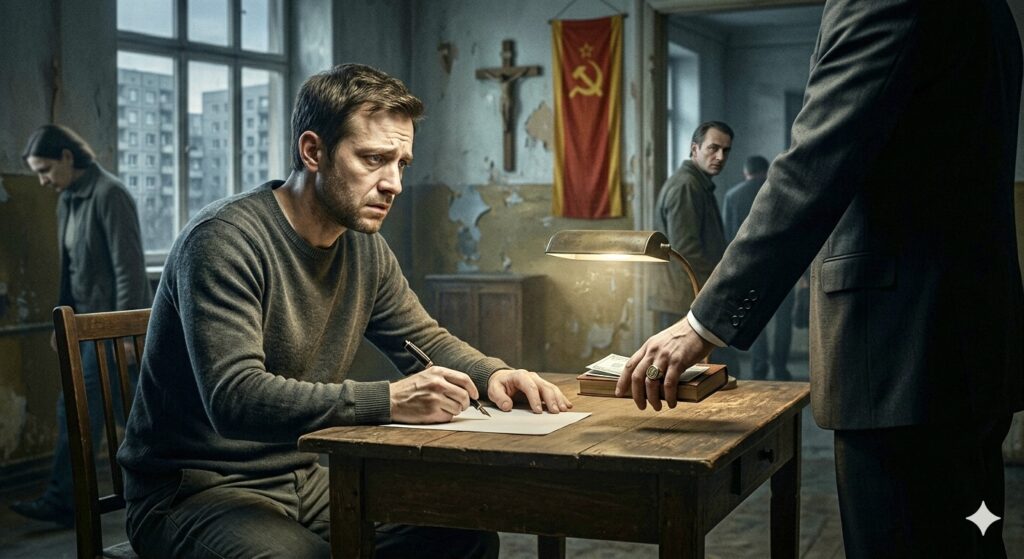
一、契约的起笔:从“顺服”到“跪服”的边界模糊
梅菲斯特诱惑浮士德时,并没有让他直接行恶,而是承诺给他“现实的满足”。对于今日的信徒,出卖灵魂的第一步往往始于对教义的极端扭曲。
现实投影:当你在主日讲台上,听到的不再是罪与救赎的真理,而是长篇累牍的“政策解读”;当你发现教堂里最显眼的位置挂的不是十字架,而是世俗领袖的画像;当你为了让教会“合法化”,主动在祷告中加入对他人的诅咒或对权力的谄媚——此时,你正坐在浮士德的谈判桌前,将终极的敬畏对象移交给了被造的权力。
二、交易的对价:以“生存”换取“真理的缄默”
浮士德为了换取生命的新生,放弃了死后的灵魂归属。而在现实中,这种交易表现为道德勇气的系统性丧失。
现实投影:当你在社交媒体看到不公义的强拆、无辜者的呐喊,你下意识地点击了“不感兴趣”或“屏蔽”;当你为了保住体制内的那份公职、那份退休金,在单位要求签署“不信教承诺书”时,你安慰自己这只是“权宜之计”;当你在单位聚餐,听着同事对信仰的亵渎和对弱者的霸凌,你选择低头喝酒,甚至陪着笑脸附和——此时,你正用真理的缄默,换取那份带着血色的安稳。
三、沉沦的深化:用“宗教辞令”为平庸之恶洗地
梅菲斯特最擅长的就是逻辑解构。最可怕的出卖,不是因为恐惧而闭口,而是因为利益而主动歪曲。
现实投影:你开始熟练地引用圣经来为自己的懦弱辩护。面对受逼迫的弟兄,你冷冷地抛出一句“我们要顺服在上执政的”;面对社会的溃败,你用“这都是末世的必然”来消解自己的责任。甚至,你为了向权力展示忠诚,不惜向有关部门提供“不听话”弟兄的信息,并美其名曰“为了教会整体的安全”。这种“犹大式”的精明,正是灵魂契约上最黑的一处墨迹。
四、坠落的逻辑:不按圣经教导的必然后果
在《浮士德》中,任何试图利用魔鬼力量来达成目标的人,最终都会陷入一种“越渴望解脱,越深陷苦难”的怪圈。
精神的异化:长期的人格分裂会导致严重的内耗。当你周日在教堂唱赞美诗,周一在单位写违心的汇报,你会发现信仰不再是力量的源泉,而成了痛苦的负担。这种“清醒的窒息感”是魔鬼对你最初的折磨。
团契的崩塌:出卖灵魂的人必然会防范他人。当教会内部充斥着审查、防备和对权力的献媚,你将失去真正的属灵伴侣。你生活在人群中,却比任何时候都孤独。
最终的虚无:世俗权力是流动的沙,而真理是永恒的磐石。那些试图靠投靠权力来寻求庇护的人,往往在风暴来临时最先被抛弃。更悲惨的是,当生命终结,你发现自己既不属于这个世界,也没能进入那个应许的国度。
结语:撕毁契约的可能
浮士德最终在行动中寻求救赎,而基督徒的救赎在于回归那唯一的磐石。
守护灵魂,并不意味着要进行惨烈的肉体对抗,而是要在内心深处划定那道不可逾越的红线。这份红线就在于:我可以因为软弱而沉默,但我绝不因为利益而歌颂;我可以被剥夺发声的权力,但我绝不交出定义真理的权利。
在权力试图吞噬一切的时代,保持那种“不合时宜”的坚持,远比沉醉于魔鬼提供的幻象中高贵。因为只有守住了灵魂,才能在苦难的尽头,看见真正的黎明。
从哪里开始?从身边事做起,从家庭做起,从工作岗位做起。
从何时开始?现在……!
Faustian Bargain: The “Soul Mortgage” and Redemption of Contemporary Believers
By HuSir
In Goethe’s magnum opus, Dr. Faustus—driven by a desire for power, knowledge, and sensual pleasures that transcend the mundane—signs a blood-inked contract with the demon Mephistopheles. The essence of this covenant is not instantaneous destruction, but a gradual surrender—a “boiling frog” style of encroachment.
In the current context of this “Land of Gloom,” if we treat the secular power that seeks to dominate all and demand absolute fealty as a metaphorical “Mephistopheles,” then many believers may have already, perhaps unwittingly, handed over their pens to sign.
I. The Opening Stroke: The Blurred Boundary Between “Submission” and “Subservience”
When Mephistopheles enticed Faust, he did not demand immediate evil; instead, he promised “worldly satisfaction.” For today’s believers, the betrayal of the soul often begins with an extreme distortion of doctrine.
Reality Projection: When the words from the Sunday pulpit are no longer the truths of sin and redemption, but interminable “policy interpretations”; when you realize the most prominent fixture in the church is not the Cross, but the portrait of a secular leader; when, to “legitimize” the church, you voluntarily interject curses upon others or sycophantic praise for power into your prayers—in these moments, you are seated at Faust’s bargaining table, transferring the ultimate object of your awe to a created, worldly power.
II. The Price of the Trade: Exchanging “Survival” for the “Silence of Truth”
Faust relinquished his soul’s afterlife in exchange for a new lease on life. In reality, this trade manifests as a systemic loss of moral courage.
Reality Projection: When you see unjust forced demolitions or the cries of the innocent on social media and instinctively click “not interested” or “block”; when, to keep your public office or pension, you sign a “Declaration of Non-Belief” at work, comforting yourself that it is merely a “tactical compromise”; when you sit at a corporate dinner, listening to colleagues blaspheme your faith or bully the weak, and you choose to lower your head, drink your wine, and even offer a forced smile of agreement—in these moments, you are using the silence of truth to purchase a peace stained with blood.
III. The Deepening Descent: Using “Religious Rhetoric” to Whitewash the Banality of Evil
Mephistopheles’ greatest skill is logical deconstruction. The most terrifying betrayal is not keeping silent out of fear, but actively distorting the truth for profit.
Reality Projection: You begin to skillfully quote Scripture to justify your own cowardice. Facing a brother or sister under persecution, you coldly remark, “We must submit to the governing authorities”; facing societal collapse, you dissolve your own responsibility with the claim, “This is all the inevitability of the End Times.” You might even, to prove your loyalty to power, provide information on “disobedient” brethren to the authorities, cloaking it in the excuse of “protecting the overall safety of the church.” This “Judas-style” shrewdness is the darkest ink on the contract of the soul.
IV. The Logic of the Fall: The Inevitable Consequence of Disregarding Biblical Teaching
In Faust, anyone who attempts to use demonic power to achieve their goals eventually falls into a paradox: the more they crave liberation, the deeper they sink into misery.
- Alienation of the Spirit: Chronic personality splitting leads to severe internal exhaustion. When you sing hymns on Sunday but write deceitful reports at work on Monday, you find that faith is no longer a source of strength, but a burdensome yoke. This “lucid suffocation” is the demon’s first torment.
- The Collapse of Fellowship: One who betrays their soul will inevitably guard against others. When a church is filled with censorship, suspicion, and sycophancy toward power, you lose your true spiritual companions. You live among a crowd, yet you are lonelier than ever.
- Ultimate Emptiness: Secular power is shifting sand; Truth is the eternal Rock. Those who seek refuge by defecting to power are often the first to be discarded when the storm hits. More tragically, when life ends, you find yourself belonging to neither this world nor the Promised Kingdom.
Conclusion: The Possibility of Tearing Up the Contract
Faust ultimately sought redemption through action; for the Christian, redemption lies in returning to the One True Rock.
Guarding the soul does not necessarily mean engaging in a tragic physical confrontation, but rather drawing an inviolable red line deep within the heart. This red line dictates: I may remain silent out of weakness, but I will never offer praise for the sake of profit; I may be stripped of my right to speak, but I will never surrender my right to define the Truth.
In an era where power seeks to swallow everything, maintaining that “out-of-place” persistence is far nobler than being intoxicated by the illusions offered by the demon. For only by holding onto the soul can one see the true dawn at the end of suffering.
Where does it begin? Start with the things around you, start with your family, and start at your workplace.
When does it begin? Now…