
文 / HuSir
复活节是基督教最核心、最喜乐的节日。它记念的,不是一个抽象的理念,而是一个真实而震撼的历史事件——耶稣基督为担当世人的罪被犹太人钉上十字架、受死、埋葬,并在第三天从死里复活,最终升天。这整个过程,构成了基督教信仰的中心:代赎、死亡、复活与新生命。
耶稣作为上帝之子本是无罪的,却甘愿担当全人类的罪(包括每一位基督徒的罪)。祂在十字架上流血舍命,满足了上帝公义的要求;祂被埋葬,象征罪的工价(死亡)得到完全偿还;祂的复活,则是上帝悦纳代赎的最有力证据,彻底战胜了死亡、罪恶和黑暗的权势,为信徒开启了永生的盼望。这就是复活节的根本象征意义:从死亡到生命,从罪恶到救赎,从绝望到荣耀。
对基督徒而言,复活节首先带来深刻的个人反思。在十字架的光照之下,我们看见自己本该承受的刑罚,却由耶稣完全担当。因此,我们当不断省察自己的罪,承认自己的软弱与亏欠,并深深感念上帝白白的恩典。正如彼得前书2:24所说:“祂被挂在木头上,亲身担当了我们的罪,使我们既然在罪上死,就得以在义上活。因祂受的鞭伤,你们便得了医治。”复活节不是一次性的庆祝,而是每年一次的提醒:我们的生命已与基督同死、同埋葬,也当与祂同复活,活出圣洁、公义、感恩的新样式。
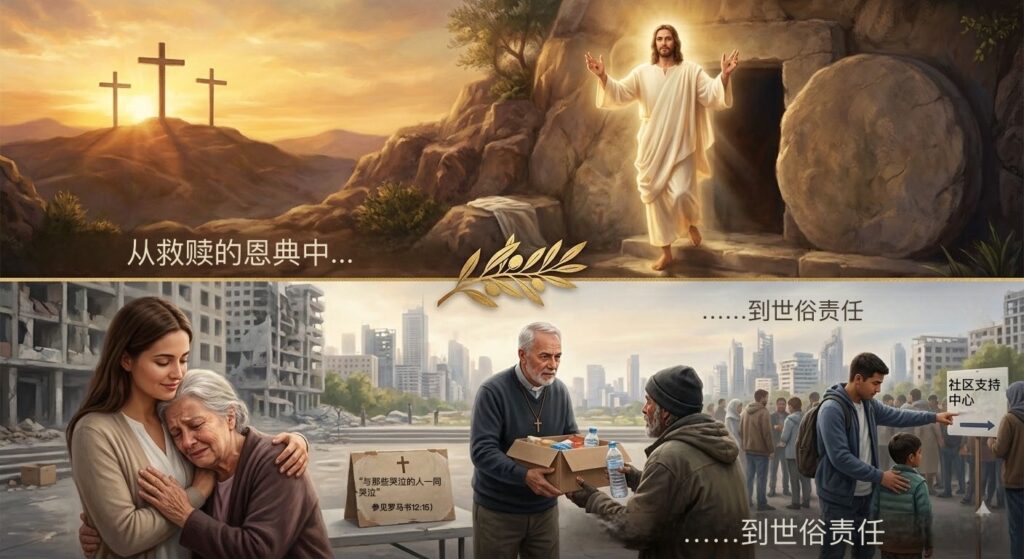
然而,复活节的意义绝不止于个人得救。它更呼召基督徒将这份恩典延伸到俗世,活出代赎性爱的实际样式。耶稣的十字架不只是为信徒而立,更是为全人类而立。祂在世时医治病人、怜悯罪人,甚至在十字架上为逼迫祂的人祷告:“父啊,赦免他们,因为他们所做的,他们不晓得。”(路加福音23:34)复活的主如今差遣门徒进入世界,正如父差遣祂一样(约翰福音17:18)。因此,基督徒不能只停留在个人感恩,而当主动担负起俗世苦难和纷争之人的重担。
这种“担当”并非救赎意义上的代赎(只有耶稣能完成),而是效法基督的同情、代祷与实际服事:
· 为他们恒切祷告:为活在战争、贫困、疾病、家庭破碎、道德混乱等苦难中的人代求,像保罗为不信的同胞“心里常常伤痛”(罗马书9:2)那样。
· 与哀哭的一同哀哭:倾听、陪伴、肩负他们一时难以承受的重担(加拉太书6:2)。
· 寻求实际帮助与解决之道:不只是灵里的关怀,更要付诸行动——提供援助、推动公义、传扬福音、参与社会关怀事工,用复活的大能去光照黑暗、医治破碎、化解纷争。
复活节的现实意义在于:复活的生命不是逃避俗世,而是带着战胜死亡的确信进入俗世。我们相信死亡与罪恶已被耶稣彻底战胜,因此能在苦难中仍存盼望,在纷争中仍作和平之子,在黑暗中仍作光。这正是“彼此担当重担,便完全了基督的律法”(加拉太书6:2)的真谛,也是基督徒在今世活出十字架与复活样式的具体呼召。
当然,这种担当必然带来代价与疲惫。基督徒需要智慧与界限,避免耗尽自己,但更要依靠那位“加给我们力量的主”(腓立比书4:13)。最终,一切苦难与眼泪都将在上帝的国度中被完全除去(启示录21:4),而我们今日的服事,正是对那日荣耀的预尝。
复活节因此成为双重的记念与呼召:一方面,我们感恩耶稣为我们担当一切罪孽;另一方面,我们也被邀请效法祂,为俗世苦难中的人代祷、担当,并寻求帮助与出路。在这个过程中,我们不仅更深经历上帝的恩典,也让复活的生命在当下真实地彰显出来。
愿每一位思想复活节的基督徒,都能在省察与感恩中,被圣灵充满怜悯与能力,在俗世的苦难与纷争中,活出耶稣基督的样式。
——写于复活节思考
The Profound Meaning of Easter: From Redeeming Grace to Secular Responsibility
By HuSir
Easter is the most central and joyful festival of Christianity. It commemorates not an abstract concept, but a shocking historical reality—that Jesus Christ, to bear the sins of the world, was crucified by the Jews, suffered, was buried, and rose from the dead on the third day, eventually ascending into heaven. This entire process constitutes the core of the Christian faith: substitutionary atonement, death, resurrection, and new life.
Jesus, as the Son of God, was inherently sinless yet chose to bear the sins of all humanity (including the sins of every believer). By shedding His blood and giving His life on the cross, He satisfied the demands of God’s justice. His burial symbolized the full payment of the wages of sin (death), while His resurrection served as the most powerful evidence of God’s acceptance of that atonement. He utterly defeated the powers of death, sin, and darkness, opening the hope of eternal life for all believers. This is the fundamental symbolic meaning of Easter: from death to life, from sin to redemption, and from despair to glory.
Personal Reflection and Grace
For Christians, Easter first brings a deep sense of personal reflection. In the light of the Cross, we see the punishment we deserved, now fully borne by Jesus. Therefore, we ought to continually examine our sins, acknowledge our weaknesses and shortcomings, and feel a profound gratitude for God’s freely given grace. As 1 Peter 2:24 states:
“who Himself bore our sins in His own body on the tree, that we, having died to sins, might live for righteousness—by whose stripes you were healed.”
Easter is not a one-time celebration but an annual reminder: our lives have died and been buried with Christ, and so we must also rise with Him to live in a new pattern of holiness, righteousness, and gratitude.
The Call to Secular Responsibility
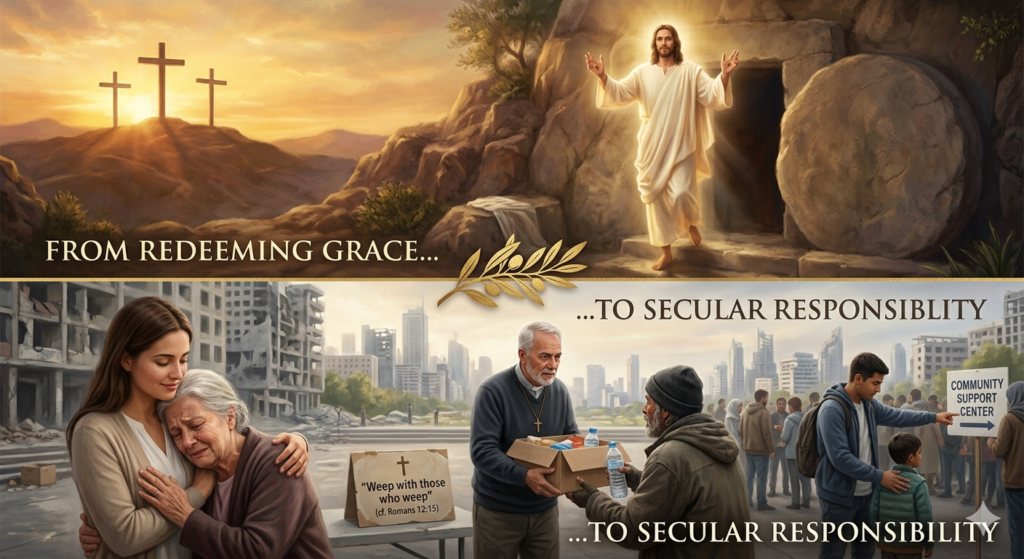
However, the significance of Easter does not end with individual salvation. It calls Christians to extend this grace into the secular world, living out the practical form of “redemptive love.” The Cross of Jesus was not erected only for believers, but for all mankind. During His time on earth, He healed the sick, had mercy on sinners, and even prayed for those persecuting Him on the cross: “Father, forgive them, for they do not know what they do” (Luke 23:34). The resurrected Lord now sends His disciples into the world just as the Father sent Him (John 17:18). Consequently, Christians cannot remain only in personal gratitude; they must actively shoulder the burdens of those suffering in the secular world.
This “bearing of burdens” is not atonement in a salvific sense (which only Jesus could accomplish), but rather an imitation of Christ’s compassion, intercession, and practical service:
* Interceding fervently for them: Praying for those living in the suffering of war, poverty, disease, broken families, and moral confusion—much like Paul felt “great sorrow and continual grief” (Romans 9:2) for his unbelieving compatriots.
* Weeping with those who weep: Listening to, accompanying, and carrying the weights that others find temporarily unbearable (Galatians 6:2).
* Seeking practical help and solutions: This is not merely spiritual care but taking action—providing aid, promoting justice, spreading the Gospel, and participating in social concern ministries. We use the power of the resurrection to illuminate darkness, heal brokenness, and resolve conflict.
Living the Resurrection Life
The contemporary significance of Easter lies in this: the resurrected life does not retreat from the world but enters it with the certainty of having overcome death. We believe that death and sin have been utterly defeated by Jesus; therefore, we can maintain hope in the midst of suffering, act as peacemakers in the midst of conflict, and remain as light in the darkness. This is the true essence of “Bear one another’s burdens, and so fulfill the law of Christ” (Galatians 6:2), and the specific calling for Christians to live out the pattern of the Cross and Resurrection today.
Admittedly, this responsibility brings cost and fatigue. Christians need wisdom and boundaries to avoid burnout, but more importantly, they must rely on the Lord who “strengthens me” (Philippians 4:13). Ultimately, all suffering and tears will be completely wiped away in the Kingdom of God (Revelation 21:4), and our service today is a foretaste of that future glory.
Easter is thus a dual commemoration and a dual calling: on one hand, we give thanks that Jesus bore all our iniquities; on the other, we are invited to follow His example—interceding for, bearing with, and seeking help and ways out for those in secular suffering. In this process, we not only experience God’s grace more deeply but also allow the life of the resurrection to be truly manifested in the present.
May every Christian who meditates on Easter be filled by the Holy Spirit with compassion and power, living out the likeness of Jesus Christ amidst the suffering and strife of this world.