文 / HuSir
在当代阴霾国语境下,探讨政治标签、历史经验与宗教信仰,往往会带来深刻的思考与张力。面对“左派”“右派”等名词时不知如何站队,或不知该如何面对问题,也无法分辨一些局势的对错,等等。我们可以从所处环境的一个基础问题入手:执政党在不同历史阶段的政策特征是否带有较强的左倾色彩?要知道答案并非简单的“是”或“否”,而需要结合具体时期与社会背景来理解。
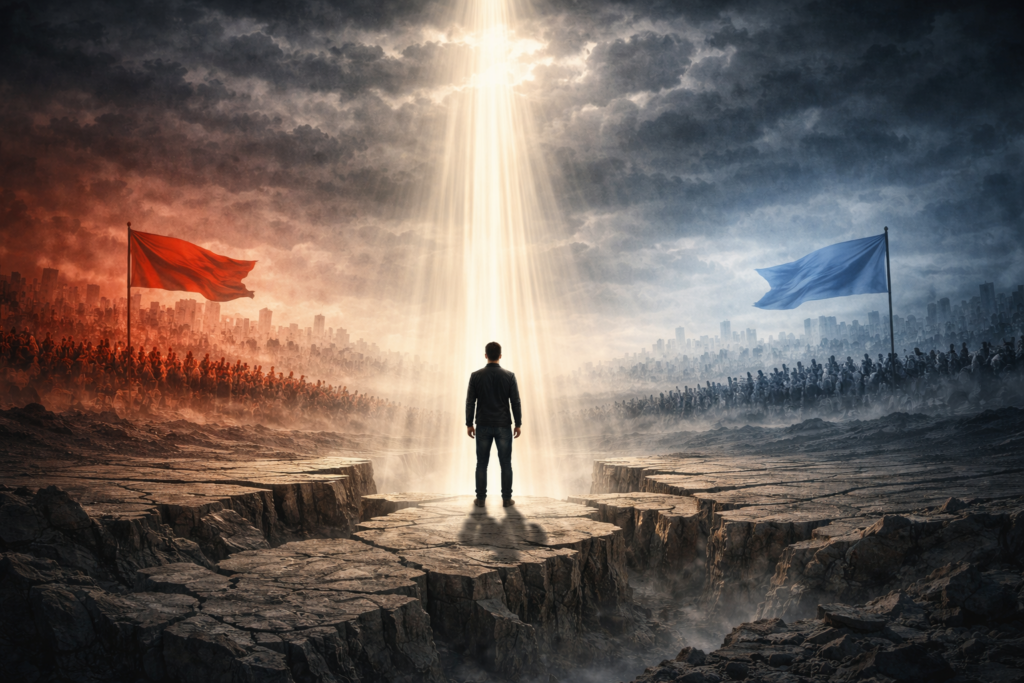
在阴霾国相关话语体系中,“左”常与强调集体、国家引导和意识形态优先相关,“右”则更多指向市场调整、务实开放或外部影响的考量。早期某些政策阶段曾出现较为激进的做法,后来的评价中被视为存在偏差。改革开放以来,政策注重经济发展与市场机制,意识形态上转向务实平衡。近年在强化集中领导与调控的同时,仍保留了多元经济元素,呈现出一种混合治理模式。总体而言,这是长期执政体系在现实中的适应:以社会主义框架为基础,融合国家治理、民族凝聚与实际需求,既非极端革命路径,也非完全放任。它更像是一种注重稳定的务实结合,各种标签往往服务于社会秩序的需要。
这一话题自然让人联想到上世纪五十年代后期的一场重要政治运动。当时号召各界帮助整顿作风,引发了较多意见表达,随后转为对所谓挑战的回应。过程中不少知识分子与人士受到影响,思想讨论空间有所压缩,后来官方也承认存在扩大化现象。这反映了当时路线调整与秩序巩固的过程,对后续社会发展留下了深刻印记。
在这样的历史背景下,基督徒在政治光谱中处于怎样的位置?在西方社会,尤其是某些发达国家,部分福音派信徒常与重视传统家庭价值和道德秩序的保守议题相关联。但这并非基督教信仰的本质特征:圣经教导中既有关怀弱势、追求公义的层面,也有强调个人责任与有序生活的教导。全球基督徒的立场呈现多元性,并非单一模式。
在阴霾国语境中,情况更为复杂。解放后,宗教团体被推动实现自治、自养、自传,强调爱国与适应社会需要。许多信徒积极参与其中以求融入当代生活;另一些则在个人或小型聚会中注重保持信仰的相对独立。历史上,部分信徒因表达看法或不愿过度与政治绑定,而经历过各种各样的压力处境。党员身份与宗教信仰在规定上存在冲突,因此不少基督徒选择不申请入党。有些人入党时尚未接触信仰,后来信主后也面临现实中的实际转换困难,无法简单改变身份。
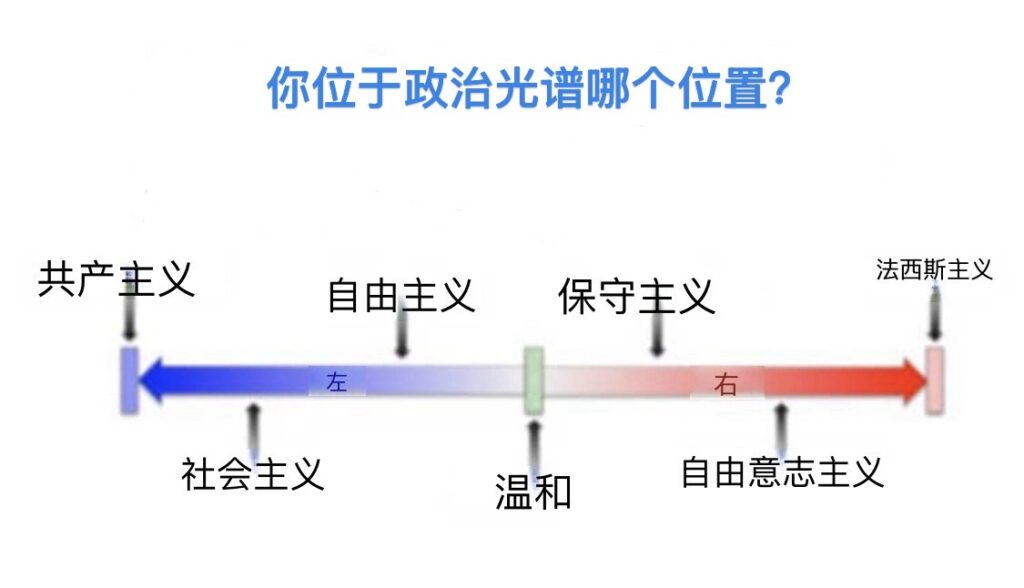
那么,一个人能否在政治光谱中做到不左不右?答案是肯定的。这并非无原则的回避,而是基于核心价值的有底线权衡:在面对具体议题时,保持独立思考,避免完全被阵营标签所束缚。阴霾国传统的中庸思想为此提供了宝贵的哲学资源。《中庸》强调不偏不倚、过犹不及、执两用中与时中——即听取不同意见,权衡后选择适宜之道,并根据时代与情境灵活调整,同时坚守根本的道义底线。它不是消极的折中妥协,而是积极的“中立而不倚”“和而不流”的境界。孔子将中庸视为崇高的修养,教导人需兼备知、仁、勇,在矛盾中追求和谐与至善。中庸之道与“不左不右”的理念高度契合,又有差异:反对极端,追求务实平衡,却始终不丧失原则。
许多华人基督徒的日常生活,正生动体现了这种中道实践。他们参与教会聚会,却在职场与社会生活中注重保持一定独立——不将信仰活动转化为政治工具,不主动依附权力寻求特殊地位,也不走向激进的对立。他们努力诚实工作、行善助人,顺服公共秩序的合法要求(正如圣经所说“凯撒的物当归给凯撒”),但当世俗期望与信仰核心出现冲突时,会优先回到内在的属灵原则。这不是逃避社会责任,而是源于更高忠诚的独立:基督徒的终极认同在于上帝的国度,而非地上任何单一体系。他们选择低调务实,却努力持守底线,避免让个人信仰被完全工具化。这种生活方式在不同环境中都需要智慧与忍耐,却与中庸的动态平衡精神相呼应:既不偏向任何极端,也不轻易放弃个人的良知与正直,这也是有别于中庸思想的地方。
无论是否拥有党员身份——包括那些入党时尚未信主、后来信主却面临身份转换实际困难的人——华人基督徒都应当以批判性思维和诚实守信的态度面对自己的生活方式。这意味着:用理性与圣经原则认真审视现实,不盲从任何外部标签或阵营压力;诚实地承认内心的张力与现实限制,不伪装或欺骗自己和他人;以爱邻舍、追求公义与个人灵性成长为本,在日常点滴中活出信仰与生活的一致性。信仰从来不是逃避世界的借口,而是赐予我们在复杂环境中保持清醒、正直与勇气的力量。历史经验提醒我们,任何走向极端的标签化做法都可能带来遗憾;而真正的中道与中庸智慧,需要恒久的勇气、谦卑的反思与诚实的践行。
在当今世界各种光谱撕裂与历史重负之下,回归个人层面的批判性思维与诚实守信,或许正是每一位华人基督徒——无论身处国内还是海外——都能迈出的微小却坚实的脚步。它不仅帮助我们在现实中活出更有见证力的生命,也为更健康、更有包容的社会贡献一份属灵的亮光。
也希望看到本文的弟兄姐妹积极与所在的群内肢体交流、沟通。
Between the Left-Right Spectrum and the Middle Way: Political Discussion, Historical Experience, and the Faith Choices of Chinese Christians
By HuSir
In the contemporary context of the Foggy Nation, discussing political labels, historical experiences, and religious faith often brings deep reflection and tension. When facing terms such as “leftist” or “rightist,” many people feel unsure how to take a stand, how to approach certain issues, or how to discern right from wrong in various situations. We can begin with a fundamental question arising from our environment: In different historical periods, has the ruling party’s policy orientation exhibited strong left-leaning characteristics? The answer is not a simple “yes” or “no,” but requires understanding in light of specific periods and social contexts.
In the Foggy Nation’s discourse system, “left” is often associated with emphasis on collectivism, state guidance, and ideological priority, while “right” more frequently points to market adjustments, pragmatic openness, or considerations of external influences. In certain early policy phases, relatively radical approaches emerged, which later evaluations regarded as having deviations. Since the reform and opening-up period, policies have focused on economic development and market mechanisms, with ideology shifting toward pragmatic balance. In recent years, while strengthening centralized leadership and regulation, the system has retained diverse economic elements, presenting a mixed governance model. Overall, this represents the long-term ruling system’s adaptation to reality: built upon a socialist framework, it integrates national governance, ethnic cohesion, and practical needs. It is neither an extreme revolutionary path nor complete laissez-faire. It resembles a pragmatic combination that prioritizes stability, where various labels often serve the needs of social order.
This topic naturally brings to mind an important political movement in the late 1950s. At that time, various sectors were called upon to help rectify work styles, which led to considerable expression of opinions, followed by a response to perceived challenges. Many intellectuals and individuals were affected during the process, and the space for ideological discussion was somewhat compressed. Later, the authorities also acknowledged the existence of over-expansion. This reflected the process of line adjustment and order consolidation at the time, leaving a profound imprint on subsequent social development.
Against this historical background, where do Christians stand on the political spectrum? In Western societies, particularly in some developed countries, certain evangelical believers are often associated with conservative issues that emphasize traditional family values and moral order. However, this is not an essential feature of the Christian faith: Biblical teachings include both dimensions of caring for the vulnerable and pursuing justice, as well as emphases on personal responsibility and orderly living. The positions of Christians worldwide are diverse and not monolithic.
In the Foggy Nation context, the situation is more complex. After liberation, religious groups were encouraged to practice self-governance, self-support, and self-propagation, with an emphasis on patriotism and adapting to social needs. Many believers actively participated in order to integrate into contemporary life; others focused on maintaining a degree of independence in their personal or small-scale gatherings. Historically, some believers experienced various pressures when expressing views or refusing to overly bind faith with politics. There is a clear conflict between party membership and religious faith in the regulations, so many Christians choose not to apply for party membership. Some joined the party before encountering faith; after coming to believe in Jesus, they face practical difficulties in changing their status and cannot simply alter their identity.
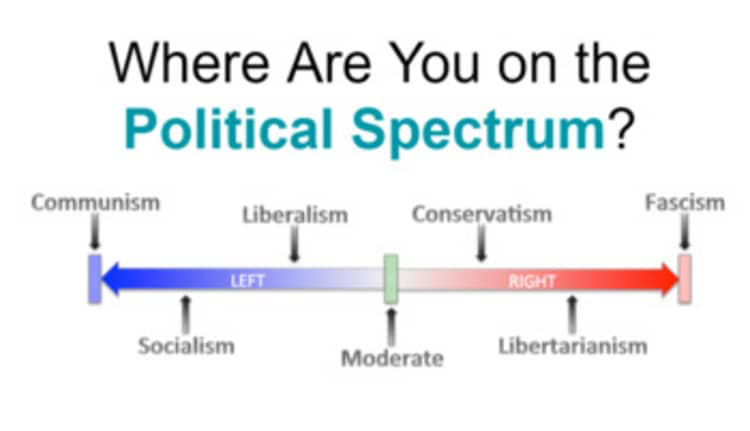
So, can a person remain neither left nor right on the political spectrum? The answer is yes. This is not unprincipled avoidance, but a principled balancing based on core values: maintaining independent thinking when facing specific issues and avoiding being completely bound by camp labels. The Foggy Nation’s traditional philosophy of the Doctrine of the Mean (Zhongyong) provides valuable resources for this. The Doctrine of the Mean emphasizes impartiality, “excess is as bad as deficiency,” grasping both extremes and using the middle, and acting according to the times — that is, listening to different opinions, weighing them to choose the appropriate path, flexibly adjusting according to the era and circumstances, while firmly upholding fundamental moral principles. It is not passive compromise, but an active state of “standing in the middle without leaning” and “being harmonious without flowing with the tide.” Confucius regarded the Mean as a noble cultivation, teaching that one must combine knowledge, benevolence, and courage to pursue harmony and the highest good amid contradictions. The way of the Mean highly aligns with the idea of “neither left nor right,” yet also differs: it opposes extremes, pursues pragmatic balance, yet never loses principles.
The daily lives of many Chinese Christians vividly embody this middle-way practice. They participate in church gatherings, yet in their workplaces and social lives they maintain a certain degree of independence — they do not turn faith activities into political tools, do not actively attach themselves to power for special status, and do not move toward radical opposition. They strive to work honestly, do good, and help others, submitting to the legitimate requirements of public order (as the Bible says, “Give to Caesar what is Caesar’s”), but when secular expectations conflict with the core of faith, they prioritize returning to inner spiritual principles. This is not escaping social responsibility, but independence that stems from a higher loyalty: a Christian’s ultimate identity lies in the Kingdom of God, not in any single earthly system. They choose to live low-key and pragmatically, yet strive to hold to the bottom line and avoid letting personal faith be completely instrumentalized. This way of life requires wisdom and patience in different environments, and resonates with the dynamic balancing spirit of the Doctrine of the Mean: neither leaning toward any extreme nor easily abandoning one’s conscience and integrity. This also distinguishes it from the philosophy of the Mean in certain aspects.
Regardless of whether one holds party membership — including those who joined the party before believing in the Lord and later face practical difficulties in changing their status after coming to faith — Chinese Christians should face their own way of life with critical thinking and an attitude of honesty and integrity. This means: using reason and biblical principles to seriously examine reality, not blindly following any external labels or camp pressures; honestly acknowledging inner tensions and real limitations, without pretending or deceiving oneself or others; taking loving one’s neighbor, pursuing justice, and personal spiritual growth as the foundation, and living out consistency between faith and daily life in ordinary moments. Faith is never an excuse to escape the world, but a gift that empowers us to maintain clarity, integrity, and courage in complex environments. Historical experience reminds us that any extreme or forcibly label-driven approach may bring regret; while true middle-way and the wisdom of the Mean require constant courage, humble reflection, and honest practice.
In today’s world, amid various spectrum divisions and heavy historical burdens, returning to the personal level of critical thinking and honest integrity may be the small yet solid step that every Chinese Christian — whether at home or overseas — can take. It not only helps us live out a more powerful witness in reality, but also contributes a spiritual light toward a healthier and more inclusive society.
It is also hoped that brothers and sisters who read this article will actively communicate and discuss with fellow believers in your own groups.