文 / HuSir
他第一次意识到不对,是在一次再普通不过的会议上。会议室里灯光明亮,空气有些干燥。台上的人语气平稳,说着那些他已经听过无数次的话:“这是为了大家好。”这句话落下时,他忽然愣了一下。不是反对,也不是愤怒,只是一种很轻微的停顿——像是脑海中有一扇门,本该通向某个熟悉的地方,却忽然打不开了。“好”,原来是什么意思?他想不起来。他低下头,跟着大家一起鼓掌。
他走出会议室的时候,走廊很长。窗外的天是灰白的,看不出是晴还是阴。他忽然有一种奇怪的感觉:仿佛整座城市,被某种看不见的结构包裹着。楼与楼之间的间距、道路的走向、人群的流动,都像是被安排过的轨迹。人们在其中行走、说话、忙碌,却很少抬头看一眼头顶的空间。后来他才意识到,那不是城市。那是一座塔。
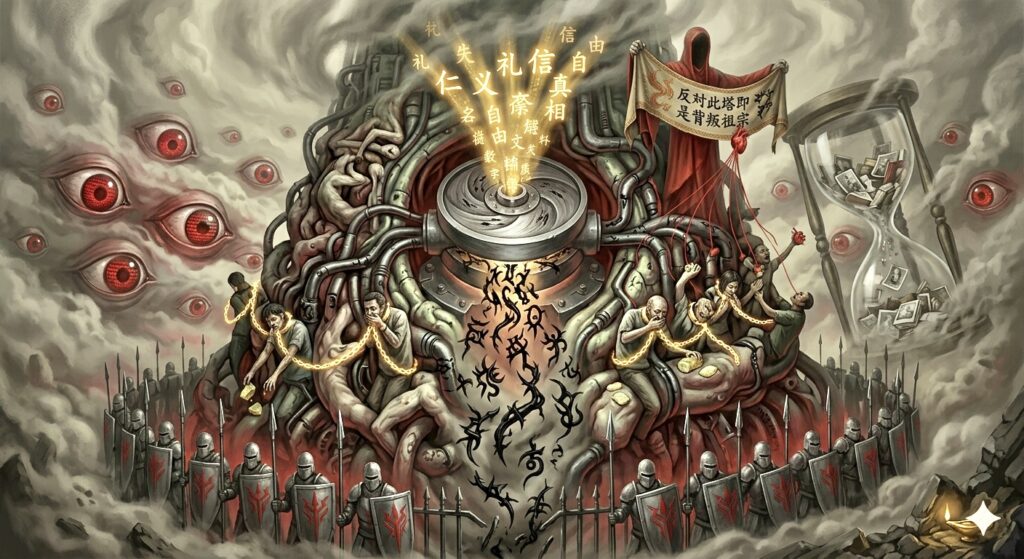
这座塔,从来不是一天建成的。人们都说它带来了秩序、安全和繁荣。塔越修越高,阴霾也越积越厚。没有人再记得塔外的天空是什么颜色,因为他们从出生起,就生活在塔的影子里。塔的中心,是一间看不见的房间。那里不存放武器,也没有铁锁。它只做一件事——重新定义词语。“顺从”被称为“美德”,“沉默”被称为“成熟”,“遗忘”被称为“向前看”。人们依然在说话,但他们逐渐发现,自己说出的每一个词,都在离真实越来越远。当有人想说“这不公平”时,喉咙却自动选择了另一个更安全的表达;当有人想问“为什么”,大脑却先一步给出了“应该这样”。慢慢地,人们不再是不会思考,而是失去了表达真实的语言。
他也不是没有察觉过。有一次,他在街上看到一个被带走的人。那人没有反抗,只是回头看了一眼,眼神很平静。那一刻,他的心猛地紧了一下。但几秒之后, 他脑海里浮现出一个熟悉的解释:“那一定是有原因的。”他松了一口气。不是因为事情变得合理了,而是因为他不用再继续想下去了。只是那天夜里,他忽然想起那双眼睛。那不是愤怒,也不是恐惧。更像是一种——已经看见了什么的平静。
他有自己的生活。房子还在还贷,孩子要上学,工作不能出差错。塔的每一层,都分配着不同程度的温暖与压力。只要顺着它的结构往上走,就能获得一点点更稳定的空气。没有人强迫他相信什么。只是所有的路径,都指向同一个方向。渐渐地, 他开始理解一件事:不是有人在看着你,而是你知道自己一直被看着。于是,人开始在还没说话之前,就已经修改了自己的想法。
关于过去,他记得的越来越少。不是彻底忘记,而是变得模糊。一些本该刺痛的记忆,被解释成“必要的代价”;一些无法解释的断裂,被轻轻地命名为“历史的复杂性”。他曾试图和朋友谈起某些事情。但话说到一半,两个人都沉默了。不是因为不敢,而是因为找不到合适的词。就像两个人站在同一片废墟前,却只能讨论天气。但那天之后,他开始隐约意识到一件事:也许不是他们没有词。而是那些词,被拿走了。
最让他困惑的,是内心的矛盾。他爱这个地方。爱这里的语言、食物、记忆中的人。可正因为如此,当他隐约觉得哪里不对时,一种更深的愧疚感也随之而来——仿佛怀疑本身,就是一种背叛。于是,他开始学会说服自己。不是因为他说服成功了,而是因为这是唯一可以让内心恢复平静的方式。
直到那一天。那天没有发生什么大事。没有冲突,没有命令,也没有谁被带走。他只是独自一人,坐在车里。外面很安静。他忽然想起很久以前的一个片段——那时他还年轻,对很多事情有直接的判断,有些话甚至会脱口而出。他试着回忆那种感觉。很模糊,但还在。就在那一刻,一些被压住的片段忽然连在了一起。那些被重新解释过的记忆,那些说不出口的话,那些“本该如此”的结论,还有那双平静的眼睛。它们第一次,不再各自孤立。它们连成了一条线。
他忽然意识到一件事:不是世界变得合理了,而是他一直在用一套被给予的语言,替一切不合理找到解释。那个念头,在他心里变得清晰起来。不再模糊。不再犹豫。它很简单:“这不对。”他没有把这句话说出口。他也没有做任何事情。他只是坐在那里,让这个念头停留了一会儿。没有替它找解释,也没有急着把它抹去。那一刻,什么都没有改变。塔依然存在,语言依然运转,世界依然平稳。
但他忽然明白:这座塔之所以稳固,不只是因为它高,而是因为它让人以为——它从来就在那里。而当一个人看见它的那一刻,它就已经不再是“真实”,而只是一种被维持的结构。他不知道这座塔会不会倒。也不知道需要多久。但他第一次知道了一件更重要的事:那不是世界的全部。
The Tower of Emptiness
—An Allegory of Language, Memory, and the Mind
By HuSir
He first sensed something was wrong during an entirely ordinary meeting. The room was brightly lit, the air slightly dry. The speaker on stage spoke calmly, repeating words he had heard countless times: “This is for everyone’s good.” As the sentence landed, he paused for a moment. Not in disagreement, nor in anger—just a faint hesitation, as if a door in his mind, one that should have led somewhere familiar, suddenly would not open. What did “good” actually mean? He could not remember. He lowered his head and joined the applause with everyone else.
When he walked out of the meeting room, the corridor felt unusually long. The sky outside was grayish white, neither clearly sunny nor overcast. A strange feeling came over him: it was as if the entire city was enclosed within an invisible structure. The spacing between buildings, the direction of the roads, the flow of people—all seemed like predetermined paths. People moved, spoke, and busied themselves within it, yet rarely looked up at the space above their heads. Only later did he realize—it was not a city. It was a tower.
This tower was never built in a single day. People said it brought order, safety, and prosperity. As it rose higher, the haze grew thicker. No one remembered the color of the sky outside anymore, for they had lived in its shadow since birth. At the center of the tower was an unseen chamber. It held no weapons and no chains. It did only one thing—redefine words. “Obedience” was called “virtue,” “silence” was called “maturity,” and “forgetting” was called “moving forward.” People still spoke, yet gradually realized that every word they uttered drifted further away from truth. When someone wanted to say “this is unfair,” their throat would choose a safer expression instead; when someone wanted to ask “why,” their mind would already supply “it should be this way.” Slowly, it was not that people could not think—it was that they had lost the language to express what was real.
He was not entirely unaware. Once, he saw someone being taken away on the street. The person did not resist, only turned back for a brief glance, their eyes calm. In that moment, his heart tightened suddenly. But a few seconds later, a familiar explanation surfaced in his mind: “There must be a reason.” He felt relieved. Not because things had become reasonable, but because he no longer needed to keep thinking about it. That night, however, he found himself remembering those eyes. They were neither angry nor afraid. They carried something else—a quiet calm, as if something had already been seen.
He had his own life. The mortgage still needed to be paid, his child had to go to school, and work could not go wrong. Each level of the tower offered its own mix of comfort and pressure. As long as one followed its structure upward, one could gain slightly more stable air. No one forced him to believe anything. Yet all paths pointed in the same direction. Gradually, he came to understand something: it was not that someone was watching you, but that you knew you were always being watched. And so, before speaking, people had already revised their thoughts.
As for the past, his memories became increasingly faint. Not entirely gone, but blurred. Some memories that should have been painful were explained away as “necessary costs”; some irreparable ruptures were gently labeled as “the complexity of history.” He once tried to talk with a friend about certain things. But halfway through, both of them fell silent. Not because they were afraid, but because they could not find the right words. It was as if they stood before the same ruins, yet could only discuss the weather. But after that day, he began to sense something faintly: perhaps it was not that they had no words—perhaps those words had been taken away.
What troubled him most was the contradiction within himself. He loved this place—its language, its food, the people in his memories. Yet precisely because of this, whenever he felt that something was wrong, a deeper sense of guilt followed—as if doubt itself were a form of betrayal. So he learned to persuade himself. Not because he had truly succeeded, but because it was the only way to restore inner calm.
Until that day. Nothing significant happened. No conflict, no orders, no one being taken away. He simply sat alone in his car. It was quiet outside. Suddenly, he remembered a distant moment—when he was younger, when he made direct judgments about things, when some words would come out without hesitation. He tried to recall that feeling. It was vague, but still there.
At that moment, certain suppressed fragments suddenly connected. The reinterpreted memories, the unspeakable words, the “it should be this way” conclusions, and those calm eyes—they were no longer isolated. They formed a line.
He suddenly realized something: it was not that the world had become reasonable—it was that he had been using a given language to explain away everything that was not.
That thought became clear in his mind. No longer vague. No longer hesitant. It was simple:
“This is not right.”
He did not say it out loud. He did not do anything. He simply sat there, letting the thought remain for a while—without explaining it away, without rushing to erase it.
At that moment, nothing changed. The tower still stood. Language still functioned. The world remained stable.
But he suddenly understood: the reason the tower was so stable was not only because it was tall, but because it made people believe—it had always been there.
And the moment someone truly sees it, it is no longer “reality,” but merely a structure being maintained.
He did not know whether the tower would fall, nor how long it would take. But for the first time, he knew something more important:
It was not the whole world.