文 / HuSir
在很多社会经验中,人们常常带着一个直觉性的期待:曾经的受害者,会更懂得约束权力;经历过伤害的人,会更愿意阻止类似的事情再次发生。但现实往往并不如此简单。
在某些环境中,我们反而会看到一种令人困惑的现象:一些曾经经历过迫害压制或局势动荡的人,在后来却并没有成为这种社会现象的终结者,反而成为既有运作方式的延续者,甚至执行者。这并不是因为他们天生更倾向于某种立场,而是因为他们所处的社会结构,本身在不断塑造人的选择。
一个关键的问题在于:当一个人从“被动承受”转向“主动参与”时,他所面对的,并不是一片空白,而是一整套已经存在的运作逻辑。这套逻辑往往具有强烈的惯性。它规定了什么是“可靠”,什么是“风险”,什么样的行为会被认可,什么样的行为会被排斥。在这样的环境中,个人的选择空间并不是无限的,而是被不断引导、筛选和塑造,并成为其一份子。
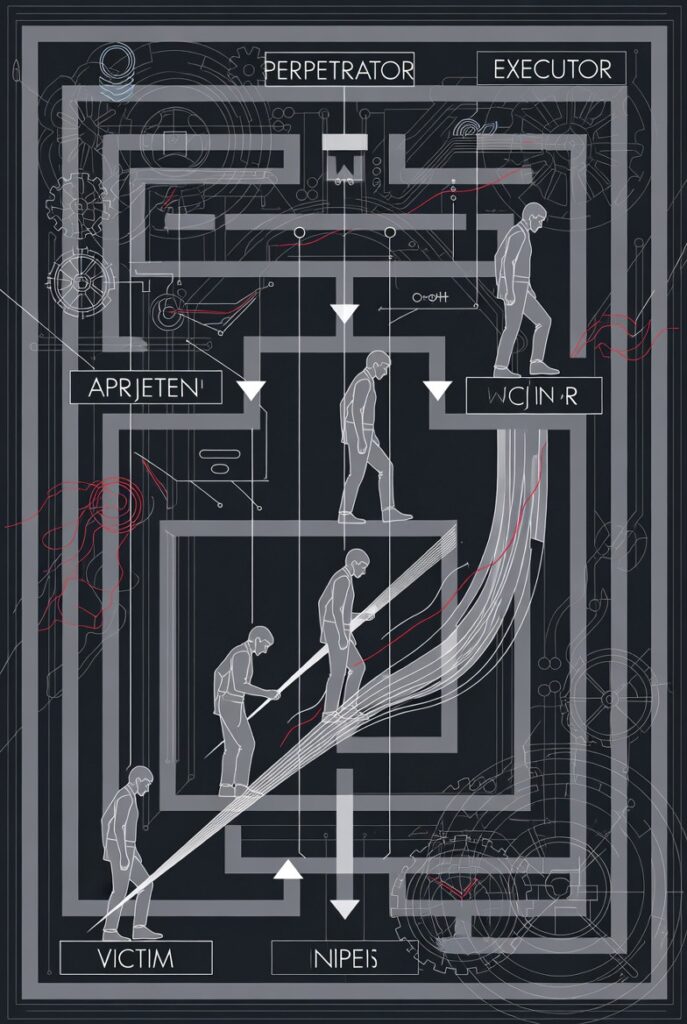
于是,一个微妙但重要的转变开始发生。对于曾经的受害者而言,最直接的感受并不一定是“我要改变这套机制”,而更可能是:“如何在这套机制中避免再次成为受害者。”而在现实路径上,这个问题往往只有一个答案:不是去改变这套结构,而是——尽可能进入这个结构的更高位置。因为位置越高,所承受的风险越小;越接近中心,越不容易被边缘化。于是,成为其一员并积极“向上”本身,就成为一种看似理性的选择。
在这个过程中,原本的经验会发生一种转化。曾经的痛苦,并不必然转化为对机制的反思,反而可能转化为一种更强烈的信念:“只有掌握这套工具,才能不再被它伤害。”当这种信念逐渐稳固,一个人就更容易接受原有的运作方式,甚至主动去适应、强化它。
与此同时,整个系统也在进行着持续的筛选。在这样的结构中,被优先保留下来的,往往不是那些严格依赖规则、强调原则的人,而是那些能够理解并顺应整体运作方式的人。于是,一种隐含的排序逐渐形成:顺应结构的能力往往高于对规则的坚持,而对规则的坚持又高于单纯的能力表现。这种排序,并不总是被明确表达出来,但却在长期运作中不断被强化。
当这种逻辑成为常态,另一个问题也随之出现:系统内部的反思空间会逐渐缩小。问题并不是完全不存在,而是越来越难以被作为“问题”来讨论。有些原本需要被反思的经验,会逐渐被转化为“需要避免的风险”;一些本应被纠正的偏差,会被整理为“操作中的注意事项”。久而久之,错误不再被当作需要面对的现实,而被吸收进运作逻辑之中,成为下一轮行为的依据。
这也解释了为什么,某些历史经验并不会自动带来结构性的改变。如果没有相应的约束机制与开放空间,个体即使有反思的意愿,也很难转化为实际的调整。相反,更常见的路径是:个体,包括受害一方在适应中改变自己,而结构则在延续中强化自身。
从更广的角度看,这并不是某一个社会独有的现象。在不同历史与文化背景下,只要权力缺乏有效的制衡与反馈,类似的循环就可能以不同形式出现。这并不是对某一类人的简单评价,而是一种在特定结构条件下反复出现的模式。
因此,真正关键的问题,并不在于个体是否“觉醒”,而在于:是否存在可以容纳反思、允许修正的空间。如果这种空间长期缺失,那么无论个体的初始经验如何,最终都更容易被引导回同一套运行轨道之中。
在这样的循环中,最容易被忽视的一点是:当错误无法被清晰地指出、讨论与修正时,它并不会消失。它只会以更隐蔽的方式被延续,在下一轮运行中以“常态”的形式再次出现。于是,问题不再以“问题”的面貌存在,而是以“规则”“经验”甚至“理所当然”的方式继续发挥作用。
也正因为如此,改变并不只是一个态度问题,而是一个结构性问题。如果缺乏能够持续产生真实反馈、允许不同声音存在、并具备自我修正能力的机制,那么任何阶段性的调整,都很难转化为长期的改变。
对于个体乃至受害者而言,或许无法改变整体结构,但仍然可以在自己的位置上,尽量保留判断、保留反思、保留对现实的清醒认识。这不会立刻改变外部环境,但至少可以避免在循环中完全失去自己。
From Victim to Perpetrator: How the Logic of Power Persists in Cycles
By HuSir
In many social experiences, people often carry an intuitive expectation: those who were once victims will better understand how to restrain power; those who have suffered harm will be more determined to prevent similar things from happening again. But reality is often not that simple.
In certain environments, we instead witness a perplexing phenomenon: some individuals who once experienced suppression or turmoil do not become the ones who end such histories. Instead, they become continuers of the existing operational logic—even its enforcers. This is not because they are inherently inclined toward a particular stance, but because the social structure they inhabit continuously shapes people’s choices.
A key question lies here: when a person shifts from “passive endurance” to “active participation,” what they face is not a blank slate, but an entire set of already-existing operational logic. This logic possesses strong inertia. It defines what is “reliable,” what constitutes “risk,” what behaviors will be recognized, and what behaviors will be rejected. In such an environment, an individual’s scope for choice is not unlimited; it is constantly guided, screened, and shaped—and the person becomes part of it.
Thus, a subtle but crucial transformation begins. For former victims, the most immediate feeling is not necessarily “I must change this mechanism,” but more often: “How can I avoid becoming a victim again within this mechanism?” In practical terms, this question usually has only one answer: not to dismantle the structure, but—to climb as high as possible within it. The higher the position, the smaller the risks endured; the closer to the center, the less likely one is to be marginalized. Therefore, actively “moving upward” and becoming part of the structure itself becomes a seemingly rational choice.
In this process, original experience undergoes a conversion. Past suffering does not necessarily turn into reflection on the mechanism; instead, it may transform into an even stronger conviction: “Only by mastering this set of tools can I avoid being hurt by it again.” Once this belief solidifies, the individual becomes more likely to accept the existing operational mode—and even to adapt to and reinforce it proactively.
At the same time, the entire system carries out continuous screening. Within such a structure, what is preferentially retained is rarely those who strictly adhere to rules and emphasize principles, but rather those who understand and conform to the overall mode of operation. Thus, an implicit hierarchy gradually takes shape: the ability to adapt to the structure often ranks above adherence to rules, while adherence to rules ranks above mere competence. This ranking is not always explicitly stated, yet it is constantly reinforced through long-term operation.
When this logic becomes the norm, another issue emerges: the space for internal reflection within the system steadily shrinks. Problems are not entirely absent, but they become increasingly difficult to discuss as “problems.” Some experiences that originally required reflection are gradually reframed as “risks to be avoided”; deviations that should have been corrected are reorganized into “precautions during operations.” Over time, errors are no longer treated as realities that must be confronted; instead, they are absorbed into the operational logic and become the basis for the next round of behavior.
This also explains why certain historical experiences do not automatically lead to structural change. Without corresponding checks and balances and open spaces, even individuals with the willingness to reflect find it difficult to translate that into actual adjustments. The more common path is the opposite: individuals—including victims—change themselves through adaptation, while the structure reinforces itself through continuation.
From a broader perspective, this is not a phenomenon unique to any single society. Across different historical and cultural contexts, as long as power lacks effective checks, balances, and feedback mechanisms, similar cycles can appear in various forms. This is not a simplistic judgment of any particular group of people, but a recurring pattern under specific structural conditions.
Therefore, the truly critical question is not whether individuals “awaken,” but whether there exists a space that can accommodate reflection and allow for correction. If such space remains absent for a long time, then regardless of an individual’s initial experiences, they are more likely to be guided back onto the same operational track.
In such cycles, one of the most easily overlooked points is this: when errors cannot be clearly identified, discussed, and corrected, they do not disappear. They are merely perpetuated in more concealed ways, reappearing in the next round of operation in the form of “normal practice.” Thus, problems no longer present themselves as “problems,” but continue to function under the guise of “rules,” “experience,” or even “common sense.”
Precisely for this reason, change is not merely a matter of attitude—it is a structural issue. Without mechanisms capable of generating genuine feedback on an ongoing basis, allowing diverse voices, and possessing the ability for self-correction, any short-term adjustments will struggle to become lasting change.
For individuals—and even victims—while it may be impossible to alter the overall structure, they can still, from their own position, strive to retain judgment, retain reflection, and retain a clear awareness of reality. This will not immediately transform the external environment, but it can at least prevent them from completely losing themselves within the cycle.