——一次关于信仰、文化与人性的对话总结
文/HuSir
在一次坦诚而深入的哲学文化交流中,一方是基督徒(以下简称信徒),另一方是“哲学家”,我们从一个尖锐的观察出发,探讨了中西方(或儒家文化圈与独一神教传统)在世界观根基上的结构性差异,并最终落脚于人性共通的困境与当代现实表现。
一、起点:无神者易将自己置于最高点
对话伊始,信徒指出:那些不愿意承认有超越性权威(神或天道)的人,实际上是在暗暗地将自己当作神。这样的人会凭借自身资源和外界赋予的权力,极尽所能地行事。结果不尽然是坏事——阴霾国自古以来不乏以天下为己任、推动变革的仁人志士——但也容易导致判断与私欲混淆。
在儒家思想熏陶下,阴霾国人自然接触佛教、道家等资源,但核心目的往往服务于“修身齐家、安邦定国”,强化“内圣外王”的实力。“内圣”指向内在道德修养,达到圣人境界;“外王”则指向外在事功,实现治国平天下的理想。这种路径本质上是自我提升到顶点,而非在一位更高者面前谦卑。没有崇高的绝对他者作为最高仰慕对象,自己便成了顶点。因此,在待人处事中,“人人平等”难以作为本体论上的绝对原则贯彻,往往停留在工具性或阶段性层面(例如科举面前的平等),而更倾向于差序格局的“君君臣臣父父子子”。
相比之下,犹太教及其派生出的基督教(独一神传统)则不同。信徒无论身处何种职位、社会地位、工作条件或身份高低,都将神视为不可逾越的最高者,从而视其他人为“在神面前的平等人”。这成为一种做人的底线,即使面对地位悬殊或自身卑微时,仍能保有谦卑与界限感。面对生死问题,信徒有“被接回家”的盼望,带来安慰与尊严;无神者则往往视之为个人修行的终结,留有遗憾。
二、两种路径的结构性差异与历史观察
儒家“内圣外王”强调能力与责任的匹配,带来强烈的历史主动性、责任感和能动性,但也易形成精英主义、绩效导向的文化。一旦权力在手,难以真正将他人当作终极意义上平等的主体。私利或判断容易被包装成“天理”“大局”或“必然”。
一神教则提供了一个结构性的外部刹车机制:有一个绝对他者(上帝)作为永恒参照,提醒人“你不是终极审判者”。这在理论上抑制了“人成为神”的冲动,即使在实践中常有偏差(宗教战争、政教合一的极端等),至少越界行为能被明确指认为“罪”,需要悔改。
历史上,两边都出过圣人与魔鬼。儒家路径出了文天祥、岳飞等,也出了权臣酷吏;基督教出了方济各、特蕾莎修女,也出了宗教裁判所。关键在于自我纠正机制的来源:一个主要靠内在修养与历史经验,另一个有外在的“神圣他者”作为锚点。
三、人性共通:僭越的根源与巴别塔的象征
我们很快达成共识:无论有神还是无神,极端情况都会出现——否认超越权威后,自以为是,当人的欲望僭越一切时,本质仍是人性的问题。宗教(或任何信仰系统)提供了自我解脱的途径:承认有限、承认需要外来救赎或恩典。但在追求信仰的道路上,难免有越界问题。
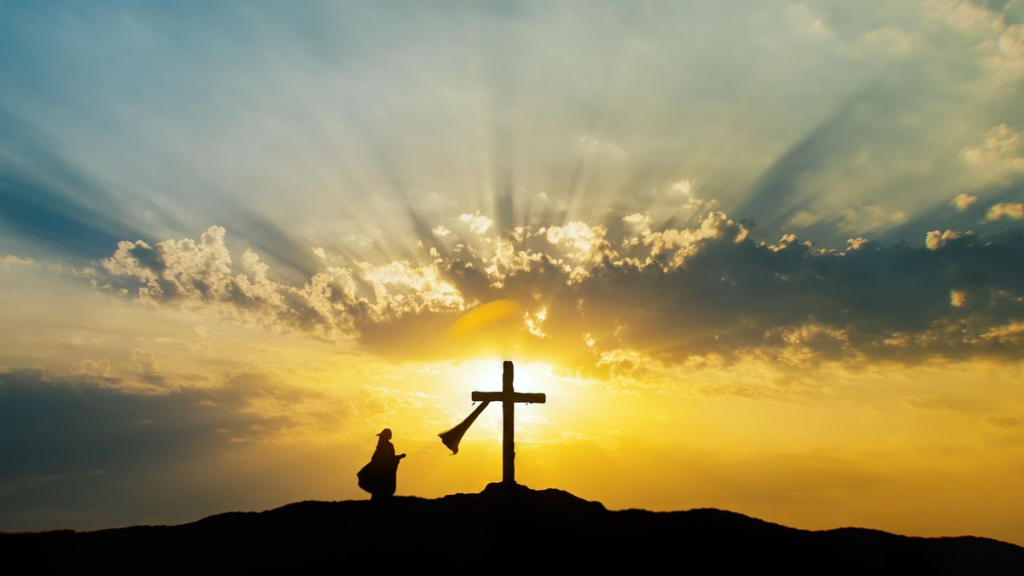
巴别塔事件正是经典象征(《圣经·创世记》11章):洪水后,人们语言相同,在示拿平原建城筑塔,“塔顶通天,为要传扬我们的名,免得我们分散”。上帝变乱口音,使他们分散,工程停顿。这故事不是简单反对建高塔或技术野心,而是指向人类试图以自身(或集体)力量“通天”、扬名、掌控命运,僭越上帝的位置,最终导致混乱与破碎。即使在有神框架下,人仍会试图僭越;但因为有神,僭越最终会被打断、审判、纠正。

四、当代最常见的僭越形式:私利驱动下的独断与底线突破
在现实层面,最常见的僭越并非宏大叙事中的“自我神化”,而是日常的、赤裸裸的私利驱动:为了个人或小圈子利益,独断专行、一意孤行,甚至突破人伦底线。
在当代阴霾国,这种表现特别突出——权力场上的利益输送、任人唯亲;基层为业绩或短期获利而漠视安全、环保、劳工权益,侵害弱势群体;家庭或职场中忽视赡养、教育,或更严重的亲情伦理突破。这些行为背后,往往缺乏一个外在的、绝对的“不可触碰的他者”来持续刹车,而是依赖自我约束、舆论或事后惩罚。而当这些外部制约也被私利渗透时,僭越就更加肆无忌惮。
在无神或世俗实用主义框架下,私利易被包装成“现实需要”“必要选择”或“大局”;有神框架虽有外部参照,但人性顽固,仍可能将“神”扭曲为个人野心或权力的工具。当代阴霾国处于混合状态:主流是高度世俗化、能力本位、实用主义(类似强化版儒家),夹杂传统残留、新兴灵性追求,以及把“成功”“稳定”“民族复兴”“个人自由”等准宗教化,为其自身的“神化”铺平道路。这种出于私利僭越的普遍性,提醒我们无论哪种文化根基,都需警惕欲望对人伦底线的侵蚀。
五、共识与开放思考
对话中我们反复强调:归根结底是人性的共同困境——我们都带着“想要成为神”的冲动。儒家路径更强调入世担当与自我完善,易生能动性却也易滑向“成大事者不拘小节”;一神教路径更强调谦卑与界限,却可能衍生权威依赖或新偶像(国家、意识形态等)。
当代无论阴霾国还是西方,“自以为是”已高度世俗化:无神者把个人感受、算法、资本等当作最高权威;有神者有时把“我的解读”“我的群体”当作神本身。一个彻底无神的文明,更容易把“人”或某种集体形式推上神坛,失败后陷入虚无或更激烈循环;有独一神传统的文明,至少还有一个声音提醒“回归到更高者面前”。
一个开放的问题是:在没有独一神的前提下,人类是否还能找到一种既不自我神化、又不陷入虚无的谦卑与平等基础?儒家曾有“畏天命”的角色,但当“天”被彻底自然化、科学化后,这个位置就空了。西方世俗社会也面临类似困境,用“人权”“进步”等填补,却常使其成为新神。或许,健康的谦卑机制可来自传统“畏天命”、制度设计、哲学自限,或对人性的清醒认识,但最根本的仍是日常选择中的自我警醒。
这次对话从文化根基差异切入,层层递进到人性僭越与当代现实,虽可能因外部限制暂时告一段落,却留下了值得持续反省的洞见。它提醒我们:在欲望与权力的诱惑前,如何守住人伦底线?如何在能力与谦卑之间找到平衡?这些问题不会随聊天结束而消失,而是会在每个人的待人处事、面对挫折与权力时,继续被检验。
感谢这次交流带来的启发。它本身就是一种对抗僭越的内在努力——通过深度思考,保持对自我的审视与对他人的平等尊重。期待未来还有机会继续探讨,共同追问:在今天这个混合而现实的世界里,如何分辨普通人“造神”,如何更好地活出人性中那份既向上又谦卑的力量呢?
The Roots of Transgression: From “Self as Supreme” to Private Interest Dictatorship
——A Summary of a Dialogue on Faith, Culture, and Human Nature
By HuSir
In a candid and profound philosophical and cultural exchange, one party was a Christian believer (hereinafter referred to as the “believer”), and the other was a “philosopher.” We began with a sharp observation and explored the structural differences in worldview between the East and the West (or between the Confucian cultural sphere and the monotheistic tradition), ultimately arriving at the common predicament of human nature and its manifestations in contemporary reality.
I. Starting Point: The Godless Tend to Place Themselves at the Highest Point
At the beginning of the dialogue, the believer pointed out that those who are unwilling to acknowledge any transcendent authority (God or the Dao of Heaven) are in fact secretly treating themselves as God. Such people will exhaust every means at their disposal—using their own resources and the power granted by the external world—to act as they wish. The results are not always negative—the Hazy Nation has never lacked benevolent and righteous figures throughout history who took the world as their responsibility and promoted change—but it also easily leads to the confusion of judgment with private desire.
Under the influence of Confucian thought, people of the Hazy Nation naturally encounter resources from Buddhism, Daoism, and other traditions, but the core purpose is often to serve the goals of “cultivating the self, regulating the family, governing the state, and bringing peace to the world,” thereby strengthening the power of “inner sageliness and outer kingliness.” “Inner sageliness” refers to inner moral cultivation, reaching the realm of the sage; “outer kingliness” points to external achievements, realizing the ideal of ordering the state and pacifying the world. This path is essentially about elevating the self to its apex, rather than humbling oneself before a higher being. Without a lofty absolute Other as the supreme object of reverence, the self becomes the pinnacle. Therefore, in dealing with others, the idea of “equality for all” is difficult to implement as an absolute ontological principle; it often remains at a instrumental or staged level (for example, equality before the imperial examinations) and tends more toward the hierarchical pattern of “the ruler as ruler, the minister as minister, the father as father, the son as son.”
In contrast, Judaism and its derivative Christianity (the monotheistic tradition) are different. No matter what position, social status, working conditions, or identity a believer holds, they regard God as the unsurpassable highest authority, and thus view others as “equals before God.” This becomes a baseline for being human; even when facing vast disparities in status or when one is in a lowly position, one can still maintain humility and a sense of boundaries. When facing the issue of life and death, believers have the hope of “being welcomed home,” which brings comfort and dignity; the godless, on the other hand, often see it as the end of personal cultivation, leaving behind regrets.
II. Structural Differences Between the Two Paths and Historical Observations
Confucian “inner sageliness and outer kingliness” emphasizes the matching of ability and responsibility, bringing strong historical initiative, a sense of responsibility, and agency. However, it also easily fosters an elitist, performance-oriented culture. Once power is in hand, it becomes difficult to truly regard others as equals in an ultimate sense. Private interests or judgments are easily packaged as “the will of Heaven,” “the greater good,” or “historical necessity.”
Monotheism, by contrast, provides a structural external braking mechanism: there is an absolute Other (God) as an eternal reference, constantly reminding people, “You are not the ultimate judge.” In theory, this restrains the impulse for “man to become God.” Even though deviations frequently occur in practice (religious wars, extreme forms of theocracy, etc.), transgressive behavior can at least be clearly identified as “sin” and requires repentance.
Throughout history, both sides have produced saints and devils. The Confucian path gave rise to figures like Wen Tianxiang and Yue Fei, but also to powerful ministers and cruel officials; Christianity produced Francis of Assisi and Mother Teresa, but also the Inquisition. The key lies in the source of the self-correction mechanism: one relies mainly on inner cultivation and historical experience, while the other has an external “divine Other” as its anchor.
III. The Commonality of Human Nature: The Root of Transgression and the Symbol of the Tower of Babel
We quickly reached a consensus: whether one believes in God or not, extreme situations will arise—after denying transcendent authority, self-righteousness follows, and when human desires override everything, the essence remains a problem of human nature. Religion (or any belief system) provides a path for self-deliverance: acknowledging one’s limitations and the need for external redemption or grace. Yet on the road of pursuing faith, boundary-crossing problems are inevitable.
The Tower of Babel incident is the classic symbol (Genesis 11 in the Bible): After the flood, people shared a common language and built a city and tower on the plain of Shinar, with its “top in the heavens, so that we may make a name for ourselves and not be scattered over the face of the whole earth.” God confused their languages, causing them to scatter, and the project came to a halt. This story is not simply against building tall towers or technological ambition, but points to humanity’s attempt to use its own (or collective) power to “reach heaven,” make a name for itself, and control destiny—transgressing God’s position—and ultimately resulting in chaos and fragmentation. Even within a theistic framework, humans will still attempt to transgress; but because God exists, transgression is ultimately interrupted, judged, and corrected.
IV. The Most Common Form of Transgression Today: Dictatorship and Bottom-Line Breaking Driven by Private Interest
At the practical level, the most common form of transgression is not the grand narrative of “self-deification,” but everyday, naked private-interest-driven behavior: acting dictatorially and willfully for personal or small-circle interests, even breaking through ethical bottom lines.
In the contemporary Hazy Nation, this manifestation is particularly prominent—interest transfer and cronyism in the field of power; at the grassroots level, neglecting safety, environmental protection, and labor rights for performance or short-term gains, infringing on vulnerable groups; in families or workplaces, neglecting support for the elderly or education, or even more serious breaches of familial ethics. Behind these behaviors often lies the absence of an external, absolute “untouchable Other” to provide continuous braking; instead, they rely on self-restraint, public opinion, or ex-post punishment. When these external constraints are also permeated by private interests, transgression becomes even more unbridled.
In a godless or secular pragmatic framework, private interests are easily packaged as “practical necessities,” “necessary choices,” or “the greater picture.” Although the theistic framework has external reference points, human nature is stubborn and may still distort “God” into a tool for personal ambition or power. The contemporary Hazy Nation exists in a mixed state: the mainstream is highly secularized, ability-oriented, and pragmatic (similar to an intensified version of Confucianism), mixed with remnants of tradition, emerging spiritual pursuits, and the quasi-religious elevation of “success,” “stability,” “national rejuvenation,” and “personal freedom,” paving the way for its own “deification.” The prevalence of such private-interest-driven transgression reminds us that regardless of cultural foundation, we must remain vigilant against desire’s erosion of ethical bottom lines.
V. Consensus and Open Reflections
Throughout the dialogue, we repeatedly emphasized that at root it is the common predicament of human nature—we all carry the impulse to “become God.” The Confucian path places greater emphasis on worldly responsibility and self-perfection, which easily generates agency but also slips toward the notion that “great achievers disregard trifles.” The monotheistic path places greater emphasis on humility and boundaries, yet it may also give rise to dependence on authority or new idols (the state, ideology, etc.).
In the contemporary era, whether in the Hazy Nation or the West, “self-righteousness” has become highly secularized: the godless treat personal feelings, algorithms, capital, and the like as the highest authority; believers sometimes treat “my interpretation” or “my group” as God itself. A thoroughly godless civilization more easily elevates “man” or certain collective forms to the divine altar, falling into nihilism or more intense cycles after failure. A civilization with a monotheistic tradition, even if it constantly falls, at least retains a voice reminding people to “return before the Higher One.”
An open question is: In the absence of the one true God, can humanity still find a foundation of humility and equality that neither deifies the self nor falls into nihilism? Confucianism once had the role of “fearing the mandate of Heaven,” but once “Heaven” was thoroughly naturalized and scientized, that position became vacant. Secular Western society faces a similar dilemma, filling the gap with “human rights,” “progress,” and the like, only to often turn them into new gods. Perhaps a healthy mechanism of humility can come from the traditional “fear of Heaven’s mandate,” institutional design, philosophical self-limitation, or a sober recognition of human nature—but the most fundamental remains self-vigilance in daily choices.
This dialogue began with differences in cultural foundations and progressed layer by layer to human transgression and contemporary reality. Although it may temporarily pause due to external constraints, it has left behind insights worthy of continued reflection. It reminds us: In the face of the temptations of desire and power, how do we guard ethical bottom lines? How do we find balance between capability and humility? These questions will not disappear with the end of a conversation but will continue to be tested in each person’s treatment of others, responses to setbacks, and exercise of power.
We thank this exchange for the inspiration it brought. It is itself an inner effort to resist transgression—through deep thinking, maintaining self-examination and equal respect for others. We look forward to future opportunities to continue the discussion and jointly ask: In today’s mixed and realistic world, how can we discern ordinary people’s “making of gods,” and how can we better live out that part of human nature that is both aspiring upward and humble?
发表回复