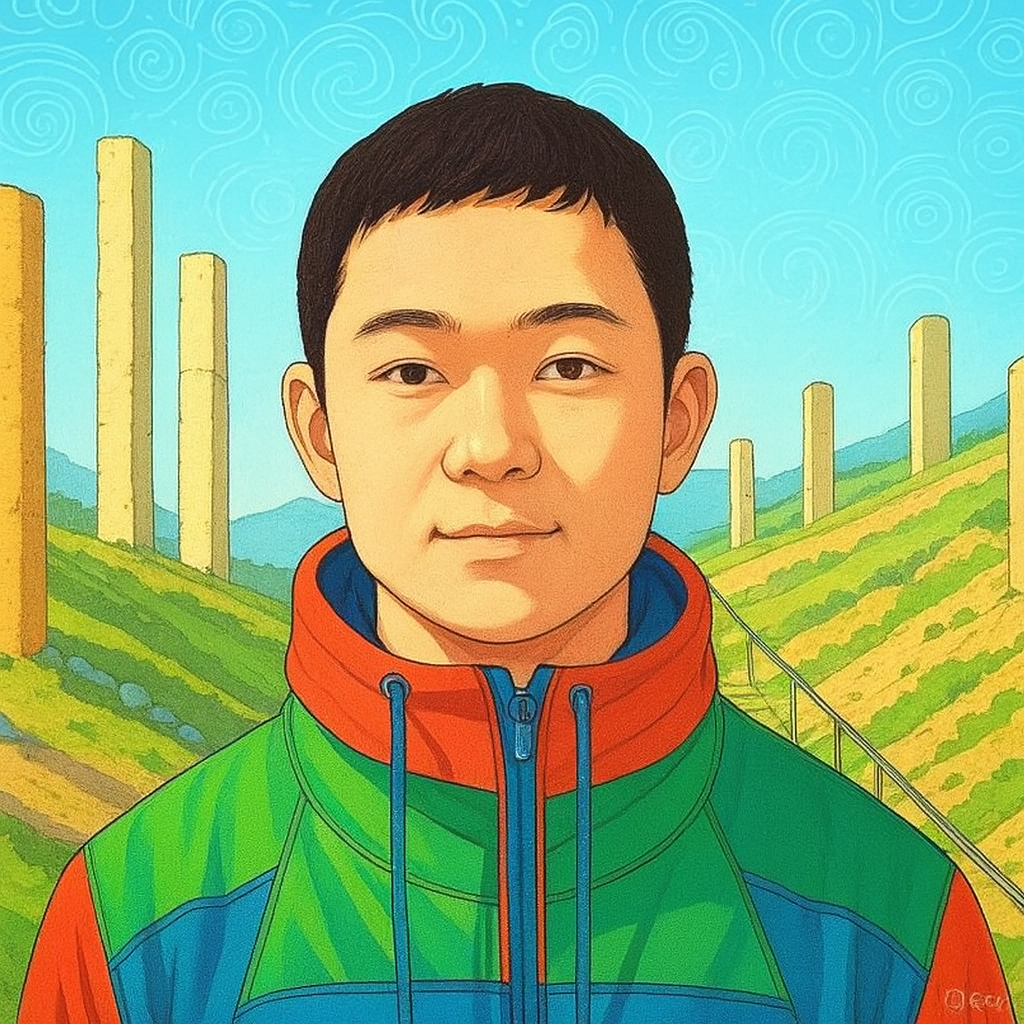
——一个中年人的身心灵回望
文 / HuSir
如果把人生放进社会发展的某一段时间轴上回看,有时会生出一种复杂的感慨。
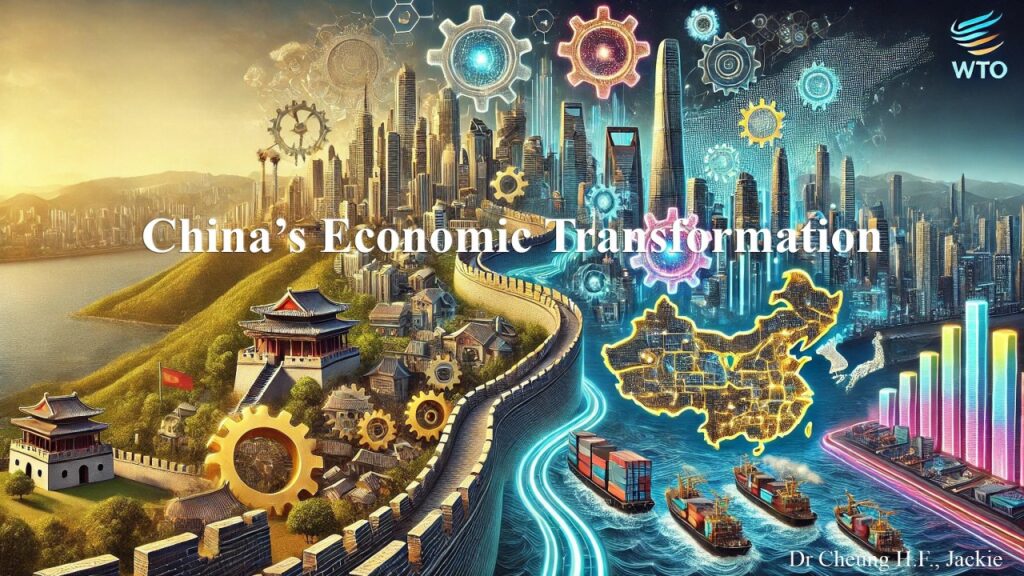
HuSir出生于二十世纪六十年代末,1991年大学毕业进入大型国有化工厂工作了8年,1995年成家立业,1998年应聘进入香港独资企业联通,2008年随着国家电信改革步伐转入电信系统,一直工作直到2022年疫情之后逐步退居二线。算起来,在电信行业工作将超过30年。乍看之下,这不过是一条再普通不过的职业轨迹。近几年经济增长乏力,当我慢慢把它与时代的节奏叠在一起时,才忽然意识到:我们这一代人的人生曲线,几乎与中国加入WTO后的整体腾飞高度重合,自己所谓的人生高光时刻也与此息息相关。
我们不是刻意赶上时代的人,却几乎一步不落地走在那条加速的轨道上。
回头看,那确实是一段带着上升气流的年代。二十世纪九十年代,中美、中日关系回暖带来了中国通信行业的快速铺开,城市面貌不断更新,个人收入稳步改善。只要肯干、能扛、守得住岗位,大多数人都能在体制与市场的交汇处找到一个相对稳定的位置。虽然那个时期计划色彩仍然浓厚,但借着对外开放的洪流,其弊端在发展这一宏大叙事中被悄悄掩盖。从这个意义上说,我们这一代,确实比许多后来者更早地站在了经济增长的斜坡上。
但如果只用“幸运”来概括,又总觉得过于简单。
因为与腾飞同步的,并不只是收入曲线,还有一种长期被忽视的内在代价。
首先变化的,是人们对这一轮繁荣与高速发展背后思想逻辑的反思明显不足。或者说,引领发展的自由思想并没有被认真追问。许多人并没有意识到,这本可以成为阴霾国人民进一步思考自由人生追求与信仰根基的重要契机。事实上,WTO之所以能够成立,本就建立在一整套制度与思想基础之上。就连每周五天工作制,也源于这一逻辑。在此之前,阴霾国人甚至不敢相信一周可以休息两天。直到今天,为劳动者争取这些权利的工会力量,仍然显得相对薄弱。
第二个变化,便是由此带来的身体透支与伤害。像HuSir这样的年轻人,为了养家糊口进入外企,试图摆脱经济困境、实现某种程度的物质自由,却始终没有被引导去追求真正的自由生活。“端起碗来吃肉,放下碗来骂娘”,是那个时期的一句口头禅。人们有肉吃了,却并不真正满足;想追求自由,却又缺乏信仰与思想上的清晰引导,只能在反复抱怨中消耗自己。当欲望不断上升,而“下海经商”、拼命工作成为主要出口时,身体透支便逐渐成为一代年轻人隐性的代价。
在高速运转的那些年里,“扛得住”几乎成了一种默认的生存姿态。任务压下来就加班,指标紧了就顶上,很多人习惯性地把疲惫往后推,把不适往下压。夜晚的城市,“吃喝玩乐一条龙”的服务在热热闹闹地承接着职场与商海奋斗者的压力释放。年轻时不觉得什么,等到四十岁以后,睡眠开始变浅,血压慢慢上来,心口偶尔发紧,情绪也不再像从前那样容易放松。
后来我才慢慢明白,那并不完全是年龄的问题,而是一整代人在高强度秩序中长期紧绷之后,缺乏信仰追求、缺少心灵反思的身体所给出的诚实回声。
某种程度上,这也是对“物质文明是精神文明的基础”这一说法的低配式理解。之所以说是低配,是因为提出这些口号的人,本身也处在摸索阶段,对现代经济与制度逻辑的理解其实远未成熟。根本理解不了WTO的创始成员国的发展经济的初衷,不是说物质文明了,你就会精神升华,而是说,那些经历过血雨腥风的各种摸爬滚打国家的历史经验早已显示:稳定而持久的物质文明,往往建立在更深层的思想文明与制度文明之上。单纯以“物质决定意识”的线性理解,很难真正支撑一个社会的长远发展,也难以回应个人对自由生活的深层追求。
如果说身体的变化还算看得见,那么心理层面的变化则更为隐蔽。
在体制与大型组织中工作久了,人很容易形成一种高度顺应环境的能力。这种能力在很多时候是优势:稳重、克制、执行力强、能承压。但它也有另一面——人会越来越习惯先压住自己的真实感受,再去完成外部期待;越来越擅长把复杂情绪折叠起来,换成一句“没事”。
久而久之,很多人外表依然平稳,内里却开始出现一种说不清的疲惫感。
而真正最晚发生、却也最深刻的变化,往往是在心灵层面。
对不少与HuSir同龄的人来说,年轻时谈信仰,多半带着某种距离感。那时更关心的是岗位、收入、家庭、孩子,很少有人有精力认真追问那些更根本的问题。但走到中年之后,当身体开始发出信号,当外在轨道基本成形,人反而更容易在某些安静时刻忽然停下来,问自己一句:这些年,我究竟是在被推动着往前走,还是在清醒地活着?
HuSir的信仰反思,也正是在这样的阶段慢慢加深的。
起初只是读经时的一点触动,后来变成对“反思”“认错”“悔改”这些词更真实的体会,再后来,逐渐延伸到对整个生命节奏的重新打量。我开始越来越清楚地看到:一个人即使在外部轨道上走得再稳,如果内在始终处在紧绷、自控与不肯松手的状态里,心灵其实很难真正安息。阴霾国的管理者或许从未打算认真面对自己犯过的错误,更不要说引领属下人民去做这样的事了。国家若缺乏反思,历史往往容易重演;个人若拒绝反省,许多错误也会以不同形式不断重复。以至于中年后都不知道哪些是错误,哪些是习俗,反正就是一味的重复、重复、重复——在外人眼里就仿佛是一个僵化、顽固的古董,对人的印象如此,对国家亦然。
这大概也是为什么,许多与WTO一同起飞的中年人,走到今天,会同时呈现出一种颇为复杂的状态:物质上并不匮乏,经验上相当丰富,但身体开始提醒边界,内心也不再像年轻时那样确信一切理所当然。
我们既是受益者,也是在高速度时代中被深度塑形的一代人。
如果一定要给这一代一个更准确的描述,也许不能简单说是“幸运的一代”,而更像是——与腾飞同行、也被腾飞消耗过的一代。物质层面确实有所提升,但精神层面的成长,却在某些阶段被误解甚至被延迟。好在,像HuSir这样出生于六十年代的人,已经开始认真回望与反思。而少数五十年代出生的人仍然在十年文艺改革的“羊肠小道”上快马加鞭,仿佛依然生活在五十年前,即便是被踢出WTO的圈子也浑然不觉。他们的目光长期停留在日益封闭的权力走廊之中,往往以忽视普通民众真实生活处境为代价。能运筹帷幄的事情除了文艺改革,便是疫情期间及其之后的动态清“灵”运动。为了这篇文章不被和谐,此处省去三千字,可省不去几十万、上百万、上千万人的生命,以及几代人僵化思维模式的培育。
不过,回望并不只是为了感慨。
这些年HuSir越来越体会到一件事:真正决定一个人后半程状态的,往往不是他年轻时跑得多快,而是他在中年之后,是否愿意反思自己过往的路径,是否愿意把情绪松下来,把心重新安放在一个更真实的位置上。
时代的大势,个人很难左右;但一个人如何整理自己的身、心与灵,却仍然保有某种主动空间。
如果说我们这一代确实曾经借着时代的上升气流飞过一段距离,那么走到今天,也许更重要的问题已经不再是“还能飞多高”,而是——在速度渐渐放缓之后,我们是否还能学会安静、清醒,并且不失去内里的那一点光。就像那句温和而有力量的意象:长夜将烬,山河月明。至少用这样的一束光,照亮自己的前程,不会在充满阴霾的夜里绊倒。
或许,这正是许多与WTO一同起飞的人,正在共同面对的下半场课题。
真正的分水岭,从来不在时代,而在人是否终于开始反思和悔改。
To Those Who Took Off with the WTO — How Are You Now?
— A Midlife Reflection on Body, Mind, and Spirit
By HuSir
If one places a human life onto a particular stretch of the timeline of social development and looks back, a complex sense of emotion sometimes arises.
HuSir was born in the late 1960s. In 1991, after graduating from university, he entered a large state-owned chemical plant and worked there for eight years. He married in 1995. In 1998, he joined a Hong Kong–funded telecommunications company. In 2008, following the pace of national telecom reforms, he transferred into the state telecom system, where he worked until gradually stepping back after the pandemic in 2022. By calculation, his career in telecommunications has spanned more than thirty years. At first glance, this appears to be nothing more than an ordinary career trajectory. Yet in recent years, as economic growth has lost momentum and I slowly overlaid my personal path with the rhythm of the times, I suddenly realized something: the life curve of our generation almost perfectly coincided with the overall takeoff that followed China’s accession to the WTO. Many of what I once considered my personal high points were, in fact, closely tied to that larger wave.
We were not people who deliberately chased the times, yet we walked almost step by step along that accelerating track.
Looking back, it truly was a period lifted by an upward current. In the 1990s, the warming of China–U.S. and China–Japan relations helped rapidly expand China’s telecommunications industry. Urban landscapes kept renewing themselves, and personal incomes improved steadily. As long as one was willing to work hard, endure pressure, and hold one’s post, most people could find a relatively stable position at the intersection of the system and the market. Although the planned-economy mindset still ran deep in that era, the tide of opening-up quietly masked many of its drawbacks within the grand narrative of development. In this sense, our generation did indeed step onto the slope of economic growth earlier than many who came after us.
Yet to summarize it simply as “luck” still feels overly reductive.
Because what rose in tandem with the takeoff was not only the income curve, but also a long-overlooked internal cost.
The first change was the clear lack of reflection on the underlying logic behind this round of prosperity and high-speed growth. Or rather, the spirit of freedom that had helped drive development was never seriously examined. Many people did not realize that this could have become an important opportunity for the people of this land to further reflect on the pursuit of a free life and the foundations of belief. In fact, the WTO itself was built upon an entire set of institutional and intellectual foundations. Even the five-day workweek emerged from this same logic. Before that, many people here could hardly imagine having two days off each week. Even today, the power of labor unions in securing such rights for workers still appears relatively weak.
The second change was the physical exhaustion and damage that followed. Young people like HuSir entered foreign-invested companies to support their families, hoping to escape financial strain and achieve a measure of material freedom, yet they were rarely guided toward pursuing genuine freedom in life. “Pick up the bowl to eat meat, put it down to curse the mother” was a common saying of that era. People had meat to eat, yet were not truly satisfied; they wanted freedom, yet lacked clear guidance in faith and thought, and so could only wear themselves down through repeated complaint. As desires kept rising and “plunging into business” or working relentlessly became the main outlet, physical depletion gradually became the hidden cost borne by a whole generation of young people.
During those years of high-speed operation, “holding up under pressure” almost became the default posture of survival. When tasks came down, people worked overtime; when targets tightened, they pushed themselves forward. Many grew accustomed to postponing fatigue and suppressing discomfort. In the nighttime city, the lively “eat, drink, and entertainment” circuits took on the role of releasing the pressures of workplace and commercial strivers. When young, few felt much of it. But after forty, sleep began to grow shallow, blood pressure crept upward, the chest would occasionally tighten, and emotions no longer relaxed as easily as before.
Only later did I gradually understand that this was not merely a matter of age. It was the honest echo of bodies that had remained tightly stretched for too long within a high-intensity order—an entire generation lacking both a pursuit of faith and sufficient inner reflection.
To some extent, this also reflects a low-resolution understanding of the claim that “material civilization is the foundation of spiritual civilization.” It is called low-resolution because even those who promoted such slogans were themselves still in a stage of exploration; their grasp of modern economic and institutional logic was far from mature. They fundamentally misunderstood the original intention behind the economic development of the WTO’s founding members. The point was never that once material civilization advances, spiritual elevation will automatically follow. Rather, the historical experience of nations that have endured profound trials has long shown that stable and lasting material prosperity is often built upon deeper layers of intellectual and institutional civilization. A simplistic linear reading of “material conditions determine consciousness” is difficult to sustain a society’s long-term development, and equally unable to respond to the individual’s deeper pursuit of a free life.
If the bodily changes were still visible, the psychological shifts were more concealed.
After working for many years within large systems and organizations, people easily develop a highly adaptive capacity to their environment. In many situations this is an advantage: steadiness, restraint, strong execution, and the ability to withstand pressure. But it has another side—people grow increasingly accustomed to first suppressing their genuine feelings before fulfilling external expectations; increasingly skilled at folding complex emotions into a simple phrase: “I’m fine.”
Over time, many appear outwardly stable, yet inwardly begin to experience an inexpressible fatigue.
And the latest change to arrive—yet also the most profound—often occurs at the level of the spirit.
For many people of HuSir’s generation, talk of faith in youth often carried a certain distance. Back then, attention focused more on positions, income, family, and children. Few had the energy to seriously pursue more fundamental questions. But after reaching middle age—when the body begins to send signals and the external track is largely set—people instead become more likely, in quiet moments, to suddenly pause and ask themselves: all these years, have I truly been living consciously, or merely being pushed forward?
HuSir’s own reflection on faith deepened gradually during precisely such a stage.
At first it was only a small stirring while reading Scripture. Later it became a more concrete understanding of words such as “reflection,” “admitting wrong,” and “repentance.” Still later, it gradually extended into a re-examination of the entire rhythm of life. I began to see more and more clearly: even if a person walks steadily along the external track, if the inner state remains tightly clenched, self-controlled, and unwilling to release its grip, the soul can hardly find true rest. The administrators of this land perhaps never seriously intended to face their own mistakes—let alone lead the people under them to do so. When a nation lacks reflection, history tends to repeat; when individuals refuse self-examination, many errors likewise recur in different forms. By middle age, one may no longer even distinguish what is error and what is merely custom—only endless repetition, repetition, repetition. To outsiders, it can appear like a rigid and stubborn antique; such impressions apply to individuals, and to nations as well.
This may be why many middle-aged people who took off alongside the WTO now present such a complex state: materially not lacking, experientially quite rich, yet the body beginning to signal its limits, and the inner certainty of youth no longer fully intact.
We are both beneficiaries and a generation deeply shaped by an age of high speed.
If one must give this generation a more accurate description, perhaps it cannot simply be called “the lucky generation.” It is more like a generation that traveled with the takeoff—and was also consumed by it. Material conditions did indeed improve, yet spiritual growth, at certain stages, was misunderstood or even delayed. Fortunately, people like HuSir, born in the 1960s, have already begun to look back and reflect seriously. Meanwhile, a small number born in the 1950s still gallop along the narrow “art reform” path of a decade past, as if still living fifty years ago—unaware even when pushed outside the WTO circle. Their gaze has remained largely fixed within increasingly insular corridors of power, often at the expense of sustained attention to the lived realities of ordinary people; beyond cultural maneuvering, their chief arenas of strategic deployment have been the dynamic “Zero-Spirit” campaigns during and after the pandemic. For the sake of keeping this article from being harmonized, three thousand words are omitted here—but what cannot be omitted are the lives of hundreds of thousands, millions, tens of millions of people, and the cultivation of rigid thinking patterns across generations.
Yet looking back is not merely for the sake of sighing.
In recent years HuSir has increasingly come to appreciate one thing: what truly determines a person’s condition in the latter half of life is often not how fast he ran in youth, but whether, after middle age, he is willing to reflect on his past path—whether he is willing to loosen his grip on accumulated tensions and place his heart again in a more truthful position.
The larger currents of the age are difficult for any individual to control. But how one orders one’s body, mind, and spirit still retains a certain space of initiative.
If our generation did indeed ride the rising current of the times and fly a certain distance, then perhaps the more important question today is no longer “how much higher can we still fly,” but rather—after the speed gradually slows, can we still learn to become quiet and clear-minded without losing that small inner light?
Like that gentle yet powerful image: the long night is nearly spent, and the mountains and rivers emerge under the bright moon. At the very least, may such a beam of light illuminate the road ahead, so that we do not stumble in the fog-filled night.
Perhaps this is precisely the second-half question now facing many who once took off alongside the WTO.
The true watershed has never been the era itself, but whether a person has finally begun to reflect and repent.