
——从民国到阴霾国的百年信任史
文 / HuSir
导语:
在很多人的直觉中,人与人之间的冷漠似乎是一种自然结果,源于社会压力、制度复杂或时代变化。然而,若从历史的长时段加以回望,会发现信任的流失并非偶然,而是被不断塑造、训练与固化的过程。本文试图以近百年的社会变迁为线索,梳理人与人关系如何被重构,并思考在失序与恐惧之中,重建信任与连结的可能路径。
如果回望近百年来阴霾国社会中人与人关系的变化,会发现一个耐人寻味却并不偶然的轨迹:人与人之间并非自然变得冷漠,而是在一整套制度安排、叙事逻辑与风险机制的长期塑造下,逐渐学会了彼此保持距离。
在民国时期,社会秩序并不稳定,政权更迭频繁,但人与人之间仍然高度依赖熟人网络与道德约束。宗族、乡里、教会、商会、同乡会等中间结构广泛存在。人与人之间的信任,更多来自共同信念、个人声誉与长期关系。见义勇为、互相照应,并非高尚口号,而是日常生活的一部分。风险当然存在,却并未被系统性地放大,更未被持续教育为“不可触碰”。
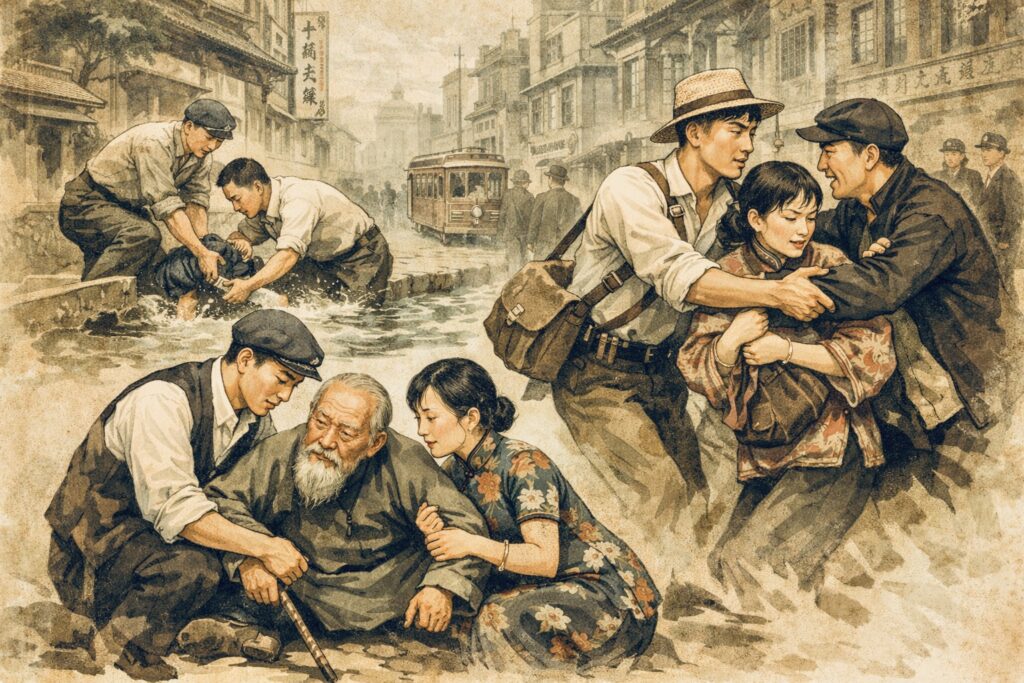
新政权建立之后,社会关系开始被重新设计。人与人之间的横向联系,逐步被替换为人与权力之间的纵向关系。组织、单位、身份、政治态度,成为人与人交往的前提条件。信任不再源于共同信念,而越来越取决于政治安全与立场一致。无论老大哥如何更替,其社会运行逻辑,已与民国时期的社会形态大相径庭。
在这一过程中,社会被反复教育一个核心信息:人与人之间的关系本身是危险的。真正安全的,不是互相托付,而是服从、汇报、保持一致。
随着一轮又一轮政治运动,人与人之间的信任被持续消耗。邻里之间、亲友之间、同事之间,开始学会保留、试探、切割责任。善意不再被视为美德,而可能成为“立场错误”的证据。沉默,逐渐被塑造成一种理性;冷处理,被视为成熟。
改革开放之后,经济活动恢复,社会表面重新活跃,但人与人关系的深层结构并未真正改变。人与人之间的连接更多转向功利计算:可以合作,但要防范;可以往来,但要留后路。信任被压缩为最低限度的交易信用,而不再是生命共同体式的承担。
顺便提及一个常被忽略却极具象征意义的变化:在此前相当长的一段时间里,人们之间(当然不包括意图不轨者)仍保有基本的社会信任感,孩子大多可以自行上学、放学,极少需要家长接送。而进入实名制全面铺开、责任不断外溢的年代之后,几乎没有人再敢让孩子独立行走。这并非单纯的安全意识提升,而是社会信任结构整体退缩的表现。
进入近二十年来,技术治理与风险管理进一步强化了这一趋势。见义勇为、扶起倒地老人,被一系列案例反复教育为“惹火烧身”;随意的玩笑、私下的交流,被纳入合规与违法的边界审查;亲密关系、非正式交往,被不断贴上“不安全”的标签。
结果并不是社会更文明了,而是人与人之间的信任半径急剧收缩。人们学会了不介入、不多问、不深交。冷漠,不再被视为道德缺陷,而成为一种被反复验证、理性选择的生存策略。
从治理角度看,这样的社会是高度可预测、也高度可控的。一个彼此陌生、彼此防范、彼此不愿承担连带责任的社会,很难形成自发组织,也难以孕育真正的公共精神。这并非偶然失误,而是一种清晰可辨的设计取向:个人失误公开化、人与人关系去信任化、社会结构去中介化、民间连结去共同体化。
正是在这样的背景下,基督教所强调的价值显得格外“格格不入”,却也格外重要。基督信仰并不是一种政治工具,而是一种关于人与人如何相处的根本性回答。它并不首先要求人忠于某种权力结构,而是要求人在神面前彼此真实、彼此守约、彼此承担。信任,不是因为对方绝对可靠,而是因为人共同面对一位超越世俗权力的审判者。
在基督信仰中,善意不被视为愚蠢,承担不被视为失败,牺牲也不被视为浪费。正因为如此,教会、家庭、社群才能在国家之外形成相对稳定的中间结构,成为社会信任的蓄水池。这,恰恰是阴霾国社会最为缺失的部分。当一个社会长期缺乏对“罪”“责任”“悔改”“守约”的共同理解,人与人之间就只能依靠恐惧来维持秩序。而恐惧无法孕育信任,只能制造孤立。
引导阴霾国人民更多地靠拢基督教,并不是要制造对抗,更不是要简单复制某种西方制度,而是为这个社会重新提供一种人与人之间可以彼此信任的根基。
对已经将基督当作救主的弟兄姐妹而言,无论你身处三自教会,还是家庭教会,都不应拘泥于敬拜形式,而更当操练真实的信仰生活:学会交托自己,跟随神,不断悔改、省察、更新,以期在基督里成为真正彼此相爱的人。每一个信徒都当牢记与神同行的本色,重新唤起对自由生活的追求与勇气,在基督面前逐渐形成更大、更稳固、更具生命力的属灵共同体。
这样的勇气,不是在权力面前彼此监督,而是在神面前彼此坦诚;不是靠风险计算维系秩序,而是靠良心与信仰约束行为。真正的社会复原,并不始于宏大的制度改革,而始于人与人之间重新敢于信任、敢于承担、敢于彼此相认的那一刻。
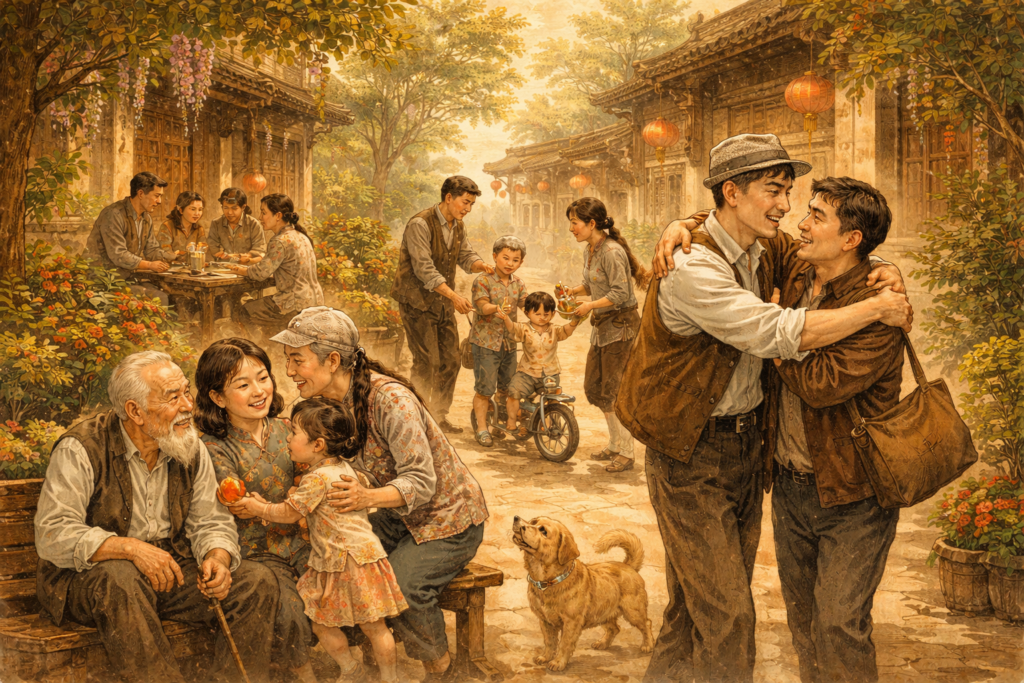
如果有一天,在阴霾国,“彼此信任”不再被视为危险,而被视为正常;“善意”不再需要反复计算后果,而成为自然反应;那么,这种改变一定不是来自权力的恩赐,而是来自信仰在民间重新扎根。
那时,一个真正和谐的社会,才可能建立在爱与信任的叙事之上,而不再笼罩在勾心斗角、步步为营的阴霾之中。
How Can We Restore the Trust and Human Connection That Have Been Gradually Eroded?
— A Century-Long History of Trust from the Republican Era to the Land of Gloom
By HuSir
Introduction
In many people’s intuition, social indifference appears to be a natural outcome of modern life—shaped by pressure, complexity, or the passage of time. Yet when viewed through a longer historical lens, the erosion of trust reveals itself not as an accident, but as a process gradually shaped and reinforced. This essay traces changes in human relationships over the past century and reflects on how trust has been restructured, as well as on the possibility of restoring connection in an age marked by fear and fragmentation.
If we look back over the past century at the changes in relationships among people in the Land of Gloom, a striking yet far from accidental pattern emerges: people did not become indifferent by nature. Rather, through a long process shaped by institutional arrangements, dominant narratives, and risk-management mechanisms, they gradually learned to keep their distance from one another.
During the Republican era, social order was unstable and political authority frequently shifted, yet relationships among people still relied heavily on networks of familiarity and moral restraint. Clan ties, local communities, churches, merchant guilds, and hometown associations functioned as important intermediary structures. Trust arose largely from shared beliefs, personal reputation, and long-term relationships. Acts of helping others or standing up for justice were not lofty slogans, but part of everyday life. Risks certainly existed, but they were neither systematically amplified nor repeatedly framed as behaviors to be avoided.
After the establishment of the new regime, social relationships began to be deliberately restructured. Horizontal connections between individuals were gradually replaced by vertical relationships between individuals and power. Organizational affiliation, work units, identity status, and political attitudes became prerequisites for social interaction. Trust no longer flowed from shared convictions, but increasingly depended on political safety and alignment. Regardless of how leadership figures changed, the underlying logic of social operation had already diverged fundamentally from that of the Republican era.
Throughout this process, society was repeatedly taught one central message: relationships between people themselves are dangerous. What is truly safe is obedience, reporting, and maintaining uniformity.
With successive political campaigns, trust among people was steadily depleted. Neighbors, relatives, and colleagues learned to withhold, to test one another, and to sever responsibility. Goodwill ceased to be regarded as a virtue and could instead become evidence of a “wrong stance.” Silence was gradually redefined as rationality, and emotional distance as maturity.
After the period of economic reform, commercial activity revived and society appeared outwardly vibrant once again. Yet the deeper structure of human relationships remained largely unchanged. Interactions increasingly took on a utilitarian character: cooperation was possible, but with caution; social contact was acceptable, but exit routes had to be preserved. Trust was reduced to minimal transactional credibility rather than the kind of shared responsibility found within genuine communities.
One often overlooked yet highly symbolic change is worth noting. For a long time previously—excluding those with malicious intent—there remained a basic level of social trust. Children commonly walked to and from school on their own, and parental escorting was rare. However, with the widespread implementation of real-name systems and the continual outward extension of responsibility, almost no one now dares to allow children to travel independently. This shift reflects not merely heightened safety awareness, but a broad retreat of social trust itself.
Over the past two decades, technological governance and risk-management frameworks have further reinforced this trend. Acts of helping the fallen or intervening in emergencies have been repeatedly framed through publicized cases as invitations to personal disaster. Casual jokes and private conversations have been pushed toward the boundaries of compliance and illegality. Intimate relationships and informal social spaces have increasingly been labeled as “unsafe.”
The result has not been a more civilized society, but a dramatic contraction of the radius of trust between people. Individuals learn not to intervene, not to ask questions, and not to form deep connections. Indifference is no longer perceived as a moral failing, but as a rational survival strategy repeatedly validated by experience.
From a governance perspective, such a society is highly predictable and easily controlled. A population that remains mutually distant, mutually suspicious, and unwilling to assume shared responsibility struggles to form spontaneous organizations or cultivate genuine public spirit. This outcome is not accidental, but reflects a discernible design orientation: the public exposure of individual missteps, the systematic erosion of interpersonal trust, the removal of intermediary social structures, and the dismantling of communal bonds.
It is precisely within this context that the values emphasized by Christianity appear profoundly out of place—and yet profoundly necessary. Christianity is not a political instrument, but a fundamental response to the question of how human beings are meant to relate to one another. It does not first demand loyalty to a power structure, but calls people to live truthfully before God, to keep faith with one another, and to bear responsibility together. Trust arises not because others are flawless, but because all stand before a moral authority that transcends worldly power.
Within the Christian faith, goodwill is not regarded as foolishness, responsibility is not treated as failure, and sacrifice is not considered wasteful. For this reason, churches, families, and communities are able to form relatively stable intermediary structures outside the state, serving as reservoirs of social trust.
This is precisely what is most lacking in the society of the Land of Gloom.
When a society lacks a shared understanding of sin, responsibility, repentance, and covenantal faithfulness, order can only be maintained through fear. Yet fear cannot nurture trust; it can only produce isolation.
Encouraging the people of the Land of Gloom to draw closer to Christianity is not about creating confrontation, nor about mechanically replicating any Western system. Rather, it is about restoring a foundation upon which people can genuinely trust one another.
For believers who have already received Christ as their Savior, whether within state-sanctioned churches or independent house churches, the priority should not be fixation on forms of worship, but the practice of authentic faith: learning to entrust oneself to God, to follow Him, and to live in continual repentance and self-examination, so as to become people who truly love one another in Christ.
Every believer should remember the essence of walking with God, rekindling the courage to pursue a life of freedom, and gradually forming broader, deeper, and more resilient spiritual communities before Christ.
Such courage does not express itself through mutual surveillance before power, but through honesty before God; not through the calculation of risks to maintain order, but through conscience and faith shaping conduct.
True social restoration does not begin with sweeping institutional reform, but with the moment when people once again dare to trust, dare to take responsibility, and dare to recognize one another as fellow human beings.
If one day in the Land of Gloom, “mutual trust” is no longer regarded as dangerous but as normal, and “goodwill” no longer requires constant calculation of consequences but becomes a natural response, such change will not come as a gift from power, but from faith taking root among the people.
Only then can a genuinely harmonious society be built upon narratives of love and trust, rather than remaining shrouded in suspicion, calculation, and pervasive gloom.