文 / HuSir
给非信徒读者的阅读提示
若你并非宗教信徒,阅读本文时无需将“悔改”“罪”等词理解为宗教仪式或道德控诉。文中所说的“罪”,更多指一种长期存在却被回避的现实:人在权力、利益与压力结构中所形成的错误选择、责任逃避与自我合理化倾向。所谓“悔改”,也并非情绪化的自责,而是一种面对真实、承担后果、重新校正方向的行动。
文中使用“阴霾国”这一说法,并非指向具体制度或现实事件,而是描述一种长期存在的社会心理氛围。若将本文视为一篇关于“阴霾国人焦虑为何反复出现”的反思,而非宗教劝信,更有助于理解其讨论的核心问题。
在当下的阴霾国,焦虑几乎成了一种普遍的生命状态。它并不总是源于个人能力不足或偶然的选择失误,更多来自长期压力、失控感、责任过载,以及对未来的不确定。许多人并非不知道应当“想开一点”,而是现实并未为他们提供真正可以“想开”的空间。本文不讨论制度层面的改良方案,而是尝试追问一个更难回避的问题:为何这种焦虑在阴霾国社会中如此顽固,并呈现出明显的代际传递特征。
在这样的处境中,人们开始寻找与焦虑共处的方式,甚至自救。有人选择忍耐,有人选择转移注意力,也有人转向宗教与信仰,希望获得更深层的心理安放。普通人的自我调节、佛教的“放下”,以及基督信仰中常被提及的“交托”,在形式上各不相同,却在实践中呈现出一个共同风险——它们往往绕开了对错误本身的直面。
对大多数普通人而言,面对焦虑最直觉的方式,是忍、扛,以及不断转移注意力。这里所说的普通人,并非价值真空中的个体,而是长期在儒家伦理与现实生存逻辑相互叠加的环境中被塑造的结果。人们将精力投入工作、家庭或各种短暂刺激之中,用忙碌对冲不安,用麻木延缓崩塌。这种方式现实、低风险,也无需改变既有世界观,因此成为主流选择。然而,它回避了一个关键事实:焦虑并非凭空产生,而是长期错误应对现实、错误处理关系、错误判断责任所积累的结果。长久的忍耐无法纠正这些偏差,只会使其在个体与社会层面持续发酵。
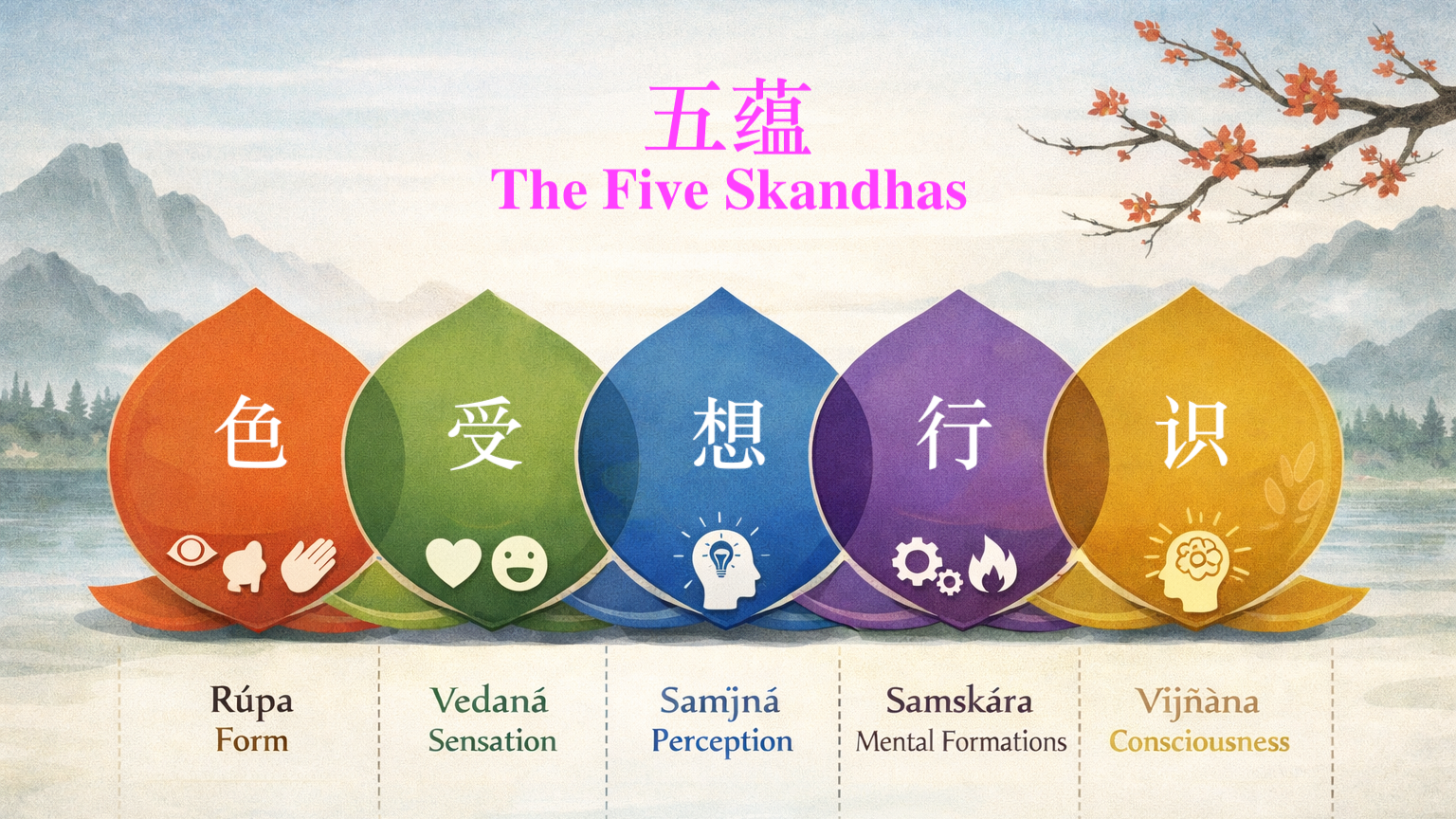
当压力不断堆积、身心接近极限时,许多阴霾国人会转向佛教路径,尤其是“五蕴皆空”“一切无常”的思想。这种方式确实具有现实缓冲作用。它通过弱化“色、受、想、行、识”,甚至空掉焦虑所依附的“我”,模糊自我的实在性,从而降低内在冲突与痛苦。然而需要指出的是,这种“放下”在多数情况下是一种退避式调节。它缓解了感受,却较少触及焦虑背后的因果链条——包括人与人之间真实存在的伤害、责任失位,以及自身长期形成的行为惯性,即佛教语境中所说的“业力”。
基督信仰在其原初意义上,并不只关注情绪安抚,而是直指人的生命状态。但在现实中,不少基督徒也容易将“交托”“信靠”简化为心理安慰机制:只要祷告、忍耐,把问题交给神,焦虑便会自然消散。这种理解同样可能成为一种回避。若不面对自身的错误选择、逃避的责任以及对他人的亏欠,信仰也可能被工具化为情绪管理方式。
事实上,基督信仰对焦虑的判断,并不是“你想太多了”,也不是“你抓得太紧了”,而是指出:人已经偏离了该承担的责任,也偏离了该承认的真实。圣经所说的“罪”,并非仅指道德意义上的恶行,而是一种系统性错位——人对自己、对他人、对真理关系的扭曲。
由此,我们必须提出一个更根本的问题:是否存在一个你不敢操纵、不能粉饰、必须面对的真理。这并非宗教专属命题,而是衡量一个民族精神结构是否健全的关键尺度。当社会缺乏这样的真理标准,善恶便不再是需要回应的现实,而容易沦为可以被重新解释、包装甚至交易的概念。
阴霾国社会长期存在的一个深层问题,正是人们在现实运行中极易被强者的利益逻辑所牵引。历史不断更替权力结构,但这一运行机制鲜有实质改变。新的秩序建立后,人们迅速调整立场,重新寻找依附对象,将“顺应现实”“识时务”“顾全大局”视为成熟与理性,而对善恶本身的判断则被一再推迟。在这一过程中,传统文化中的部分伦理资源,往往更多承担了维持秩序的功能,而较少提供对权力与错误的反省机制。
当“罪”不被认真对待,善也便逐渐失去根基。善不再意味着抵抗诱惑、承担代价,而退化为顺势而为、合乎利益的修辞。个人在这样的环境中学会的,不是如何坚持善,而是如何在不同力量之间灵活调整立场。结果是,追求善的能力不断下降,而对强者逻辑的适应能力却持续强化。
正因如此,阴霾国人的焦虑并不仅是个人心理问题,而是一种长期累积的民族性症状。它源于对错误的回避、对责任的推迟,以及对真理的工具化。当不存在一个不可操纵的真理,罪便永远可以被粉饰,善也永远可以被重新定义。以基督教信仰为根基的国家,在其制度传统中往往明确指出治理的道德标准来自哪里,并强调权力必须受更高原则约束;而以实践性无神论进行治理的国家,则更容易在现实运行中把强权背后的“我”抬升为最高裁断者,用叙事与宣传掩盖恶,也掩盖善恶标准本应高于权力本身这一事实。
在这一意义上,基督信仰所提出的“悔改”,并非情绪性的自责,而是一种严肃的现实行动:承认错误、承担后果、修复关系、重新对齐生命方向。耶稣所呼召的,并不是人逃离现实,而是在无法再自我欺骗之处,开始真实的更新。

因此,解决阴霾国人焦虑的根本路径,不在于让人变得更冷静或更超脱,而在于让个人与社会重新学习面对真实。不是靠空掉自我,也不是靠顺应强者,而是靠承认罪、重建责任、恢复善恶的不可交易性。悔改并不使人软弱,恰恰相反,它是个人与民族实践与神同行、重新获得内在力量的起点。
这种顺从并非源于阴霾国人天生缺乏道德感,而是因为历史上始终缺乏一种稳定、不可被操纵的“罪之反省机制”。错误往往随着权力更替被消解,责任被宏大叙事所吸收,个体无需真正面对自身的选择与后果。久而久之,反省被视为多余甚至具有风险的行为,而非通向更新的起点。
The Roots of Anxiety in the Land of Gloom: The Inevitable Outcome of a Nation Lacking Reflection on Sin
By HuSir
A Reading Note for Non-Believing Readers
If you are not a religious believer, you do not need to understand terms such as “sin” or “repentance” in this article as religious rituals or moral accusations. Here, sin refers more broadly to a long-standing reality that is habitually avoided: the accumulation of wrong choices, evasion of responsibility, and self-justification formed within structures of power, interest, and pressure. Likewise, repentance does not mean emotional self-condemnation, but a concrete act of facing reality, bearing consequences, and re-aligning one’s direction in life.
The term “the Land of Gloom” is not intended to point to any specific political system or contemporary event. It describes a persistent social and psychological atmosphere. If this essay is read as a reflection on why anxiety repeatedly manifests among people in the Land of Gloom—rather than as a piece of religious persuasion—its core argument will be easier to grasp.
In today’s Land of Gloom, anxiety has become a nearly universal condition of life. It is not always rooted in personal inadequacy or isolated mistakes. More often, it arises from long-term pressure, loss of control, excessive responsibility, and deep uncertainty about the future. Many people do not lack advice on how to “relax” or “think more positively”; rather, reality itself offers them no real space in which such advice can be practiced. This essay does not propose institutional reforms. Instead, it asks a more difficult question: why has anxiety become so entrenched in the Land of Gloom, and why is it transmitted across generations?
Within this environment, people seek various ways to coexist with anxiety—or to save themselves from it. Some choose endurance, some distraction, while others turn to religion or belief in search of deeper psychological refuge. The self-regulation of ordinary people, the Buddhist practice of “letting go,” and the Christian notion of “entrusting” may appear different on the surface, yet in practice they share a common risk: they often bypass a direct confrontation with error itself.
For most ordinary people, the most instinctive response to anxiety is to endure, to carry on, and to continuously divert attention. These “ordinary people” are not blank slates in a moral vacuum; they are shaped within an environment where Confucian ethics and pragmatic survival logic overlap and reinforce each other. People pour their energy into work, family, or short-lived stimuli, using busyness to offset unease and numbness to delay collapse. This approach is realistic, low-risk, and requires no fundamental change in worldview, which is precisely why it becomes dominant. Yet it avoids a crucial fact: anxiety does not arise out of nothing. It is the cumulative result of long-term misjudgments in facing reality, mishandling relationships, and misallocating responsibility. Prolonged endurance cannot correct these distortions; it only allows them to ferment further at both individual and societal levels.
When pressure continues to accumulate and body and mind approach exhaustion, many people in the Land of Gloom turn toward Buddhist paths, particularly ideas such as “the emptiness of the five aggregates” and “impermanence.” These approaches do offer real psychological buffering. By weakening attachment to form, sensation, perception, volition, and consciousness—and even dissolving the “self” upon which anxiety depends—they blur the solidity of the ego and reduce inner conflict and suffering. Yet it must be acknowledged that this form of letting go is, in most cases, a retreating adjustment. It alleviates subjective experience but rarely addresses the causal chain behind anxiety: real harm between people, displaced responsibility, and long-formed behavioral inertia—what Buddhism would call karma.
In its original meaning, Christian faith does not merely aim to soothe emotions but confronts the state of human life itself. In reality, however, many Christians reduce “entrusting” or “trusting God” to a psychological comfort mechanism: as long as one prays, endures, and hands problems over to God, anxiety will naturally fade. This, too, can become a form of avoidance. If one does not face personal errors, evaded responsibilities, and harm done to others, faith itself can be instrumentalized as a tool for emotional management.
In fact, Christianity’s diagnosis of anxiety is neither “you are overthinking” nor “you are holding on too tightly.” Rather, it points to something deeper: human beings have deviated from responsibilities they ought to bear and from truths they ought to acknowledge. In Scripture, sin does not merely denote immoral acts; it describes a systemic misalignment—a distortion in one’s relationship with oneself, with others, and with truth itself.
This leads to a more fundamental question: does there exist a truth that you dare not manipulate, cannot disguise, and must ultimately face? This is not a question exclusive to religion. It is a critical measure of a nation’s spiritual health. When such a truth is absent, good and evil no longer confront people as realities that demand response. Instead, they become concepts that can be reinterpreted, packaged, and even traded.
A deep-rooted problem within the Land of Gloom is the ease with which people are drawn by the logic of the strong and their interests. Power structures have changed repeatedly throughout history, yet this operational logic has rarely shifted in substance. When a new order emerges, people quickly adjust their positions, seek new affiliations, and treat “adapting to reality,”“knowing the times,” and “considering the bigger picture” as signs of maturity and rationality—while judgments of good and evil are continually postponed. In this process, certain elements of traditional culture function more to preserve order than to cultivate reflection on power and wrongdoing.
This conformity does not stem from an inherent moral deficiency among the people of the Land of Gloom. Rather, history has lacked a stable and non-manipulable mechanism for reflection on sin. Errors are often dissolved with regime change, responsibilities absorbed by grand narratives, and individuals are spared from truly confronting their own choices and consequences. Over time, reflection comes to be seen as unnecessary—or even dangerous—rather than as the starting point of renewal.
When sin is not taken seriously, goodness gradually loses its foundation. Goodness no longer signifies resisting temptation or bearing cost; it deteriorates into rhetoric aligned with advantage and convenience. Individuals learn not how to uphold good, but how to shift positions flexibly among competing powers. As a result, the capacity to pursue good steadily declines, while adaptability to the logic of the strong becomes increasingly refined.
For this reason, anxiety in the Land of Gloom is not merely a personal psychological issue, but a long-accumulated national condition. It arises from avoidance of error, postponement of responsibility, and the instrumentalization of truth. When no truth stands beyond manipulation, sin can always be disguised, and good and evil can always be redefined. In societies historically shaped by Christian faith, governing standards are often grounded in principles acknowledged as higher than power itself, constraining authority accordingly. By contrast, societies governed by practical atheism are more prone, in practice, to elevate the self behind power into the ultimate judge—using narrative and propaganda to conceal evil and to obscure the fact that moral standards ought to stand above authority.
In this sense, the repentance emphasized by Christian faith is not emotional self-reproach, but a serious engagement with reality: acknowledging error, bearing consequences, repairing relationships, and realigning one’s life direction. The call of Jesus is not to escape reality, but to begin genuine renewal precisely where self-deception is no longer possible.
Therefore, the fundamental path out of anxiety for the people of the Land of Gloom does not lie in becoming calmer or more detached. It lies in relearning how to face reality—personally and collectively. Not by emptying the self, nor by conforming to the strong, but by acknowledging sin, rebuilding responsibility, and restoring the non-negotiable nature of good and evil. Repentance does not weaken a people. On the contrary, it is the starting point for individuals and nations to walk with God and regain inner strength.