文 / HuSir
在这个物质极大丰富的时代,阴霾国的人似乎拥有了前所未有的饱足感。楼市、股市、孩子的前途、下一顿更好的饭……我们把全部的精力和聪明才智,都投入到看得见、摸得着、算得清的现实事务之中。然而,在胃部日益饱胀的同时,许多人的内心却传来一种隐秘却持久的饥饿——灵魂的饥饿。
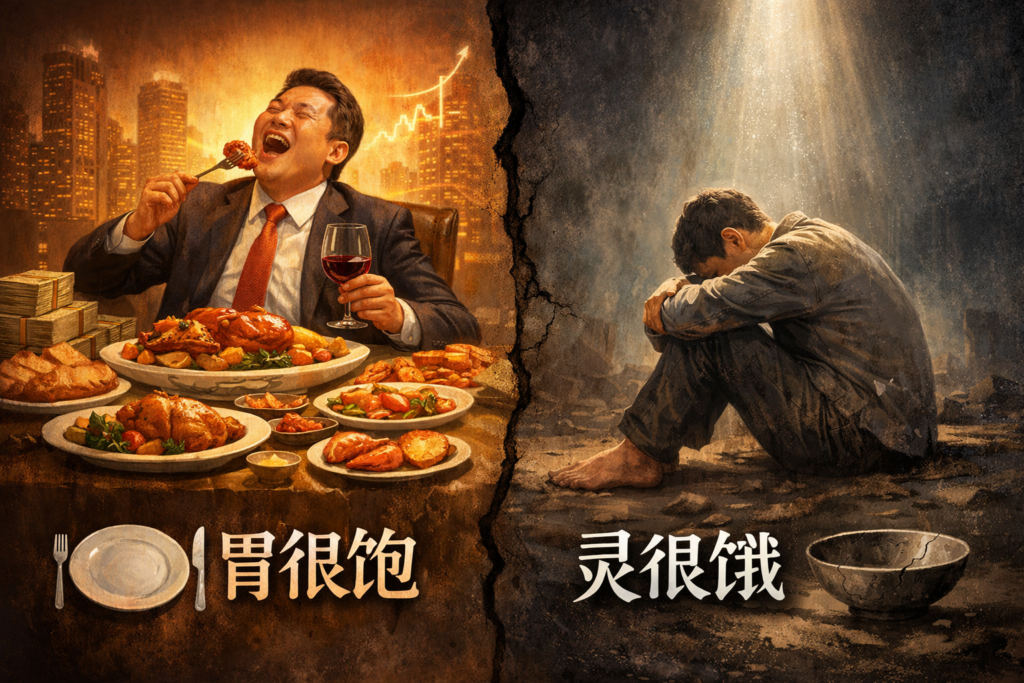
也许有人会说,明明是有人还生活在温饱线上,为了家庭和孩子的生存日夜打拼,又怎么会有时间去思考灵魂深处的事情呢?但这涉及社会和经济的复杂因素,今天暂不讨论。我想聚焦的是:为什么一个如此勤奋、如此务实的民族,灵性的饥渴感却日渐麻木?
简单来说,我认为根源有二:一是长期被儒释道文化深度熏陶,二是我们普遍不愿意为“看不见的东西”付出真实代价。
一、灵魂的“力气”投放错了地方
阴霾国的人是全世界最能吃苦、最肯付出的民族之一。为了物质层面的安稳与体面,我们可以忍受极致的枯燥,牺牲大量的休息,甚至透支健康。但在灵魂自由与生命意义这件事上,我们却表现得异常吝啬,甚至近乎懒惰。
在我们的潜意识账本里,“胃”是会叫的,而“灵”是不解渴的。我们习惯把所有的力气都投射在可见、可计量、可变现的物质目标上。对于不可见、无法立即带来回报的灵魂追问,我们常常觉得多想一分钟都是“内耗”。当一个人不再问“我为何而活”,而只关心“我如何活得更好”时,福音对他而言,就远不如一张实用的折扣券来得迫切。
二、被儒释道“格式化”的灵魂接收器
基督教在东方土地上常常显得“水土不服”,除了外部环境因素,更深层的原因在于:两千多年来,儒释道文化已深刻塑造了我们的精神结构。
儒家重人伦与现世秩序,释家讲因果与来世解脱,道家追求顺应自然与逍遥。这些思想共同指向一个核心——如何在现世中安身立命、如何处理可见的人际与现实问题。久而久之,我们的精神接收器被“格式化”成了只接受实用、现世、可感知信号的模式。
圣灵的教导却是超验的,它要求安静、仰望与降服。它呼唤我们暂时放下肉身的算计,去聆听那看不见的声音。可当一个民族长期习惯于在地表忙碌爬行,精神高度被压缩到只剩“平视利益”或“俯视弱小”时,那来自天上的电波,落在大脑里往往只会变成一串无法解读的乱码。
三、地下室里的灵魂与白天的面具
更荒诞的是灵魂的“两面性”。
许多人在私下场合——家庭教会、深夜的阅读、独处的祷告中——会短暂地触碰到灵魂的颤动,甚至热泪盈眶。他们真诚地渴望自由、渴望被神触摸。
然而,一旦回到白天,推开办公室的门,走进亲戚聚会或职场应酬,他们就会迅速戴上面具。圆滑的言语、精明的权衡、习以为常的随波逐流……为了维持表面的和谐与安全,他们宁可牺牲灵魂的一致性。
这种灵魂自由成了“地下室里的收藏品”——偶尔拿出来看看,却从不敢拿到阳光下真正使用。它无法兑现成日常的生命状态,最终只能成为一场无法落地的梦。
四、药方:从不再撒谎开始
如果这个民族的灵魂正处于一种“集体假死”的状态,真正的药方在哪里?
不在于读多少深奥的神学著作,而在于一个看似卑微、却极其关键的起点:停止撒谎,并开始为真实付出代价。
我们习以为常的“和谐”,本质上是由无数顺从的谎言堆砌而成。为了合群,我们对习俗撒谎;为了生存,我们对良知撒谎;为了安全,我们对内心最真实的呼声撒谎。当谎言成为日常的呼吸,灵魂便逐渐窒息。因为真理的灵,无法居住在一个由虚伪筑成的迷宫里。
不撒谎,是找回灵魂的第一步,也是最疼痛的一步。它意味着你可能不再那么“圆滑”、不再那么“好相处”,甚至会失去一些世俗的便利与人情。但也唯有愿意为“真实”支付代价,我们才真正开始把灵魂看得比胃的饱足更加重要。
当夜深人静,喧闹散去,我常常对自己说:哪怕只有一寸,也要守住内心的真实。只有这样,当那道光真正照过来的时候,我们才不至于因为早已失明,而错过那唯一的救赎。
Why Are Our Stomachs Full, Yet Our Souls Hungry?
By HuSir
In this era of material abundance, people in the Hazy Land seem to enjoy an unprecedented sense of fullness. Real estate, stocks, our children’s future, and the next better meal — we pour all our energy and intelligence into matters that are visible, tangible, and calculable. Yet while our stomachs grow increasingly full, many hearts quietly suffer from a hidden but persistent hunger — the hunger of the soul.
Some may say that many people are still struggling on the edge of basic survival, working day and night for their families and children’s livelihood. How could they have time to think about deep spiritual matters? That involves complex social and economic factors, which I will not discuss today. What I want to focus on is this: Why has a nation known for its diligence and pragmatism gradually become numb to spiritual thirst?
Simply put, I believe there are two root causes. First, the deep and long-term influence of Confucian, Buddhist, and Daoist culture. Second, our widespread unwillingness to pay a real price for things we cannot see.
I. Our Soul’s Energy Has Been Invested in the Wrong Place
People in the Hazy Land are among the most hardworking and willing to sacrifice in the world. For material stability and respectability, we can endure extreme boredom, sacrifice vast amounts of rest, and even exhaust our health. Yet when it comes to soul freedom and the meaning of life, we show remarkable stinginess, even laziness.
In our subconscious ledger, the “stomach” makes noise, while the “soul” does not thirst. We are accustomed to pouring all our energy into visible, measurable, and monetizable material goals. For invisible matters that cannot bring immediate returns — such as questions about the soul — we often feel that even thinking about them for one extra minute is “internal friction.” When a person stops asking “Why do I live?” and only cares about “How can I live better?”, the gospel becomes far less urgent to him than a practical discount coupon.
II. The Soul’s Receiver Has Been Formatted by Confucianism, Buddhism, and Daoism
Christianity often appears “unadapted” to Eastern soil. Apart from external environmental factors, a deeper reason lies in the fact that for over two thousand years, Confucian, Buddhist, and Daoist thought has profoundly shaped our spiritual structure.
Confucianism emphasizes human relationships and worldly order. Buddhism speaks of karma and liberation in the next life. Daoism pursues harmony with nature and carefree living. Together, these traditions point to one core concern: how to settle down and live peacefully in this present world, and how to handle visible interpersonal and practical issues. Over time, our spiritual receiver has been “formatted” to accept only practical, worldly, and perceptible signals.
The teaching of the Holy Spirit, however, is transcendent. It requires quietness, looking upward, and surrender. It calls us to temporarily set aside the calculations of the flesh and listen to the unseen voice. But when a nation has long been accustomed to crawling busily on the surface of the earth, with its spiritual height compressed until it can only “look horizontally at benefits” or “look down on the weak,” the signals from heaven often become nothing but undecipherable noise in the brain.
III. Souls in the Basement and Masks in the Daylight
What is even more absurd is the “duality” of the soul.
Many people, in private settings — family churches, late-night reading, or solitary prayer — momentarily touch the trembling of their souls and even shed tears. They sincerely long for freedom and to be touched by God.
Yet the moment they return to daylight, open the office door, or step into family gatherings and workplace socializing, they quickly put on their masks. Smooth words, shrewd calculations, and the habitual going with the flow… In order to maintain surface harmony and safety, they are willing to sacrifice the consistency of their souls.
This kind of soul freedom has become a “collection kept in the basement” — occasionally taken out to look at, but never dared to be brought into the sunlight and truly used. It cannot be cashed into daily life and ultimately remains an unrealizable dream.
IV. The Remedy: Begin by Stopping Lies
If the soul of this nation is in a state of “collective suspended animation,” where is the real remedy?
It does not lie in reading profound theological works, but in a seemingly humble yet extremely critical starting point: stopping lies and beginning to pay the price for truth.
The “harmony” we are accustomed to is essentially built upon countless submissive lies. To fit in, we lie to customs; to survive, we lie to our conscience; to stay safe, we lie to the truest voice in our hearts. When lying becomes our daily breath, the soul gradually suffocates. Because the Spirit of truth cannot dwell in a maze built of falsehood.
Stopping lies is the first step to recovering the soul, and also the most painful one. It means you may no longer be so “smooth,” no longer so “easy to get along with,” and may even lose some worldly conveniences and relationships. But only when we are willing to pay the price for “truth” do we truly begin to value the soul more than the fullness of the stomach.
When the night grows quiet and the noise fades away, I often say to myself: Even if it is only one inch, I must guard the truth in my heart. Only then, when that light truly shines upon us, will we not miss the only redemption because we have already gone blind.
发表回复