文 / HuSir
前言:从春节鞭炮禁令,到疫情时期的出行限制,再到宗教、经济与人口政策的变化——
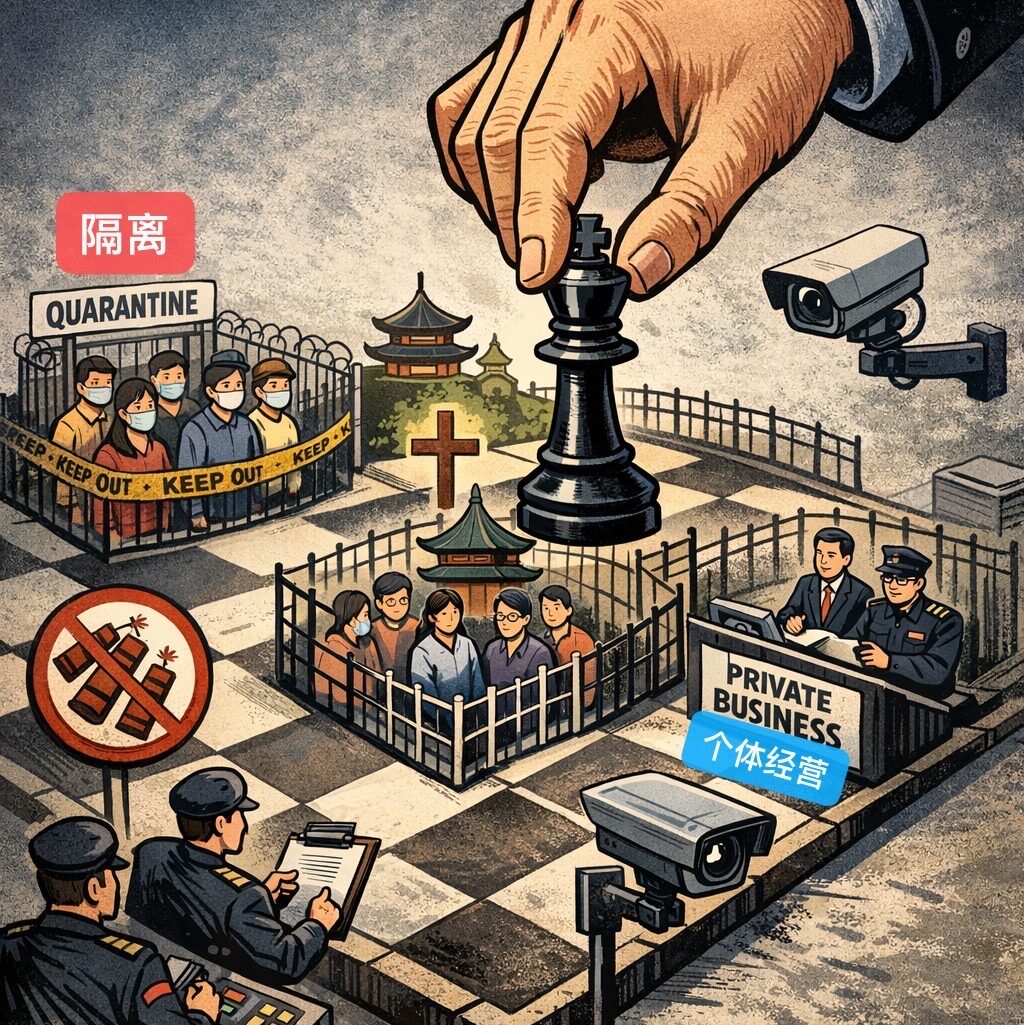
当治理不断进入日常生活细节,我们是否正在经历一场关于“服从边界”的社会实验?权力在测试服从,社会也在测试觉醒。
“爆竹声中一岁除,春风送暖入屠苏”,放鞭炮,本是阴霾国人春节期间最具象征意义的民俗之一。千百年来,人们在辞旧迎新的时刻点燃鞭炮,用爆裂的声响驱散旧年的阴霾,也表达对新年的祝愿。然而近几年,这一习俗却频频遭遇中央及各地的禁令,甚至连私家车携带鞭炮都可能被视为违法行为。对许多普通百姓而言,这样的规定显得难以理解。毕竟在他们的生活经验中,放鞭炮并非破坏秩序的行为,而是一种延续已久的文化表达。这一变化不仅是对民俗的限制,也让人开始思考:权力是否正在通过这些看似细微的事务,逐渐试探社会的服从边界?
但有趣的是,无论各地警察如何查车、如何抓捕,每到春节夜晚,各个城市与乡村仍旧能听见此起彼伏的鞭炮声,仿佛枪林弹雨一般。民间的习惯并没有因为禁令而完全消失。表面看,这似乎是一种政策与现实之间的落差。然而如果换一个角度看,这种现象也可能反映出一种更深层的社会互动:权力在不断试探社会的边界,而社会则在本能地寻找自身能够承受的空间。
阴霾国古代有一句话:“官不与民斗。”在传统社会中,国家治理与民间习俗之间往往存在某种默契。只要不触犯法律,不破坏公共秩序,不伤害社会风化,许多民俗都会在民间自然延续。放鞭炮便是这样的例子。然而在某些时代,权力的逻辑并不止于维持秩序,而是逐渐延伸到生活的更多细节。于是,一些原本属于社会习俗的自发领域的行为,也开始进入行政管理的范围。
这种趋势在疫情时期表现得尤为明显。当疫情爆发时,许多国家采取限制措施,本身并不奇怪。但在一些地方,限制逐渐层层加码:从控制疫情传播,发展到对个人出行的严格管理,甚至通过隔离等手段大幅压缩个人行动空间。许多人回顾那段经历时,往往产生一种疑问:某些措施究竟是出于防疫需要,还是在无形中测试社会的服从程度?
放鞭炮禁令在某种意义上也可以被理解为类似逻辑的一种延伸。民俗并不必然污染空气,也未必破坏公共安全,但它却成为行政管理的对象。这种管理方式给人的感觉,不再只是对某种具体风险的治理,而更像是在不断重新划定权力与社会之间的界线。当治理边界缺乏宪法性约束时,权力便可能不断扩展其管理范围。相比之下,一些国家的制度设计更强调权力边界。例如美国即使频繁发生枪击案件,也没有全面禁枪,其中一个重要原因便是其宪法第二修正案(1791年)对公民持枪权利的保护。
回顾过去几十年的社会变化,人们也能看到类似的模式在不同领域出现。新阴霾国成立初期,出于意识形态与政治安全的考虑,政府对来自西方的天主教和基督教活动进行严格限制,并推动建立“自治、自养、自传的教会”模式,以此作为规范宗教活动的框架,将原本与全球宗教体系相连的教会结构纳入本土化管理框架,同时对其他私下聚会的敬拜团体进行限制。后来,当佛教和道教在社会中仍然拥有广泛影响力时,党组织规定便冠以爱国爱党的名义逐渐进入寺庙和道观之中,以确保宗教活动始终处于政治框架之内。
经济领域也出现过类似现象。民营经济在某些时期展现出较高效率和活力,但与此同时,一些政策开始强调党组织进入企业,以突出政治领导的核心地位。对许多企业家来说,这不仅是组织结构的变化,也意味着一种文化与权力关系的重新界定。
人口政策的变化同样可以作为例证。几十年前,计划生育成为严格执行的国家政策,对无数家庭产生了深远影响;而近年来,又逐渐放开二胎、三胎。对普通家庭而言,这些政策调整往往意味着生活选择的巨大变化,却很少由个人决定。宪法规定个人生育直接与国家经济和社会发展挂钩。
从宗教到经济,从人口政策到疫情管理,再到民俗限制,这些现象在不同领域出现,但背后似乎存在某种共同逻辑:权力不断扩展管理范围,而社会则在适应、忍耐或寻找新的空间。
如果继续推演这种趋势,甚至有人用略带讽刺的方式表达担忧:如果这种趋势继续发展,或许有一天连人们的呼吸和行动方式都可能被纳入管理之中。当然,这样的说法带有讽刺意味,但它反映出一种普遍情绪——当治理的延伸不依法进行,权力进入越来越多的生活细节时,人们会自然产生对自由空间缩小的焦虑。
然而历史也提醒我们,社会变化往往并不是单向度的。百年前,阴霾国社会曾经历过一次重要的文化转变:裹脚这一延续了上千年的习俗最终被废除。值得注意的是,这一改变最初并非来自民众的普遍支持,反而在许多地方遭遇抵制。对很多家庭来说,裹脚早已成为文化习惯,甚至被视为女性美的象征。但随着教育传播、思想启蒙和社会结构变化,人们逐渐重新理解女性的身体与尊严,这一传统最终消失。
裹脚的终结其实说明了一件事情:社会观念的改变往往比行政命令更深远。当人们开始重新思考习俗、权力与个人尊严之间的关系时,制度也会随之改变。
因此,当面对各种社会限制时,一个更深的问题或许并不是简单的“如何对抗”,而是:社会如何在长期过程中逐渐形成更成熟的公民意识。真正稳定而健康的社会秩序,并不只依赖权力的命令,也依赖社会自身的责任感与公共精神。
权力的延伸若不断测试社会的服从边界,社会也在不断测试自身的觉醒边界。历史从来不是静止的。它在权力与社会之间的互动中缓慢前行。
也许真正值得思考的,并不是某一条禁令本身,而是一个更长远的问题:当一个社会不断面对边界收缩时,人民如何重新理解自由、责任与共同体之间的关系。
这个问题没有简单答案。但历史证明,任何社会的未来,最终都不会只由权力决定,也不会只由情绪决定,而是由人们在长期经验、记忆与反思中逐渐形成的社会共识所塑造。
Obedience Testing: When Power Begins to Probe the Boundaries of Society
By HuSir
Forward: From firecracker bans during Lunar New Year to pandemic mobility restrictions, from religion and private enterprise to population policies—When governance steadily expands into everyday life, are we witnessing a quiet test of social obedience?Power tests compliance.Society tests its awakening.
“Amid the crackling of firecrackers the old year departs; the spring breeze brings warmth with the wine of Tusu.” Setting off firecrackers has long been one of the most symbolic customs during the Lunar New Year in the Hazy Nation. For thousands of years, people have ignited firecrackers at the moment of bidding farewell to the old year and welcoming the new, using the explosive sound to drive away the gloom of the past year while expressing their hopes for the year to come. Yet in recent years, this custom has frequently encountered bans issued by central and local authorities. In some places, even carrying firecrackers in a private car may be treated as a violation of the law. For many ordinary citizens, such regulations are difficult to understand. In their lived experience, setting off firecrackers is not an act that disrupts public order, but rather a cultural expression that has been passed down through generations. This change is therefore not merely a restriction on a folk custom; it also raises a question: is power using such seemingly trivial matters to gradually test the boundaries of social obedience?
Yet an interesting phenomenon remains. No matter how strictly the police check vehicles or conduct inspections, every Lunar New Year night still echoes with the sound of firecrackers across cities and villages, as if bullets were raining down in a battlefield. The habit of the people has not completely disappeared because of the ban. On the surface, this seems to reveal a gap between policy and reality. But from another perspective, it may reflect a deeper form of social interaction: power continually tests the limits of society, while society instinctively searches for the space it can still bear.
There is an old saying in the Hazy Nation: “Officials should not fight the people.” In traditional society, governance and folk customs often existed in a tacit balance. As long as customs did not violate the law, disrupt public order, or harm social morality, they were allowed to continue naturally within society. Setting off firecrackers was precisely such an example. However, in certain periods, the logic of power extends beyond maintaining order and gradually reaches deeper into the details of everyday life. As a result, behaviors that once belonged to the spontaneous realm of social customs begin to fall under administrative management.
This trend became especially visible during the pandemic. When the pandemic first broke out, many countries imposed restrictions, which in itself was not unusual. But in some places, restrictions were gradually intensified layer by layer: what began as measures to control the spread of the virus evolved into strict management of personal movement, even using quarantine measures to drastically compress individuals’ freedom of action. When many people look back on that period, they often ask a question: were certain measures truly necessary for epidemic control, or were they, consciously or unconsciously, testing the degree of society’s obedience?
The ban on firecrackers can be understood as an extension of the same logic. Folk customs do not necessarily pollute the air, nor do they necessarily threaten public safety, yet they have become objects of administrative regulation. This style of governance no longer appears to be simply the management of specific risks, but rather an ongoing process of redrawing the boundary between power and society. When the limits of governance lack constitutional restraint, power can easily expand its scope of management. In contrast, some countries emphasize institutional limits on power. For example, despite frequent reports of mass shootings in the United States, the country has not implemented a comprehensive gun ban. One fundamental reason lies in the protection of citizens’ gun rights under the Second Amendment to the U.S. Constitution (1791).
Looking back over the past several decades, similar patterns can be observed across different fields. In the early years of the New Hazy Nation, out of concerns about ideology and political security, the government placed strict restrictions on Catholic and Protestant activities originating from the West. It promoted the model of the “Three-Self Church” (self-governance, self-support, and self-propagation) as the framework for regulating religious activities, bringing church structures that were originally connected to the global Christian community into a domestically managed system, while restricting other privately organized worship gatherings. Later, when Buddhism and Taoism continued to exert significant influence in society, party organizations gradually entered temples and Taoist monasteries under the banner of patriotism and loyalty to the party, ensuring that religious activities remained within a political framework.
A similar phenomenon appeared in the economic sphere. In certain periods, the private sector demonstrated higher efficiency and vitality than many state-owned enterprises. At the same time, however, policies began to emphasize the establishment of party organizations within private companies in order to highlight the central role of political leadership. For many entrepreneurs, this was not merely a structural change within organizations, but also a redefinition of the relationship between culture and power.
Changes in population policy offer another example. Decades ago, the one-child policy was strictly enforced as a national policy, profoundly affecting countless families. In recent years, however, the government has gradually relaxed these controls, first allowing two children and later three. For ordinary families, such policy adjustments often mean major shifts in life choices, yet these choices are rarely determined by individuals themselves. The constitution links personal reproduction directly to the nation’s economic and social development.
From religion to the economy, from population policy to pandemic management, and from there to the regulation of folk customs, these phenomena appear across different fields. Behind them, however, seems to lie a common logic: power continually expands the scope of governance, while society adapts, endures, or searches for new spaces within which to live.
If one continues to extend this trend, some people even express their concern in exaggerated terms: perhaps one day rulers will even regulate how many times people breathe or the way they walk. Of course, such remarks carry a tone of satire. Yet they reflect a widespread sentiment: when governance expands without being bound by law, and power enters more and more details of everyday life, people naturally begin to feel anxiety about the shrinking space of freedom.
History, however, also reminds us that social change is rarely one-directional. A century ago, the Hazy Nation experienced an important cultural transformation: the practice of foot-binding, which had lasted for more than a thousand years, was eventually abolished. Notably, this change was not initially supported by the majority of the population; in many places it even met with resistance. For many families, foot-binding had long been regarded as a cultural tradition and even as a symbol of feminine beauty. Yet as education spread, ideas evolved, and social structures changed, people gradually began to rethink the meaning of women’s bodies and dignity. In the end, the practice disappeared.
The end of foot-binding reveals an important truth: changes in social consciousness often run deeper than administrative orders. When people begin to reconsider the relationship between customs, power, and human dignity, institutions themselves begin to change.
Therefore, when facing various social restrictions, the deeper question may not simply be “how to resist,” but rather: how can society gradually cultivate a more mature sense of civic consciousness over time? A stable and healthy social order does not rely solely on commands issued by power; it also depends on society’s own sense of responsibility and public spirit.
If the extension of power continually tests the boundaries of obedience, society likewise tests the boundaries of its own awakening. History is never static. It moves slowly forward through the interaction between power and society.
What may truly deserve reflection is not any single prohibition itself, but a broader question: when a society repeatedly faces the shrinking of its boundaries, how should its people reinterpret the relationship between freedom, responsibility, and community?
There is no simple answer to this question. Yet history shows that the future of any society will ultimately be shaped neither by power alone nor by emotion alone, but by the social consensus gradually formed through people’s long experience, memory, and reflection.
发表回复