——从生存模式走向民主社会的真实路径
文 / HuSir
“活着”,是人生而为人的最低要求,也是任何社会秩序首先要解决的问题。在饥荒、战争、瘟疫与动荡的年代,能活下来,本身就是一种胜利。人们接受强力秩序,忍受压迫与不公,往往并非出于愚昧,而是出于一种最现实的判断:只要还能活着,其它都可以暂时放一放。
问题在于,当“活着”从阶段性的底线目标,被长期固化为社会运行的核心逻辑时,文明就开始停滞了,尤其是在没有饥荒、战争等动荡年代里。生存模式一旦被无限延长,便会悄然改变人对自身的理解——人不再被视为具有判断与尊严的个体,而被当作需要被安置、被管理、被维稳的对象。社会看似稳定,却逐渐失去向前生长的能力。
生存模式有其清晰而冷静的内在逻辑:减少不确定性,压低风险暴露,避免个人承担后果。在这种逻辑下,人们被反复训练去少问为什么、少作判断、少表达差异,把复杂问题交给权力处理。短期内,这种方式确实能降低焦虑,也能快速形成秩序,但长期来看,它会持续侵蚀人的三样东西:对未来的想象力、对自身尊严的确认,以及为选择负责的能力。
一、生存模式如何被制度化为“安全选择”
从人类文明历史看,国家治理的模式大致有集权式、民主式、分权式和混合式等主要类型。在集权结构中,这种生存逻辑被制度化、日常化、道德化。通过“下级服从上级、个人服从集体”的组织原则,判断被系统性上收,责任被层层转移。个人被反复告知:只要服从安排、完成任务、执行指令,后果自然由“组织”“上级”“集体”承担。
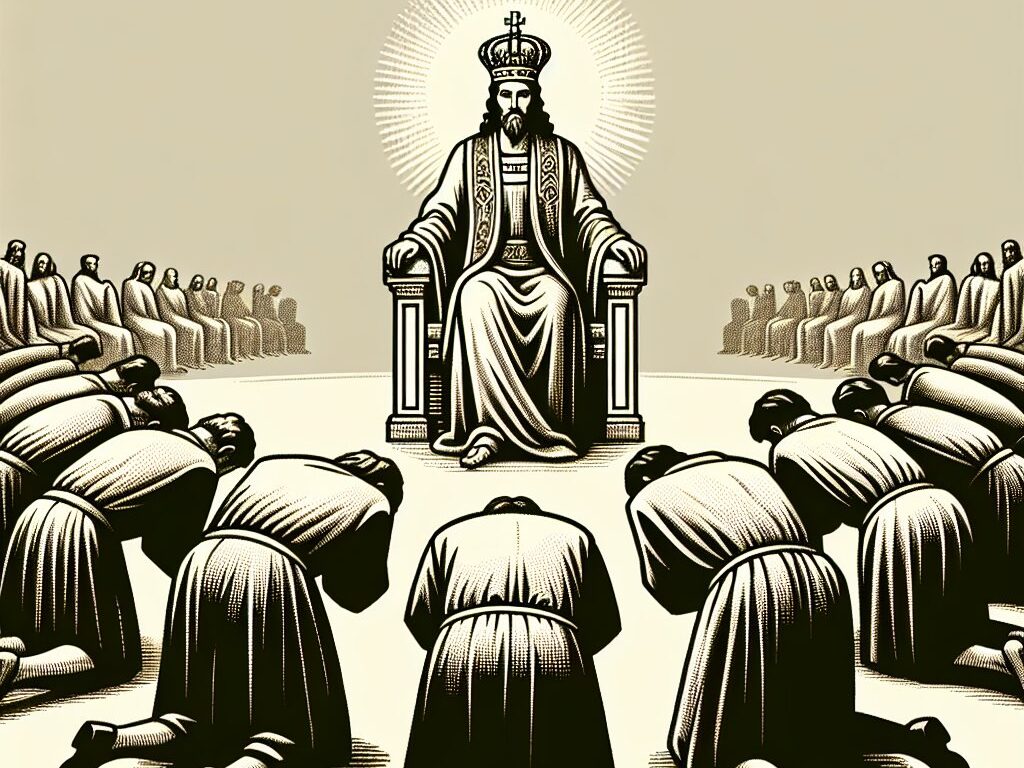
久而久之,一种极为稳定的心理结构形成了——人们并非真的不劳而获,而是不必为公共判断与公共后果负责。这种状态在生存模式下显得安全、合理,甚至被视为成熟与懂事。
当一个社会整体停留在这种生存结构中,自由便会显得多余甚至危险。自由意味着不确定,意味着判断失误的可能,意味着个体必须承担选择的后果。相较之下,“被安排”“被保护”“被告知正确答案”,反而显得更轻松、更稳妥。于是,自由不需要被公开否定,只需要被不断暗示为不现实、不成熟、不合时宜,它便会自行退场。
二、民主社会并非理想选择,而是风险倒逼的结果
这正是为什么,许多社会在客观条件已经发生变化之后,仍然难以走出生存叙事。并非人们不知道还有另一种生活方式,而是长期处于恐惧结构中的心智,已经不再相信自己有能力承受自由所带来的重量。集权之所以能够反复出现,并非因为它多么理想,而是因为它精准地回应了这种心理需求:有人替你决定,有人替你负责,有人替你承担后果。
民主社会的出现,恰恰不是因为人类突然变得高尚,而是因为这种“责任外包型生存模式”在历史中一次次破产。当权力高度集中却反复失败,当战争、财政、治理错误带来无法承受的代价,人们逐渐意识到一个残酷事实:把全部判断交给权力,反而是风险最高的选择。民主并非理想制度,而是一种在反复灾难之后,被迫接受的“次优方案”。
从历史看,民主社会的生成,往往经历三个阶段。第一阶段,人们仍然希望通过更换统治者来修复集权,相信“如果换一个更好的人,问题就能解决”。第二阶段,人们被迫承认:无论换谁,集中权力都会放大错误,个人无法再把命运完全交给他人。第三阶段,责任开始回到社会的中间层——法律、制度、公共讨论、权力制衡逐步出现,人们不得不为一部分公共后果承担责任。
正是在这一过程中,民主的人民根基才逐渐形成。它不是建立在“人人觉醒”的理想之上,而是建立在一个更冷静的共识之上:没有任何个人、组织或集体,值得被长期赋予不受限制的判断权。民主的核心,不是让人民轻松,而是让任何人都无法轻松地决定他人的命运。
三、从生存走向民主:个体能走的最小一步
因此,民主社会并不是生存模式的自然升级版,而是一条更艰难的道路。它更慢、更吵、更容易失败,也更要求个人承担心理与现实成本。但它的优势在于,错误可以被公开讨论,失败可以被及时止损,经验可以被真实累积。文明不再依赖某个“正确的人”,而依赖一套允许人犯错、纠错、复盘的结构。
回到现实个体层面,这条路并不要求每个人成为政治参与者或制度设计者。真正的起点,往往极其克制而具体:不提前放弃判断,不把明显错误说成合理,不因为服从结构而在内心彻底关闭思考通道。当越来越多的人愿意为自己的判断保留记录、为事实保留底线、为尊严承担一点点风险,社会才会真正具备走出生存模式的可能。
因此,生存并不是错误,自由也不是口号。问题只在于,一个社会是否允许人们在活着之后,继续成为完整的人。如果答案是否定的,那么再稳定的秩序,也只能维持表面的延续,而无法孕育真正的未来。文明的进化,从来不是从活着直接跳到自由,而是从不再甘心把一切判断与责任交出去开始。
Why “Simply Staying Alive” Is Never Enough to Sustain a Civilization
— The Real Path from Survival Mode to a Democratic Society
By HuSir
“Staying alive” is the lowest requirement of being human, and the first problem any social order must solve. In times of famine, war, plague, and turmoil, survival itself is a victory. When people accept strong authority and endure oppression or injustice, it is often not out of ignorance, but out of a sober calculation: as long as one can remain alive, everything else can be postponed.
The problem arises when “staying alive,” originally a bottom-line goal for exceptional circumstances, becomes permanently fixed as the core logic of social operation—especially in periods without famine or war. Once survival mode is indefinitely extended, it quietly reshapes how people understand themselves. Individuals are no longer seen as beings with judgment and dignity, but as objects to be arranged, managed, and stabilized. Society may appear orderly, yet it gradually loses its capacity for growth.
Survival mode follows a clear and cold internal logic: reduce uncertainty, suppress risk exposure, and avoid personal responsibility for consequences. Under this logic, people are repeatedly trained to ask fewer questions, make fewer judgments, and express fewer differences, while complex problems are handed over to authority. In the short term, this does reduce anxiety and rapidly produces order. In the long run, however, it steadily erodes three essential human capacities: imagination for the future, recognition of personal dignity, and the ability to take responsibility for one’s choices.
I. How Survival Mode Becomes Institutionalized as “Safety”
Across human history, systems of governance have generally taken centralized, democratic, decentralized, or hybrid forms. Within centralized systems, survival logic becomes institutionalized, normalized, and moralized. Through organizational principles such as “subordinates obey superiors” and “individuals submit to the collective,” judgment is systematically concentrated upward while responsibility is passed along layer by layer. Individuals are repeatedly told that as long as they follow orders, complete tasks, and execute instructions, the consequences will be borne by “the organization,” “the leadership,” or “the collective.”
Over time, a highly stable psychological structure forms. People are not truly living without effort; rather, they are no longer required to bear responsibility for public judgment or public outcomes. In survival mode, this condition feels safe, reasonable, and is even praised as maturity and sensibility.
When an entire society remains within this structure, freedom begins to appear unnecessary or even dangerous. Freedom implies uncertainty, the possibility of misjudgment, and the burden of bearing consequences. By contrast, being “arranged,” “protected,” or “given the correct answer” feels easier and more secure. As a result, freedom does not need to be openly rejected—it only needs to be repeatedly framed as unrealistic, immature, or inappropriate, and it quietly exits the stage.
II. Democracy Is Not an Ideal Choice, but a Result of Risk Collapse
This is why many societies struggle to leave survival narratives behind even after objective conditions have changed. It is not that people are unaware of alternative ways of living, but that minds shaped by long-term fear structures no longer believe they can carry the weight of freedom. Centralized power persists not because it is ideal, but because it precisely satisfies this psychological need: someone else decides, someone else is responsible, someone else bears the consequences.
Democratic societies did not emerge because humanity suddenly became noble. They arose because this “outsourced-responsibility survival model” repeatedly collapsed in history. When concentrated power failed again and again—through war, fiscal collapse, and catastrophic governance errors—people were forced to recognize a harsh truth: entrusting all judgment to authority is actually the highest-risk option. Democracy is not an ideal system, but a “second-best solution” accepted after repeated disasters.
Historically, democratic societies tend to form through three stages. In the first, people still hope to repair centralized power by replacing rulers, believing that “a better person” will solve the problem. In the second, people are forced to admit that no matter who rules, concentrated power amplifies error, and individuals cannot safely surrender their fate to others. In the third, responsibility begins to return to the middle layers of society—law, institutions, public discourse, and checks on power gradually emerge, and people are compelled to bear a portion of public consequences.
It is through this process that the popular foundation of democracy slowly forms. It is not based on the ideal that “everyone awakens,” but on a sober consensus: no individual, organization, or collective deserves unlimited judgment power over time. The essence of democracy is not to make life easy for the people, but to ensure that no one can easily decide the fate of others.
III. From Survival to Democracy: The Smallest Step an Individual Can Take
Democracy, therefore, is not a natural upgrade of survival mode, but a far more demanding path. It is slower, noisier, more prone to failure, and requires individuals to bear psychological and real-world costs. Its strength lies in the fact that mistakes can be publicly discussed, failures can be stopped before becoming catastrophic, and experience can be genuinely accumulated. Civilization no longer depends on finding the “right person,” but on maintaining structures that allow error, correction, and reflection.
At the individual level, this path does not require everyone to become a political actor or institutional designer. The true starting point is often modest and concrete: not abandoning judgment prematurely, not labeling obvious errors as reasonable, and not shutting down one’s capacity for thought out of obedience to structure. When more people are willing to preserve records of their judgment, maintain boundaries of truth, and bear a small amount of risk for dignity, society begins to acquire the capacity to leave survival mode behind.
Thus, survival is not a mistake, and freedom is not a slogan. The question is whether a society allows people, after staying alive, to continue becoming complete human beings. If the answer is no, then even the most stable order can only maintain surface continuity, never a genuine future. Civilizational evolution does not leap directly from survival to freedom; it begins when people are no longer willing to surrender all judgment and responsibility.