——从制度逻辑、信仰缺失与人的责任谈起
文/HuSir
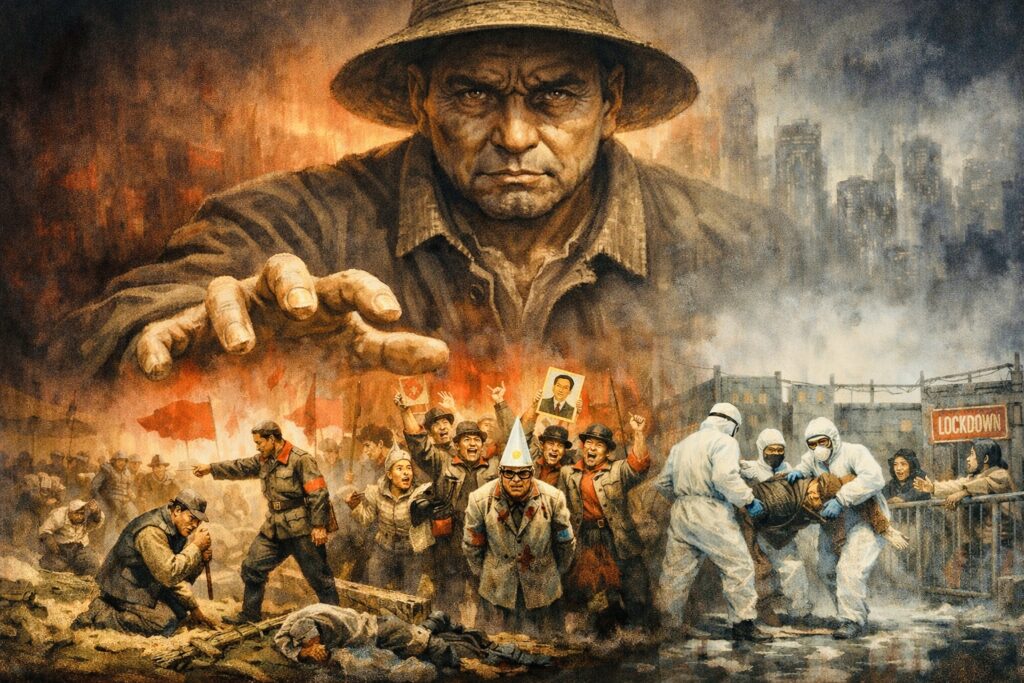
自建国以来,大洋国在多个关键历史阶段,以“阶级斗争”“清除敌对势力”“维护整体稳定”等名义,作出了一系列影响深远的重大决策。这些决策往往出发于权力安全与意识形态需要,缺乏最基本的道德考量和长远意义上的逻辑判断,时刻在动态清除不安定因素,在现实中造成了极其广泛、深重且长期的社会灾难。
问题的关键并不仅在于“是否犯过错误”,任何国家、任何政权,都不可能完全避免错误。真正值得警惕的是:这些错误为何一次次发生,却始终无法在逻辑上、制度上被彻底反思与纠正。
一、大洋国的独裁结构,使错误难以被发现,更难以被纠正
在高度集权的体制中,决策权集中于极少数人之手,而社会缺乏独立的信息渠道、司法审查与公共讨论空间。结果是:
- 错误往往在被发现之前,已经造成巨大伤害
- 决策的正确性主要取决于政治立场,而非事实与后果
- 即便出现严重后果,也更倾向于被解释、淡化或转移责任
在这样的结构中,错误不再被视为需要悔改的对象,而被当作需要掩盖的风险。这使得制度本身,逐渐失去自我修正的能力。
二、不反思的权力,也依赖不追问的社会
然而,仅仅将责任归结于大洋国的独裁结构,并不足以解释全部问题。另一个同样重要、却常被忽视的因素在于:社会整体对真理、良知与责任的关系,逐渐变得模糊。
在长期的政治高压与意识形态塑造下,许多人学会了回避判断、放弃追问:
- 错误被理解为“时代问题”,而非人的选择
- 灾难被视为“不可抗力”,而非可反思的结果
- 个人只需“自保”,无需承担道德立场
当一个社会不再鼓励人们面对真理,也不再鼓励为错误承担责任,权力的专断就不再需要持续使用暴力,它可以通过沉默与顺从自行维持。因此,一个值得反复追问的问题是:在如此多次、如此惨烈的历史错误之后,为什么社会并未形成真正的反思机制?为什么悲剧没有成为警钟,反而常常被重新包装、合理化,甚至被重复制造?除了制度结构本身,一个常被忽略却极其关键的因素,是文化传统与信仰在现实中的失效方式。下面我从人民群体中的文化传统和有一定信仰根基的人群这个角度详细分析一下。
儒家:秩序优先,责任被向上转移
在长期的政治实践中,儒家思想更多以一种治理伦理而非信仰形态存在。它强调服从、忍耐、角色责任与整体稳定,却很少为“权力犯错后如何被追责”提供清晰路径。当“顾全大局”“以和为贵”被反复强化,个体对错误的判断能力往往被道德化地压制。结果是:错误不被直面,责任被稀释,反思被视为破坏秩序。悲剧于是被解释为“代价”“阵痛”“历史阶段”,而不是需要被追究的决策后果。
道与佛:苦难被内化,现实责任被消解
道家与佛家原本都包含对权力幻象的深刻洞察。但在现实中,它们常被简化为一种承受苦难的心理机制。当苦难被理解为“自然运行”“个人修行”“因果所致”,人们便容易将结构性错误转化为个体命运问题。
不公不再被质问,灾难不再被追责,错误被转化为“想开一点”。这并非信仰本身的缺陷,而是信仰在权力压力下,被重新解释成不触碰现实的安慰工具。
基督教:信仰被私有化,反思被去公共化
在神学上,基督信仰强调悔改、认罪与更新,强调真理高于权力。但在现实环境中,许多信徒选择将信仰严格限定在个人层面。因为害怕在实际生活中出现信仰偏差,同时缺乏牧者的合适引导,不敢在社会问题中坚持真理,结果是依据“随波逐流”,明哲保身。不愿意在现实生活中悔改,而仅仅将悔改变成个人道德,救赎变成来世盼望,而现实中的制度性错误,则被视为“不便讨论的话题”。当信仰只作用于内心,而不再触及公共责任,它便失去了阻止悲剧重演的能力。
一个共同结果:错误不再需要被承认
无论是传统文化,还是不同宗教形态,当它们在现实中无法促成人对错误的公开承认与悔改,就会产生一个相同的后果:错误被叙事化,而非被反省;悲剧被纪念,却不被纠正。而当一个社会长期无法承认错误,悲剧就不再是例外,而会逐渐演变为一种“可接受的常态”。
这正是悲剧反复发生的深层原因之一。
三、信仰缺失,使人失去对“更高标准”的敬畏
从更深的层面看,这一切并非单纯的政治问题,而是信仰与灵性的问题。当人不再承认有任何高于政权、意识形态与现实利益的真理标准时,道德判断便会随权力而移动。对错不再由良知决定,而由立场决定;生命不再因其本身而珍贵,而因是否“有用”而被衡量。俗话说,人若不敬畏真理,便会被谎言辖制。
在这样的环境中,邪恶并不总是以暴力的形式出现,它更常通过合理化、服从与冷漠扩散。人们并非主动选择成为恶的同谋,但在不反思、不悔改、不追求真理的状态中,既成了独裁者的工具,也成了制度性灾难的受害者。
四、悔改并非软弱,而是阻止悲剧重演的起点
真正的出路,并不在于仇恨或简单归罪,而在于是否愿意面对一个艰难却必要的问题:我们是否承认人会犯错?是否承认权力必须被约束?是否承认真理高于任何世俗权威?悔改,并不是情绪化的自责,而是理性而诚实的回转——承认错误的存在,理解错误的根源,并在制度与心灵层面防止其再次发生。只要错误仍然被掩盖,悲剧就不会真正结束;只要真理仍然被回避,历史就注定会以不同的面目重演。
结语
独裁并非只靠少数人维持,它的另一面是依赖一个不再追问真理的环境。而真正的改变,往往不是从权力中心开始,而是从个体重新恢复良知、敬畏与对真理的渴望开始。这并非易事,但这是唯一不再重复悲剧的道路。
When Errors Are Not Reflected Upon, Tragedy Will Repeat Itself
— On Institutional Logic, the Absence of Faith, and Human Responsibility
By HuSir
Since its founding, Oceania has, at multiple critical historical junctures, made a series of far-reaching decisions in the name of “class struggle,” “eliminating hostile forces,” and “maintaining overall stability.” These decisions were often driven primarily by concerns over regime security and ideological control, lacking even the most basic moral consideration or long-term rational judgment. Through continuous campaigns to eliminate perceived instability, they have produced widespread, profound, and long-lasting social disasters.
The core issue is not simply whether mistakes were made. No country or government is entirely free from error. What truly warrants concern is why such errors have occurred repeatedly, yet have never been thoroughly examined or corrected at the logical or institutional level.
I. An Authoritarian Structure Makes Errors Difficult to Detect—and Even Harder to Correct
In a highly centralized system, decision-making power is concentrated in the hands of a very small group, while society lacks independent channels of information, judicial review, and public deliberation. As a result:
- Errors often cause enormous harm before they are even recognized
- The “correctness” of decisions is determined by political stance rather than facts or consequences
- Even when outcomes are catastrophic, responsibility is more likely to be explained away, diluted, or shifted elsewhere
Under such a structure, errors are no longer treated as matters requiring repentance, but as risks that must be concealed. Over time, the system itself loses its capacity for self-correction.
II. Power That Refuses Reflection Also Depends on a Society That Stops Asking Questions
However, attributing responsibility solely to authoritarian structures does not fully explain the problem. An equally important yet often overlooked factor is the gradual blurring of society’s understanding of truth, conscience, and responsibility.
Under prolonged political pressure and ideological conditioning, many people learn to avoid judgment and abandon inquiry:
- Errors are framed as “historical circumstances” rather than human choices
- Disasters are treated as “inevitable forces” rather than outcomes open to reflection
- Individuals focus on self-preservation, feeling no obligation to take a moral stand
When a society no longer encourages people to face the truth or assume responsibility for errors, authoritarian power no longer needs constant violence to sustain itself; silence and conformity become sufficient.
This raises a question that must be asked repeatedly: after so many devastating historical errors, why has genuine reflection failed to take root? Why have tragedies not become lasting warnings, but instead been repackaged, rationalized, and even reproduced?
Beyond institutional structure itself, one crucial yet often neglected factor lies in how cultural traditions and faith have failed in practice. The following analysis examines this issue from the perspectives of popular cultural traditions and communities with religious foundations.
Confucianism: Order First, Responsibility Shifted Upward
In long-standing political practice, Confucianism has functioned more as a governing ethic than as a transcendent faith. It emphasizes obedience, endurance, role-based responsibility, and overall stability, yet offers little guidance on how power should be held accountable when it errs.
When concepts such as “preserving the greater good” and “maintaining harmony” are repeatedly reinforced, individuals’ capacity to judge wrongdoing is often morally suppressed. Errors go unaddressed, responsibility is diluted, and reflection is seen as a threat to order. Tragedies are thus explained away as “necessary costs,” “growing pains,” or “historical stages,” rather than as decision-making failures that demand accountability.
Daoism and Buddhism: Suffering Internalized, Real-World Responsibility Dissolved
Both Daoism and Buddhism originally contain profound insights into the illusory nature of power. In reality, however, they are often reduced to psychological coping mechanisms for enduring suffering.
When hardship is interpreted as “the natural order,” “personal cultivation,” or “karmic consequence,” structural errors are easily transformed into matters of individual fate. Injustice is no longer questioned, disasters are no longer traced back to responsibility, and wrongdoing is neutralized with phrases like “just let it go.”
This is not a flaw inherent in these traditions, but the result of faith being reinterpreted under pressure to avoid confronting reality—becoming a tool of consolation rather than moral engagement.
Christianity: Faith Privatized, Reflection Removed from the Public Sphere
Theologically, Christianity emphasizes repentance, confession, and renewal, affirming that truth stands above power. In practice, however, many believers restrict their faith strictly to the private realm.
Out of fear of misapplication, social consequences, or insufficient pastoral guidance, believers often avoid standing for truth in public issues, choosing conformity and self-protection instead. Repentance is reduced to personal morality, salvation becomes solely a hope for the afterlife, and systemic injustice is treated as “not appropriate to discuss.”
When faith functions only inwardly and no longer engages public responsibility, it loses its power to prevent tragedy from repeating.
A Shared Outcome: Errors No Longer Need to Be Acknowledged
Whether through traditional culture or religious forms, when a society fails to promote public acknowledgment of error and genuine repentance, the outcome is the same: errors are narrated rather than examined; tragedies are commemorated but not corrected.
When a society cannot admit mistakes, tragedy ceases to be exceptional and gradually becomes an “acceptable normal.”
This is one of the deepest reasons such tragedies continue to recur.
III. The Absence of Faith Erodes Reverence for a Higher Standard
At a deeper level, this is not merely a political issue, but a spiritual one. When people no longer recognize any truth higher than the state, ideology, or immediate interest, moral judgment shifts with power.
Right and wrong are no longer guided by conscience, but by position. Human life is no longer valued for its inherent dignity, but measured by its “utility.” As the saying goes, when people cease to revere truth, they inevitably fall under the dominion of lies.
In such an environment, evil does not always manifest through overt violence. More often, it spreads through rationalization, obedience, and indifference. People may not actively choose to become accomplices, yet through non-reflection, non-repentance, and the abandonment of truth, they become both tools of authoritarian power and victims of institutional disaster.
IV. Repentance Is Not Weakness, but the Beginning of Ending Tragedy
The true way forward lies neither in hatred nor in simplistic blame, but in confronting a difficult yet necessary set of questions: Do we acknowledge that humans err? Do we accept that power must be constrained? Do we recognize that truth stands above all worldly authority?
Repentance is not emotional self-condemnation, but a rational and honest turning back—acknowledging error, understanding its roots, and preventing its recurrence both institutionally and spiritually. As long as errors are concealed, tragedy will not truly end. As long as truth is avoided, history will inevitably repeat itself in new forms.
Conclusion
Authoritarianism is not sustained by a small group alone; it also relies on an environment that no longer seeks truth. Genuine change rarely begins at the center of power, but with individuals who recover conscience, reverence, and a longing for truth.
This path is not easy—but it is the only way to ensure that tragedy does not repeat itself.