文/HuSir
在大洋国,人们从小就被一种温暖而坚定的国家叙事包裹:我们与国家是一体的,政府永远代表人民,权力与每个人休戚与共。从课本到新闻,从标语到文件,这套话语被重复了千万遍,仿佛天经地义。然而,一旦真正走进生活,你就会发现,口号与现实之间裂开了一道越来越深的鸿沟。
法律写着“人民至上”,可人民无法选择自己脚下的土地归谁、无法自由迁徙、无法畅所欲言、无法监督权力、也无法决定税收和资源怎么花;口号喊着“权为民所用”,可权力既不受制衡也不受监督,更不必为错误买单;即便是所谓的纪委这一党内监督机构也不过是为最高统治者延续权力的陪唱而已。宣传说“我们是一家人”,可到关键时刻,这个“家”的利益常常与千千万万普通人的实际生活背道而驰。
这种结构性矛盾,构成了大洋国独有的“敌我结构”:权力把人民视为潜在威胁,而非国家根基。这不是情绪化的指责,而是制度运行的必然结果,其宪法规定的一系列权力只不过是给自由世界粉饰自己的幌子,所有许诺给人民的权力和权利均被各种各样的法规、党的文件歪曲,实则名存实亡,如言论自由、宗教自由等等。
要弄清大洋国为何必然走向敌我对立,也为了明白自由国家为何几乎不可能出现同样结构,我们必须回到一个最根本的问题:国家与人民的关系究竟是由宣传决定的,还是由法律逻辑决定的。以下,便是几方面的核心内容比较。
一、权力优先,还是人民优先?
大洋国的制度从来不是为了限制权力,而是为了保障权力的长久稳定。因此:法律主要用来规范人民,而不是约束政府;公权力的边界可以无限延伸,个人权利的边界却被划得死死的;权力犯错无需负责,人民犯错必须承担全部后果;政府可以随意解释一切,人民却不能质疑任何解释。这种结构性倾斜,正是敌我关系的根源。
以土地制度为例。大洋国最动听的说法是“土地属于人民集体”,听上去无比崇高,可现实是:人民不能买卖、不能自主决定用途、不能决定收益分配;政府却可以源源不断地“卖地”,卖地收入也并不返还给所谓“集体”。当决策失误导致巨额债务,最终通过高房价、重税费、罚款、通胀、基层财政枯竭、民生削减,全部转嫁到人民头上。于是,口号里最美的制度,变成了:人民承担后果,权力独占收益。权力才是真正的主人,人民只是被管理的对象。在自由国家,这几乎不可能发生,因为法律默认:土地属于人民,权力只是受托管理者。两者的主客关系彻底倒置。
二、防疫三年:敌我结构最赤裸的展示
那三年,数亿大洋国人第一次如此清晰地体会到:权力是绝对自由的,人民是绝对被动的。你决定不了能否出门、能否上班、能否就医、能否返乡、能否说话、能否知道真相。人被封在楼里、封在城里、堵在高速路上,而权力却可以朝令夕改、重新解释数据、否定昨日的命令。所有的成本由人民承担,权力几乎零成本。人民无权质疑权力,权力却随时可以彻底改变人民的生活。这正是敌我结构最极致的体现。
而在自由国家,政府每一次限制公民自由都必须提交法律依据,接受议会、法院、媒体、公众的多重审查与追责。限制自由是“例外”,且代价高昂;在大洋国,限制自由却是“常态”,且毫无代价。两种世界观截然相反,这样的反差归根结底是国家治理者的价值观和信仰不同,一个属神,一个属魔鬼。
三、户籍制度:用纸面身份制造真实阶级
自由国家最基本的共识是:人可以选择生活在哪儿。大洋国却把人永久钉死在一个行政单位上,并根据这个单位决定你能享受什么等级的公共服务。同一个国籍,因为出生地不同,教育、医疗、养老、买房、落户的权利天差地别。这不是人口管理政策,而是赤裸裸的制度化阶级区隔。
自由国家的逻辑是:国家为每一个人服务。大洋国的逻辑是:人民必须适应国家划好的格子。于是,敌我结构再次被强化。
四、教育:统一本质,还是解放人格?
自由国家的未来取决于它如何对待孩子。自由国家的教育核心是:教会独立思考、鼓励质疑、保护表达、尊重差异,不把孩子当成工具。
大洋国的教育核心是:统一答案、统一叙事、统一价值、统一考试,把忠诚放在思考之前,把顺从放在创造之前,把集体永远高于个体。这不是简单的教学方法之别,而是一场意识形态工程。一个必须统一思想的社会,最害怕的就是独立人格和人民具备不同的信仰,以及由此产生的自由言论。
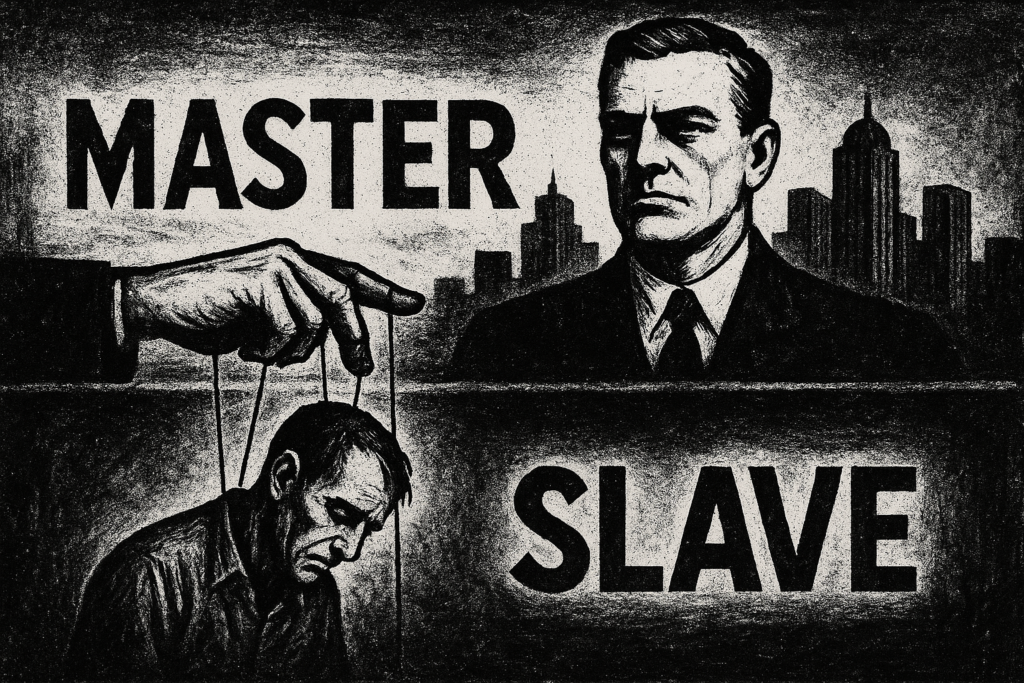
五、法律地位的根本差异:谁是主人,谁是奴隶?
这是大洋国与自由世界最彻底的分水岭。先看自由国家:人民在上,国家在下。权力必须接受公众、媒体、独立司法、议会的监督与问责;人民可以批评、投票、起诉政府、要求信息公开、随时更换执政者。人民既是权力的来源,也是权力的最终审判者。
再看大洋国:国家在上,人民在下。人民不能选择、不能更换、不能审查、不能监督、不能公开质疑权力;法律的最终解释权永远掌握在权力手中,纪委沦为党派统治者选择性执行法律、有目的性的抓人、打击异己的帮凶。人民只是被管理的奴隶,而不是权力的主人。
六、为什么自由国家不会出现敌我结构?
因为自由国家的底层逻辑是:国家是人民的仆人,而非人民的主人。因此制度被刻意设计为:任何人掌权都不能太久;任何权力都必须被制衡;法律首先约束权力;信息必须公开;人必须能表达不满;媒体必须能追问执政者。于是,国家与人民永远是“服务与被服务”的关系,而非“统治与被统治”。自由国家最害怕的是权力侵犯人民;
大洋国最害怕的是人民挑战权力。恐惧的对象不同,制度就不同,人与国家的关系就不同。
七、属灵视角:神国为何永远拒绝敌我结构?
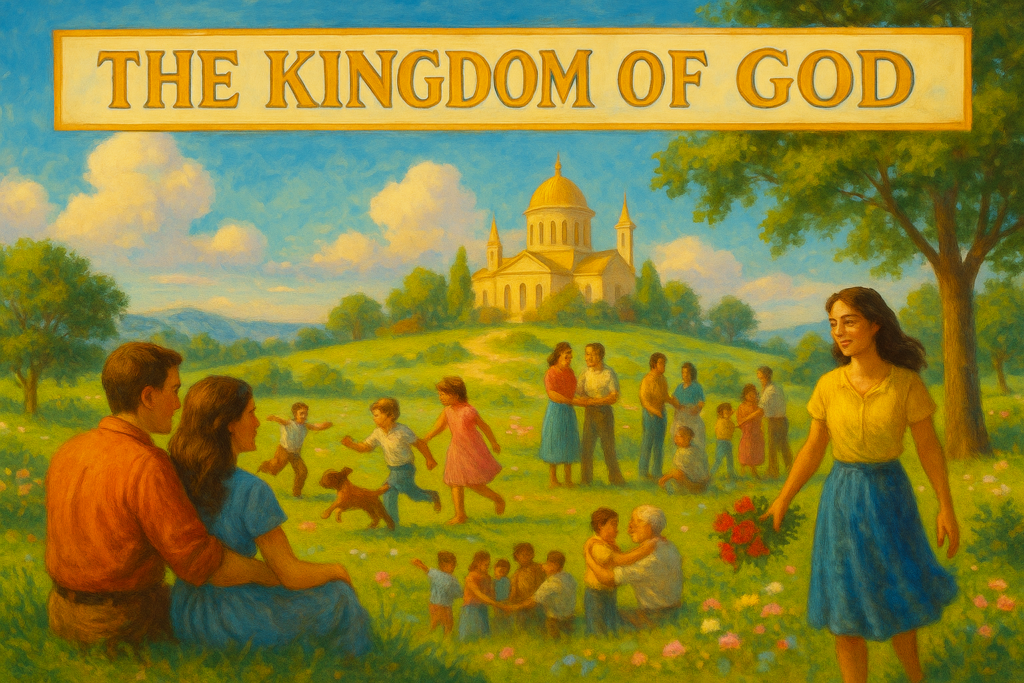
在神的国度里:人是按神的形象被造的,有自由意志与不可剥夺的尊严;权柄的目的是保护人、服事人,而非控制人。耶稣说:“你们中间为大的,倒要像最小的;为首的,倒要像服事人的。”这是神国政治哲学的全部核心。
极权体系却反其道而行:权力至上,人是工具,自由危险,思想必须统一,一切制度与政策最终只为维护权力本身。
神国的权柄是光,极权的权柄是影;神国的关系是爱,极权的关系是敌我。
结语:从大洋国的梦中醒来
敌我结构不是一句口号,而是活生生的生活逻辑。当权力把人民当作“奴隶”,人民就永远不可能把当权者当作“仆人”。一个民族要从大洋国的梦中醒来,不是为了革命、推翻或对抗,而是为了:拥有思想、拥有自由、拥有尊严、拥有选择,拥有真正作为“人”的位置,拥有神为我们预备的那份光。
当一个人开始思考,敌我结构就出现了第一道裂缝;当更多人醒来,那个笼罩所有人的梦,就再也维持不下去了。
愿每一位生活在大洋国的人,都能走向光、走向真理、走向自由,走向神为你预备的那丰盛的生命。
Are People in Oceania Masters or Slaves?
By HuSir
In Oceania, people grow up enveloped by a warm and unwavering national narrative: We and the state are one. The government always represents the people. Power shares the people’s joys and sorrows. From textbooks to news broadcasts, from slogans to official documents, this set of ideas is repeated millions of times until it feels like a self-evident truth.
Yet the moment one steps into real life, a widening chasm appears between the slogans and reality.
The law proclaims “the people come first,” but the people cannot determine who owns the land beneath their feet, cannot freely relocate, cannot speak openly, cannot supervise state power, and cannot decide how taxes or public resources are used. The state shouts “power belongs to the people,” yet that power is neither restrained nor supervised and never pays for its mistakes. Even the so-called disciplinary commissions, nominally a mechanism for internal oversight, are merely background musicians helping the supreme ruler perpetuate his authority. Propaganda claims “we are one family,” yet in critical moments, the interests of this “family” often run counter to the real lives of millions of ordinary people.
This structural contradiction forms Oceania’s unique “friend–enemy framework”: power regards the people as a potential threat rather than the foundation of the state. This is not an emotional accusation; it is the inevitable result of how the system functions. The constitutionally guaranteed rights serve only as a decorative façade for the outside world. In practice, every right promised to the people is hollowed out by lower regulations, directives, and Party documents—speech, religion, and other freedoms exist in name only.
To understand why Oceania inevitably slides into a friend–enemy structure—and why liberal democracies rarely, if ever, experience the same—we must return to one foundational truth: the relationship between the state and the people is not determined by propaganda, but by legal logic.
Below is a structural comparison across several key dimensions.
1. Power First, or People First?
Oceania’s system was never designed to restrain power but to guarantee its long-term stability. Therefore:
- The law primarily regulates the people, not the government.
- The boundaries of public authority expand freely, while the boundaries of personal rights are tightly drawn.
- When power errs, no one is held accountable; when the people err, they bear the full cost.
- The government may reinterpret anything at will, while the people may question nothing.
This structural tilt is the root of the friend–enemy divide.
Take the land regime as an example. Oceania’s most poetic ideal is: “the land belongs to the people collectively.” It sounds noble. But in reality, the people cannot buy or sell land, cannot determine its use, cannot decide how its profits are distributed. The government, however, can sell land endlessly—and the revenue does not return to the so-called “collective.”
When poor decisions lead to massive debt, the consequences are transferred to the people through soaring housing prices, heavy taxes and fees, fines, inflation, fiscal collapse at the grassroots level, and cuts in public services. Thus, the most beautiful slogan becomes a cruel equation: the people bear the losses, and power keeps the gains.
Power is the true master; the people are merely managed objects.
In liberal democracies, this is almost impossible, because their legal foundations assume: land belongs to the people, and power is only a trustee.
The master–servant relationship is fully reversed in Oceania.
2. Three Years of Pandemic: The Friend–Enemy Structure Laid Bare
During those three years, hundreds of millions in Oceania grasped a truth with unprecedented clarity: power is absolutely free, and the people are absolutely passive.
You could not decide whether you could leave your home, work, seek medical treatment, return to your hometown, speak openly, or know the truth. People were sealed inside buildings, inside cities, stopped at checkpoints—yet power could change orders overnight, reinterpret data, and disown yesterday’s commands.
The people bore every cost; power bore none.
The people could not question authority; authority could redefine the people’s entire lives at any moment.
This is the friend–enemy structure in its purest form.
In liberal countries, every restriction on personal freedom must be justified legally and subjected to legislative scrutiny, judicial review, media oversight, and public accountability. Restrictions on freedom are exceptions and extremely costly. In Oceania, restricting freedom is routine and cost-free.
The contrast lies not in competence, but in worldview—one shaped by God, the other by the forces opposed to Him.
3. The Household Registration System: Paper Identities Creating Real Castes
In liberal nations, one basic premise stands firm: people may choose where they live.
Oceania, however, nails individuals permanently to an administrative unit, and that unit determines their access to all public services.
Two citizens with the same nationality have radically different rights in education, healthcare, pensions, home ownership, and residency—solely because of where they were born.
This is not population management; it is institutionalized caste division.
The logic of free nations is: the state serves every individual.
Oceania’s logic is: individuals must fit into pre-drawn boxes.
Once again, the friend–enemy divide deepens.
4. Education: Uniformity or the Liberation of the Person?
The future of any nation lies in how it treats its children.
Liberal education aims to cultivate independent thinking, encourage questioning, protect free expression, respect differences, and avoid treating children as tools.
Oceania’s education aims for uniform answers, uniform narratives, uniform values, and uniform examinations—placing loyalty before thought, obedience before creativity, and the collective forever above the individual.
This is not pedagogy; it is ideological engineering.
A society that demands uniform thought fears nothing more than independent persons and citizens with diverse faiths—because such individuals ultimately produce free speech.
5. The Fundamental Legal Divide: Who Is Master, Who Is Slave?
This is the deepest watershed between Oceania and the free world.
In free nations, the people are above the state.
Power must submit to public oversight, media scrutiny, independent judiciary, and legislative accountability.
Citizens may criticize, vote out, sue the government, demand transparency, and replace the ruling administration at will.
The people are both the source and the judge of power.
In Oceania, the state is above the people.
Citizens cannot choose, replace, examine, supervise, or publicly challenge authority.
The ultimate power of legal interpretation is monopolized by the state.
The disciplinary apparatus has become a tool for selective enforcement and political purges.
The people are not masters.
They are subjects—managed, not represented.
6. Why Liberal Nations Avoid the Friend–Enemy Structure
Because liberalism rests on one core belief:
The state is the servant of the people, not their master.
Therefore, institutions deliberately ensure:
- No one may remain in power too long.
- All power must be checked.
- Law restrains power first, not the people.
- Information must be public.
- Dissent must be protected.
- The press must question authority.
Thus, the state–citizen relationship is always service, not domination.
The free world fears state overreach.
Oceania fears the people themselves.
Different fears produce different systems.
Different systems produce different kinds of societies.
7. The Spiritual Lens: Why God’s Kingdom Rejects the Friend–Enemy Structure
In the Kingdom of God:
- Human beings are made in His image.
- Every person possesses free will and inherent dignity.
- Authority exists to protect and serve, not to control.
Jesus said:
“The greatest among you should be like the least; and the one who rules like the one who serves.”
This is the entire foundation of God’s political philosophy.
Totalitarian systems invert it entirely:
power above all, people as tools, freedom as danger, thought as something to be unified, and every system and policy designed ultimately to maintain power.
God’s authority is light; totalitarian authority is shadow.
God’s relationship is love; totalitarianism’s relationship is enmity.
Conclusion: Waking from Oceania’s Dream
The friend–enemy structure is not a slogan; it is a lived reality.
When power regards the people as slaves, the people cannot possibly regard power as their servant.
A nation awakens from Oceania’s dream not through revolution, overthrow, or confrontation, but through reclaiming:
- Thought
- Freedom
- Dignity
- Choice
- The status of being fully human
- And the light God intended for us
When a single person begins to think, the friend–enemy structure cracks.
When many awaken, the dream that blankets the land can no longer sustain itself.
May every person living in Oceania walk toward light, truth, freedom, and the abundant life God has prepared.