文/HuSir
导读:人到中年,很多变化并不是突然发生的,而是在身体、情绪与信仰的层层叠加中,悄然完成。一次心梗之后,我开始认真面对一个从未深想过的问题:为什么我越来越不快乐了?这不是一篇简单的情绪倾诉,而是一段关于身体警醒、灵性反思与中年转折的真实记录。
今天是除夕,这是一个辞旧迎新、阖家团圆的日子。可我却发现自己无法真正沉浸在这热闹的节日氛围中,反而再次陷入一个长久以来困扰我的问题:为什么我越来越不快乐了?
我今年56岁,马上57岁了。我试图追溯这份不快乐的源头,却发现它并不是来自某一个单一事件,而更像是一种逐渐渗透进来的情绪。
回想过去,我曾是一个很容易感受到幸福的人。即使经历了父亲1997年去世、后来姥姥离世,我也没有掉泪,也没有让这些事件在当时深刻影响我的情绪。虽然我思念亲人,但那时似乎更多是一种懵懂和不知所措,也不知道该从社会中寻找问题的答案,因为那时还没有深入了解自己所处的社会环境,对发生在我身上的社会反噬也缺乏亲身体验。我依然能为生活中的小事感到激动和兴奋,依然能够体会到人生的美好。
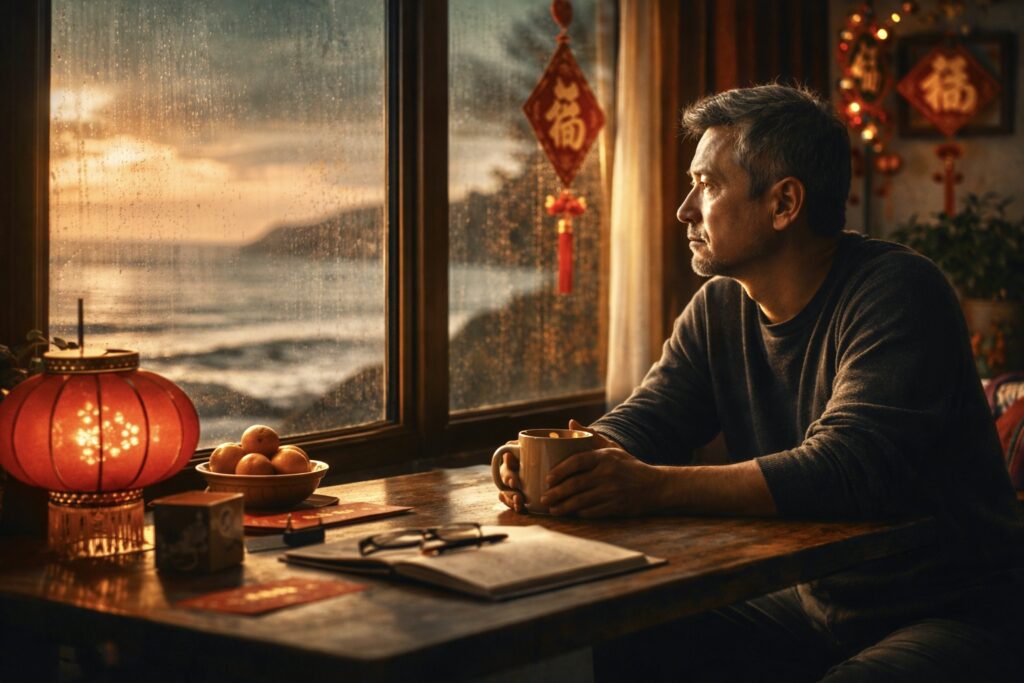
真正的转折,出现在2017年的那次心梗。
那次手术让我第一次非常深刻地意识到自己的脆弱,也让我开始认真反思自己的生命与过往。随之而来的,是我对参加家庭式聚会敬拜十四年多的信仰有了进一步思考,对“罪”的意识也变得更加敏锐。
然而,这些灵性上的觉醒,并没有让我变得更加轻松,反而带来了更多的不快乐。我似乎在不知不觉中,失去了重新快乐的能力。
不快乐的根源,逐渐显现为从身体到灵魂的双重冲击。
首先,是身体发出的警告。2017年一次酒后的心梗无疑是一个重要节点。那次手术不仅让我直面身体的脆弱,也让我第一次真正意识到:健康并不是理所当然的。“年轻就是资本”的想法,在那之后开始松动。
手术之后,我越来越清楚地看到,身体并不是可以无限供给的工具。它会疲惫,会生病,甚至会突然停止运转。这样的认知,让我内心生出一种深深的无力感。
或许,正是这种无力感,使我开始更多地思考生命的意义。我逐渐注意到,自己不仅身体有限,内心也背负着许多关于“罪”的意识。然而,这样的觉醒并没有带来想象中的释放,反而让我陷入了一种更为沉重的状态。
其次,是灵性成长带来的某种“反噬”。
在信仰中,我学会了反思自己的罪,这让我更敏锐地察觉到自己的不足与亏欠。然而我渐渐发现,这种对罪的反思并没有让我获得轻松感,反而慢慢变成了一种沉重的负担,使我越来越不快乐。因为我对自己“罪”的省察越来越深,而实际悔改的程度却常常跟不上,这种反差反而让我更内疚;再加上在现实生活中新老诱惑面前时有无力感,使我越发感觉有愧于耶稣基督的教导。
也许,我的问题在于,注意力过于集中在“我哪里做错了”,却忽略了“我已经被接纳了”。信仰的核心本应是恩典,是释放,而不应成为责备自己的一场永无休止的内在战争。
如果我无法真正接受自己已经被爱的事实,无法从恩典中获得喜乐,那么,对罪的敏锐意识就很容易变成一副难以卸下的枷锁。
与此同时,我也开始重新审视人生的意义,并逐渐意识到,自己的“快乐能力”似乎正在退化。
随着年龄增长,我越来越难从过去那些曾让我快乐的事情中获得同样的满足感。以前,一顿好饭、一场聚会、一个小小的成就,都能让我高兴很久;而现在,那些曾经带来幸福感的事物,似乎变得平淡了许多。
这让我不禁怀疑:是不是年轻时的快乐过于表层?是不是现在的生活缺少某种更深的意义?这种对过去的重新审视,以及对当下状态的不满足,使我产生了一种“快乐能力正在流失”的感受。
回过头看,不快乐的背后,也许还有文化与性格层面的影响。
作为一名56岁的中国人,我从小接受的观念之一,就是把责任感视为人生的核心。无论是对家庭还是对工作,我都习惯性地要求自己承担起责任,把事情尽量做到最好。这种强烈的责任意识,虽然在某种程度上推动我取得了一些成绩,却也让我很难真正放松下来。
同时,我也不得不承认,自己长期存在情感压抑的习惯。
回想父亲和姥姥去世的那段时间,我表现得相当坚强,“该干嘛干嘛”,几乎没有真正释放过内心的悲伤。也许,这种情感压抑已经在不知不觉中固化为一种反应模式,使我很难坦然面对自己的真实感受。
那些未被表达、未被流动的情绪,可能正是今日不快乐的重要潜在来源之一。
于是,我也开始尝试,向自己提出一些更诚实的问题。
我是不是过度沉浸在对罪的反思之中了?也许是的。我需要不断提醒自己,信仰的核心是恩典,是释放,而不是让自己背负越来越重的内在负担。我已经被接纳,并不需要用自己的行为去换取被爱的资格。
我是否允许自己真正感受悲伤?也许并没有。我——也包括许多和我类似的一代人——太习惯于坚强,太习惯于压抑情绪,而不太习惯给自己空间去承认不安、疲惫与脆弱。
我是不是对自己要求过高了?很可能是的。我总希望自己还能回到过去那种自然的快乐状态,却忽略了一个事实:快乐本身也会随着人生阶段而改变。我需要学会接纳这种变化,而不是一味抗拒它。
或许,我需要从生活中那些看似微小的片刻,重新学习感受快乐。
每天留一点时间,去感受阳光的温度;安静地吃一顿简单的饭;和家人平和地聊几句近况……这些看起来微不足道的事情,也许正是重新唤醒内在活力的起点。
而信仰也不断提醒我:人生的核心,并不在于眼前情绪的高低起伏,而在于灵魂是否找到了真正可以安放的位置。
不快乐,并不可怕。它也许正是在提醒我,需要重新审视自己的人生节奏,需要重新调整身、心与灵的关系。
愿我能在信仰中慢慢学会与自己和解,重新找到内心真正的平安。
也愿这个除夕,不只是时间上的辞旧迎新,而成为我重新学习安静、重新学习领受恩典的一个起点。
Why Am I Feeling Less Happy at 56?
—–A Midlife Reflection on Faith, Fragility, and Joy
By HuSir
Preface:
In middle age, many changes do not occur suddenly. Rather, they take shape quietly through the layered accumulation of bodily signals, emotional shifts, and spiritual reflection. After a heart attack, I began to seriously confront a question I had never deeply considered before: Why am I becoming less and less happy? This is not merely an emotional outpouring, but a personal record of physical warning, spiritual introspection, and a midlife turning point.
Today is Lunar New Year’s Eve—a time for farewell and renewal, for family reunion and warmth. Yet I find myself unable to truly immerse in the festive atmosphere. Instead, I am once again drawn back to a question that has troubled me for a long time: Why am I becoming less and less happy?
I am 56 this year, soon to turn 57. When I try to trace the source of this unhappiness, I realize it does not stem from a single event. Rather, it feels like an emotion that has slowly seeped into my life over time.
Looking back, I used to be someone who could easily feel happiness. Even when my father passed away in 1997, and later when my grandmother died, I did not cry, nor did those events deeply disturb my emotions at the time. I missed them, of course, but back then I was more bewildered than sorrowful, unsure what to do, and unaware of how to seek answers from the society around me. I had not yet come to deeply understand the environment I was living in, nor had I personally experienced the social pressures that would later become clearer to me. I could still be excited by small things in life and could still genuinely feel the beauty of living.
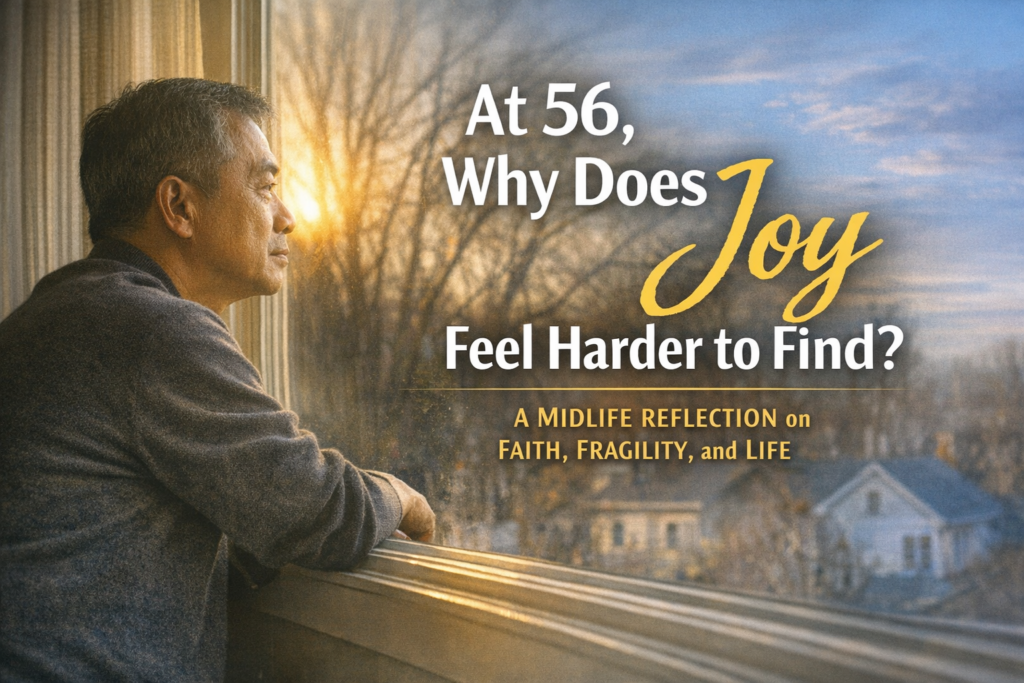
The real turning point came with the heart attack in 2017.
That surgery forced me, for the first time, to confront my own fragility. It also pushed me to seriously reflect on my life and my past. Along with it came deeper thoughts about the faith I had practiced through more than fourteen years of attending home-style fellowship gatherings. My awareness of “sin” became sharper and more personal.
Yet, unexpectedly, this spiritual awakening did not make me feel lighter. Instead, it brought more heaviness. Without quite realizing when it happened, I seemed to have lost my ability to feel joy again.
The roots of this unhappiness gradually revealed themselves as a double impact—from body to soul.
First came the warning from my body. The alcohol-related heart attack in 2017 was undoubtedly a critical milestone. That surgery not only exposed my physical vulnerability but also made me realize for the first time that health is not something to be taken for granted. The old belief that “youth is capital” began to loosen its grip.
After the operation, I saw more clearly than ever that the body is not an endlessly renewable tool. It grows tired. It falls ill. It can even suddenly stop. This realization produced in me a deep sense of powerlessness.
Perhaps it was precisely this sense of powerlessness that pushed me to think more seriously about the meaning of life. I began to notice that not only is my body limited, but my inner world also carries a heavy awareness of sin. Yet this awakening did not bring the release I had imagined. Instead, it drew me into an even heavier state.
Secondly, there was a kind of “backlash” from spiritual growth.
Through faith, I learned to examine my sins. This made me more sensitive to my shortcomings and failures. But gradually I discovered that this reflection did not bring me ease. Instead, it slowly became a burden, making me increasingly unhappy.
Because my self-examination of sin grew deeper and deeper, while my actual degree of repentance often lagged behind, this gap only intensified my sense of guilt. Coupled with my recurring feelings of weakness when facing both old and new temptations in daily life, I increasingly felt that I had fallen short of the teachings of Jesus Christ.
Perhaps my problem lies here: my attention has been overly focused on “where I have failed,” while I have neglected the truth that “I have already been accepted.” The core of faith should be grace and release—not an endless internal war of self-accusation.
If I cannot truly accept that I am already loved, and cannot draw joy from grace, then my heightened awareness of sin can easily become a set of chains that I cannot remove.
At the same time, I began to reexamine the meaning of life and gradually realized that my “capacity for happiness” seemed to be declining.
As I age, I find it increasingly difficult to derive the same satisfaction from things that once made me happy. In the past, a good meal, a gathering, or a small achievement could keep me joyful for quite a while. Now, those same things feel noticeably flatter.
This makes me wonder: Was my earlier happiness too superficial? Or does my present life lack some deeper sense of meaning? This reassessment of the past, combined with dissatisfaction in the present, has given me the unsettling feeling that my ability to feel happiness is fading.
Looking back, the roots of this unhappiness may also lie partly in cultural and personality influences.
As a 56-year-old Chinese man, one of the core ideas instilled in me since childhood has been the primacy of responsibility. Whether toward family or work, I have always felt compelled to shoulder my duties and do my best. This strong sense of responsibility has indeed helped me achieve certain things in life—but it has also made it very difficult for me to truly relax.
At the same time, I must admit that I have long had the habit of emotional suppression.
When my father and grandmother passed away, I appeared outwardly strong—“life went on as usual.” I hardly allowed myself to fully release my grief. Perhaps this suppression has gradually solidified into a habitual response, making it difficult for me to face my true inner feelings.
Those emotions that were never expressed, never allowed to flow, may well be an important hidden source of my present unhappiness.
So I began to ask myself some more honest questions.
Have I been overly immersed in self-examination of sin? Perhaps yes. I need to keep reminding myself that the core of faith is grace and release—not the accumulation of heavier and heavier inner burdens. I have already been accepted. I do not need to earn the right to be loved through my own performance.
Have I truly allowed myself to feel sorrow? Perhaps not. I—and many of my generation—have become too accustomed to being strong, too accustomed to suppressing emotions, and not accustomed enough to giving ourselves space to acknowledge anxiety, fatigue, and vulnerability.
Have I set my expectations for myself too high? Very likely. I have always hoped to return to the natural happiness of earlier years, without fully realizing that happiness itself changes across different stages of life. I need to learn to accept this change rather than resist it.
Perhaps I need to begin again with the small things in life.
To take time each day to feel the warmth of sunlight…
To quietly enjoy a simple meal…
To speak calmly with family about ordinary matters…
These seemingly insignificant moments may in fact be the starting point for reawakening inner vitality.
Faith continues to remind me that the core of life does not lie in the rise and fall of immediate emotions, but in whether the soul has truly found a place to rest.
Unhappiness itself is not something to fear. It may simply be reminding me to reexamine the rhythm of my life and to readjust the relationship between body, mind, and spirit.
May I learn, slowly, to be reconciled with myself through faith, and to rediscover true inner peace.
And may this Lunar New Year’s Eve become not merely a turning of the calendar, but a new beginning in which I relearn stillness and relearn how to receive grace.